UNESCO committee approves conservation report for Iran's Hegmataneh
TEHRAN – The UNESCO World Heritage Committee has approved Iran's conservation report for the World Heritage site of Hegmataneh, confirming that the site's protection, management and restoration measures comply with the committee's requirements, provincial heritage officials said on Wednesday.
Mohsen Masoum-Alizadeh, director-general of Cultural Heritage, Tourism and Handicrafts for Hamadan province, said the report was prepared by experts from the Hegmataneh World Heritage Base and Iran's Ministry of Cultural Heritage, Tourism and Handicrafts in accordance with UNESCO's reporting requirements. The document was submitted to the World Heritage Centre before being reviewed and endorsed by the committee.
He described the report as one of Iran's principal commitments following Hegmataneh's inscription on the UNESCO World Heritage List in 2024. It outlines conservation and restoration work, site management, monitoring systems, archaeological research, executive plans and governance mechanisms implemented to safeguard the property.
Masoum-Alizadeh said the committee's approval reflected confidence in the site's management and acknowledged measures taken to preserve Hegmataneh's Outstanding Universal Value. The committee also stressed the importance of continuing conservation programs, management measures and regular monitoring.
Under the committee's decision, Iran is required to submit an updated report on conservation progress, management policies and the implementation of protection measures to the UNESCO World Heritage Centre by the end of 2027.
The official said periodic conservation reports are among the World Heritage Committee's main monitoring tools, requiring States Parties to provide regular updates on the condition of listed properties, conservation challenges, management practices and future plans.
He added that the approval indicates that conservation and management efforts at Hegmataneh are consistent with UNESCO's standards and resulted from cooperation between the ministry, the Hegmataneh World Heritage Base, heritage specialists and provincial authorities.
Masoum-Alizadeh said future priorities include strengthening site protection, expanding monitoring systems, improving integrated management, safeguarding the property's boundaries and buffer zones, enhancing visitor services, advancing archaeological research and promoting the site's historical and cultural significance.
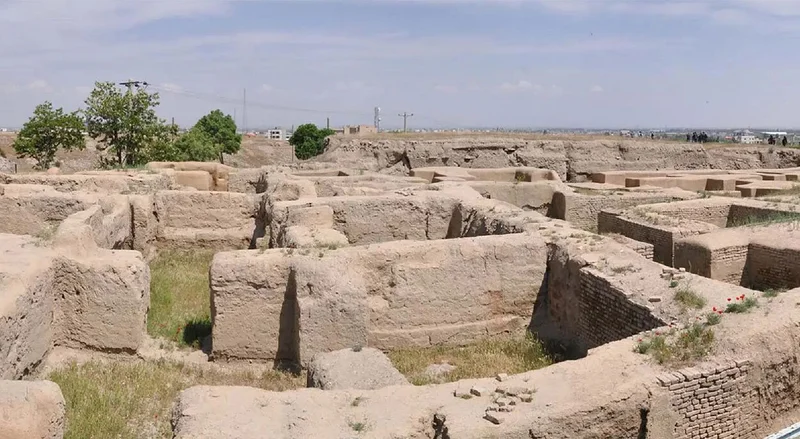
The archaeological remains of ancient Hegmataneh, located in central-west Iran near the modern city of Hamadan. Continuously inhabited for nearly 3,000 years, the site provides rare evidence of the Median civilization of the seventh and sixth centuries BCE and later served as a summer capital for the Achaemenid, Seleucid, Parthian and Sasanian empires.
Known in classical sources as Ecbatana, Hegmataneh is regarded as the capital of the Median kingdom and remained an important urban center throughout successive historical periods. Covering about 50 hectares within modern Hamadan, the archaeological site contains remains from the Median, Achaemenid, Parthian, Sasanian and Islamic periods, with much of the surviving architecture dating to the Parthian era. Its urban planning and architectural remains are considered among the most significant examples of Parthian city design.
AM