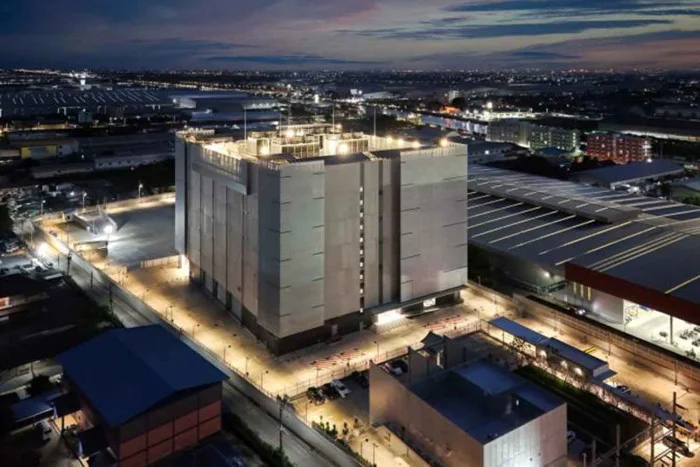
The cabinet has approved a national policy committee to oversee the country’s fast-growing data centre industry, aiming to balance investment promotion with concerns over energy security, water resources and environmental protection.
The Data Centre Policy Committee will formulate national policies and coordinate with state agencies responsible for approving and regulating data centre projects, government spokeswoman Rachada Dhnadirek said on Wednesday.
The committee will be chaired by a deputy prime minister appointed by Prime Minister Anutin Charnvirakul, with the ministers of digital economy and society, interior and energy serving as deputies, alongside senior officials and up to three experts appointed by the prime minister.
Its mandate includes setting regulatory standards, monitoring the industry’s impact on electricity, water use, cybersecurity and environmental protection, while supporting the country’s goal of becoming a regional digital economy hub.
“The objective is to provide clear direction for Thailand’s digital economy. We will see to it that data centre businesses do not adversely affect the country’s energy security or water resources,” Ms Rachada said.
In 2025, the digital sector was the largest destination for the Board of Investment (BoI) applications, at 746 billion baht, with most of that linked to data centres. The value of dedicated data centre applications rose more than sevenfold, from 99 billion baht in 2024 to 728 billion in 2025.
In the first quarter of 2026, data centres accounted for the overwhelming majority of a record level of applications exceeding 1 trillion baht. So far, the BoI has approved 16 data centres to serve artificial intelligence developers. None of them has been built yet, and the country still lacks a specific legal framework for these digital installations.
The Ministry of Commerce has issued 1,145 permits for AI data centre businesses, 669 of them in Bangkok and most of those on Rama IX Road. The rest are scattered across Nonthaburi, Pathum Thani, Phuket, Chon Buri, Nakhon Ratchasima, Rayong and Khon Kaen provinces.
At present, approvals for data centre projects rely on building control and land-use regulations, as the facilities are not classified as factories under existing law. A new law is currently being drafted.
The cabinet’s decision to establish the committee coincided with a petition filed at Government House by Srisuwan Janya, president of the Anti-Global Warming Association, urging the prime minister to tighten environmental controls on data centres, cloud service facilities and advanced electronics projects.
Mr Srisuwan warned that large data centres consume huge amounts of electricity and water, potentially competing with households and farmers for resources.
- Editorial: Rules before data centres