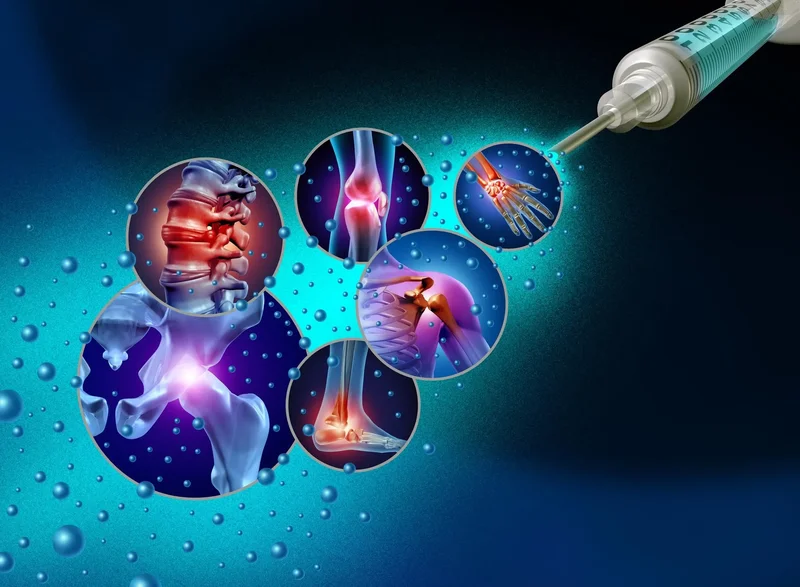
For years, regenerative medicine therapies such as platelet-rich plasma (PRP) were the province of elite athletes and ultra-high-net-worth patients. Tiger Woods credited PRP injections with helping him recover from knee and Achilles injuries, while Kobe Bryant famously traveled overseas for a PRP procedure on his ailing knee. What was once a closely guarded advantage for professional athletes is now migrating into mainstream orthopedic and spine care, particularly among entrepreneurs, executives, and other high performers whose schedules leave little room for the extended downtime that surgery demands.
How Regenerative Medicine Is Transforming Spine Care
Back pain is the leading cause of disability worldwide, affecting an estimated 619 million people. For most of modern medicine’s history, the treatment paradigm has been reactive: wait for a disc or a joint to degenerate, then intervene. Early in my career, I treated back pain using the tools I was trained on, injecting corticosteroids into the epidural space, ablating pain-transmitting nerves with radiofrequency energy, or, when conservative options failed, implanting hardware.
These interventions can effectively mute pain signals, but they do not address the underlying degenerative process. Regenerative medicine takes a fundamentally different approach. Rather than silencing the alarm, it aims to repair the structural damage that triggered it in the first place, while creating conditions that discourage further breakdown.
The Functional Spinal Unit: Disc and Joint as an Example
Disc pathology is a useful illustration of this shift. A healthy intervertebral disc functions much like a jelly doughnut: a tough, fibrocartilage outer ring, the annulus fibrosus, encasing a soft, hydrated core called the nucleus pulposus. Everyday mechanical stress from lifting, prolonged sitting, and poor posture can cause small tears in the annulus, allowing inflammatory proteins from the nucleus to leak outward and irritate adjacent nerve roots. This is the mechanism behind much of the sciatica and axial back pain we see clinically.
An isolated disc tear, however, rarely tells the whole story. This is where the concept of the functional spinal unit (FSU) becomes clinically important: the vertebral bodies, intervertebral disc, paired facet joints, and surrounding ligaments all operate as a single biomechanical system. Chronic back pain is typically the product of dysfunction across several of these structures at once, not a single degenerated disc in isolation. Evaluating and treating the FSU as an integrated unit, rather than chasing only one structure that may give only partial relief, allows regenerative therapies to produce more durable, comprehensive relief.
Exploring the Mechanisms Behind Regenerative Spine Care
Depending on which components of the FSU are compromised, we typically draw on one of two regenerative modalities: platelet-rich plasma or bone marrow concentrate. PRP is an autologous blood product created by concentrating a patient’s own platelets, which serve as dense reservoirs of growth factors and cytokines, the signaling molecules that orchestrate tissue repair. Bone marrow concentrate, by contrast, in addition to the growth factors, is also rich in mesenchymal stem cells (MSCs), progenitor cells capable of differentiating into muscle, bone, cartilage, tendon, and disc tissue.
Whether the target is the disc itself, a facet joint, or a supporting ligament, both therapies work through a similar biological logic: they accelerate and amplify the body’s native healing cascade, helping degraded tissue stabilize on its own rather than continuing to break down and generate inflammatory pain signals.
Clinical Evidence: A Decade of Follow-Up
I led one of the first randomized controlled trials investigating the effects of autologous bone marrow concentrate and the growth factors in platelet-rich plasma on human intervertebral discs. Compared with placebo, patients receiving the treatment showed statistically significant improvements in both pain and functional outcomes, with no adverse effects, hospitalizations, or surgeries reported at 12 months. Notably, many participants required only a single injection rather than a repeated treatment series. In my own practice, I have followed a number of these patients for a decade or longer, and the majority remain surgery-free today.
A Proactive Approach for High Performers
An increasing number of executives and high performers are choosing to intervene before an injury forces the issue. Regenerative medicine offers an alternative: one that works in concert with the body's own reparative biology instead of waiting for a structural failure that forces a binary choice between surgery and years of managed pain. By supporting the body's innate capacity for self-repair, we are able to unlock healing that once seemed possible only through the operating room.