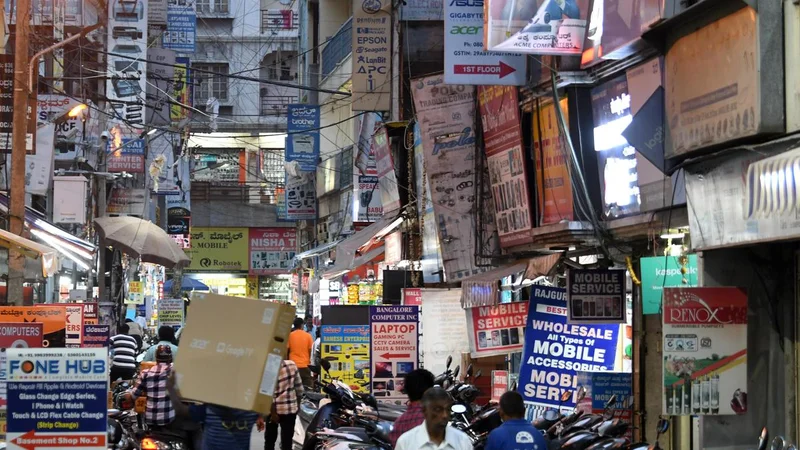
The Supreme Court on Wednesday (August 5, 2026) granted six weeks to several States and Union Territories to respond to a public interest litigation (PIL) petition seeking directions requiring shop owners to display their identity, registration details and number of employees at their establishments to enable consumers to pursue complaints under the Consumer Protection Act, 2019.
A Bench of Justices Vikram Nath and Sandeep Mehta was hearing a petition filed by lawyer and Bharatiya Janata Party (BJP) leader Ashwini Kumar Upadhyay seeking such disclosure requirements as a measure to safeguard consumer rights.
During the hearing, Mr. Upadhyay informed the Bench that responses had so far been received from only a few States, including Haryana, Punjab, Bihar and Assam, as well as the Union Territory of Andaman and Nicobar Islands.
“We grant six weeks’ time to the respondents who have not filed responses to file the same,” the Bench said.
The court posted the matter for further hearing after three months.
The petition has sought directions requiring shops to prominently display at their entrances details including the name and address of the establishment, contact information, registration particulars and the number of employees, in a manner clearly visible to consumers.
“Every consumer has a right to know about not only the quality, quantity, potency, purity standards, manufacturing and expiry date, Bureau of Indian Standards (BIS)/Food Safety and Standards Authority of India (FSSAI) certification, but also the details of distributors, dealers, sellers and shop owners, so as to seek redressal against unfair and restrictive trade practices and unscrupulous exploitation in the spirit of provisions of the 2019 Act,” the petition said.
It contended that access to the identity and registration details of distributors, dealers and sellers was necessary for consumers to effectively pursue complaints concerning defective products or deficient services before consumer redressal forums.
The plea further argued that such disclosures were integral to a consumer’s right to make informed choices and seek protection against unfair or restrictive trade practices and exploitation.
“Each consumer has [the] right to be informed about quality, quantity, potency, purity, standard and price of goods and services to protect him against unfair trade practices, restrictive trade practices and unscrupulous exploitation,” it added.
Published - August 05, 2026 09:38 pm IST