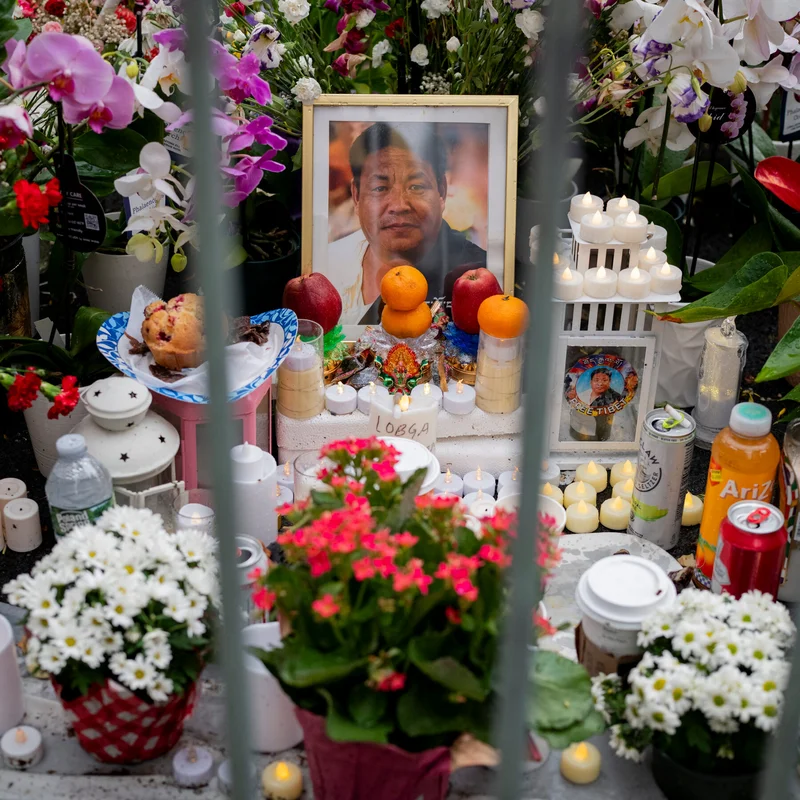
It was 91 degrees in Manhattan and even hotter on the pavement, but the Tibetans gathered as planned outside the Chinese Consulate. Amid the waving flags and synchronized chants, one of the protesters, Ngawang Tashi, looked for his friend Lobga Rangzen.
Lobga Rangzen was a stalwart of events like this. His friends joked that he was happier at protests than on his birthday. At protests, he felt most useful to the cause of Tibetan independence from China — a cause to which he was so devoted, he had even put it in his name: Rangzen means “independence” in Tibetan.
Ngawang Tashi scanned the crowd once, then again. It was strange that Lobga Rangzen wasn’t there.
The next evening, July 2, he was at Costco when another friend called.
“Come to the United Nations right now,” the friend said. “He is in front of there and burning.”
Around the world, many people had already seen what Ngawang Tashi was just learning: Lobga Rangzen, 52, had set himself on fire in front of the United Nations headquarters in Manhattan, streaming the act live on Facebook. He had planted a Tibetan flag on the pavement and taken out fliers that demanded FREE TIBET and CHINA OUT OF TIBET. Then he lit his chuba, or Tibetan robe, on fire.
Ngawang Tashi couldn’t make sense of the news. He had just seen Lobga Rangzen a few days earlier, at their weekly Tibetan dance group. Hadn’t Lobga Rangzen just promised to make his famous Tibetan sausages for a party a few days later? Surely, he reassured himself, his friend would be fine.