The Kids Online Safety Act (KOSA) advanced out of the Senate Commerce Committee with a unanimous vote on Wednesday. KOSA, which would require new rules around age verification online and reduce anonymity on the web, still needs to be voted on by the entire Senate. A version of the controversial bill already passed the House in June.
KOSA, first introduced in 2022, passed the Senate in 2024 with a vote of 91-3. But it died in the House later that year over free speech concerns. Other online “safety” bills being considered Wednesday included the SCREEN Act, Youth AI Privacy Act, and CHATBOT Act.
The SCREEN Act, which would require age verification for sites that host any adult material of any kind, received a vote of 15-13 in favor in the markup hearing Wednesday, but many voted by proxy and there weren’t enough senators in the room voting to advance the bill. The bill passed 267-117 in the House, though it’s been criticized for requiring age verification on any site with a single piece of what might be deemed sexually explicit content.
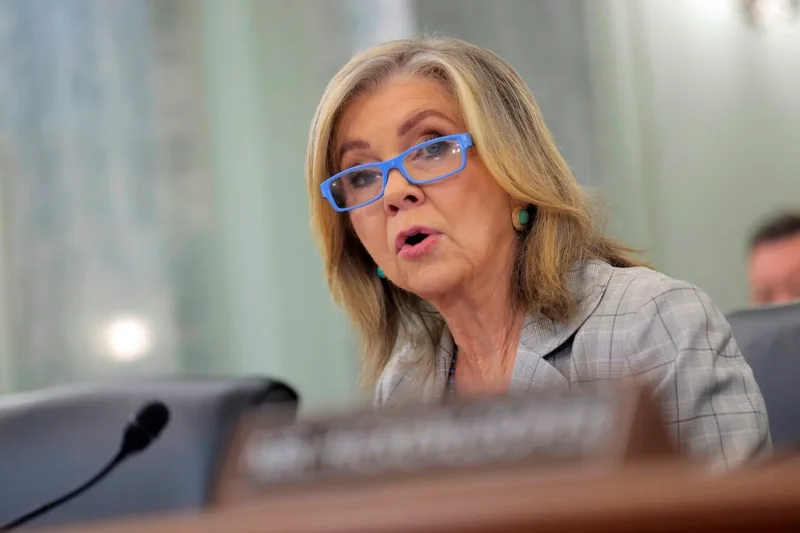
Sen. Marsha Blackburn, the Republican sponsor of KOSA along with Democrat Richard Blumenthal, praised the bill’s advancement and called out Big Tech.
“I think one of the important things that we’re seeing today is we’re sending a message to Big Tech that the era of Big Tech profiting off of our children is over,” said Blackburn said during the markup hearing Wednesday. “Congress is moving forward to make certain that they have to accept responsibility for the foreseeable harms that their products cause.”
The Youth AI Privacy Act, introduced by Democrat Sen. Ed Markey, also advanced out of committee Wednesday. The bill includes a ban on advertising to children in AI chatbots and so-called manipulative chatbot design. But critics warn it would actually require more data collection of kids to be properly implemented, a strange paradox.
The CHATBOT Act would require parental controls for AI chatbots so that kids aren’t exposed to harmful material, though critics have similar privacy concerns and warn it creates a one-size-fits-all environment for differentiating between kid and adult content. Which is to say that it treats 8-year-olds and the content they’re allowed to access the same as 17-year-olds under this model of legislation.
The Electronic Frontier Foundation was one of several groups opposing KOSA over the alleged threat to online rights and privacy. The EFF wrote a letter to the Senate committee, dated Aug. 5, which explained the potential harms from not just the implementation of KOSA but the SCREEN Act, the Youth AI Privacy Act, and the CHATBOT Act.
“These bills do not increase user privacy. Rather, they create new privacy problems. Whether companies verify ages by checking government IDs, performing facial analysis, checking usersâ bank records, or collecting other personal information, these systems require the handing over of more sensitive data to access lawful online speech and services,” the EFF wrote in its letter.
“Once a user turns their personal information over, itâs now vulnerable to leaks, data theft, or misuse. This isnât just a hypotheticalâweâve already seen several breaches of age verification providers.”
Attempts to protect kids from harms associated with social media use have become a global issue. Australia passed the first ban on kids using social media, which took effect in late 2025, banning anyone under 16 from the major platforms. Other countries like Denmark, Spain, Greece, and the UK are all considering similar bans.
France’s legislature passed a ban on kids using social media in July, but it still needs to be reviewed for constitutionality before being implemented. The bill will ban kids from accessing TikTok, Facebook, Instagram, and X. Kids will be able to access YouTube, but comments will need to be turned off.
The effectiveness of social media bans remains to be seen. A report released Friday showed that 81.5% of Australian kids used social media after that country imposed its ban. That’s only slightly down from 85.9% of kids who reported the same before the law went into effect, according to Bloomberg.