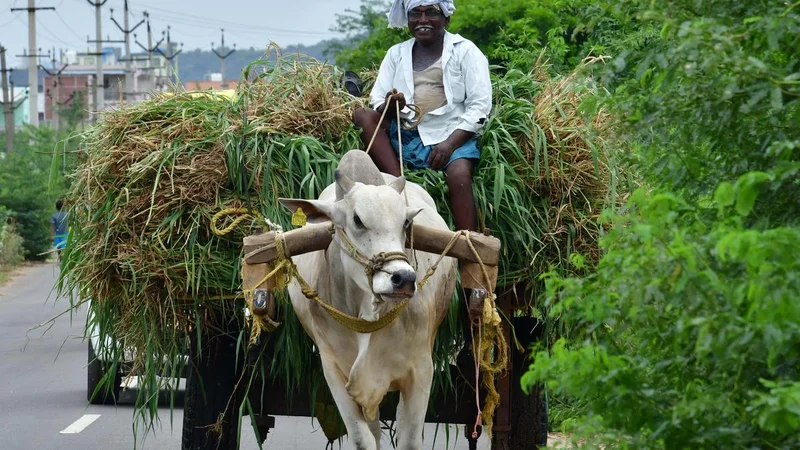
Detailed guidelines have been issued to district animal husbandry officers to ensure continuous monitoring of fodder availability from the village level up to the district level.
\| Photo Credit: Representative photo
The Andhra Pradesh Animal Husbandry Department has readied a comprehensive action plan to tackle the possible shortage of livestock fodder expected by November due to the below-normal rainfall caused by El Nino conditions, Animal Husbandry Director Dr. T. Damodara Naidu said on Wednesday.
In a release, Dr. Naidu said deficient rainfall across the State could lead to a severe fodder shortage in the coming months, necessitating early intervention. Detailed guidelines had been issued to district animal husbandry officers, directing them to undertake continuous monitoring of fodder availability from the village level up to the district level. Farmers are being educated on the effective utilisation of fodder crops raised through pre-monsoon dry sowing, he said.
The department is establishing fodder monitoring committees at the mandal, divisional and district levels, besides constituting a Fodder Development Committee under the jurisdiction of every veterinary institution. These committees will oversee the utilisation of fodder seeds, assess water availability and promote the preparation of silage to ensure adequate fodder supplies during the lean season, he said.
Dr. Naidu said the department was encouraging the establishment of silage and total mixed ration (TMR) manufacturing and supply units by extending industrial incentives at the district level. Livestock markets were being closely monitored to prevent farmers from resorting to distress sales of cattle due to fodder scarcity, he said.
The department also plans to mobilise resources for fodder development with the support of Water Users’ Associations, Self-Help Groups, Farmer Producer Organisations, voluntary organisations, donors and Corporate Social Responsibility (CSR) initiatives under the P4 model.
Training for farmers
Training programmes on fodder management and conservation are being organised for farmers through veterinary colleges and Krishi Vigyan Kendras (KVKs). To strengthen preparedness, fodder banks are also being established in water-abundant regions to create reserves for future requirements, Dr. Naidu added.
Published - July 22, 2026 07:58 pm IST