Dating in the modern age is hard. But Vicki Gibbs, head of research at Autism Spectrum Australia (Aspect), says the challenges can multiply for people who are neurodivergent (a blanket term that encapsulates autism, attention deficit hyperactivity disorder, dyslexia, synesthesia and obsessive-compulsive disorder, among others). “Everything that’s hard about dating in today’s world is amplified for them,” she says.
A recent Aspect survey of autistic adults across Australia, the US and UK found that 83 per cent had met people through dating apps, and nearly half had formed long-term relationships as a result.
Gibbs is pleased by the success rate, but has had some concern about safety issues, with nearly half the respondents reporting unwanted sexual messages (which other research indicates is a similar level of harassment for all adults), and more than one-fifth feeling pressured to meet against their wishes.
“It can be more difficult for autistic people to pick up on red flags,” she says. “And because they are being told their whole lives that they ‘weren’t getting it’ or ‘doing it wrong’, many developed a people-pleasing style and can be less likely to assert themselves.”
The study found one of the biggest deliberations was whether to disclose an autism diagnosis on a dating profile (only 9 per cent disclosed). Gibbs says disclosure can be a double-edged sword: daters may rule themselves out from potential matches early on, or risk rejection down the line.
Here, we speak with three neurodiverse women who have navigated the dating pool.
“I stunned him to silence for about 20 minutes”: Emma Beardsley, 38
“I was pretty reluctant to jump into online dating because I was worried about all the safety risks. Dating can be really hard for autistic people because we have challenges reading facial expressions and vocal tone, which means we can be vulnerable to manipulation.
Before I was married, I had an experience where I was manipulated for months into sleeping with somebody with promises of a relationship. I wasn’t able to read the ‘red flags’ that told me that this person was only after sex.
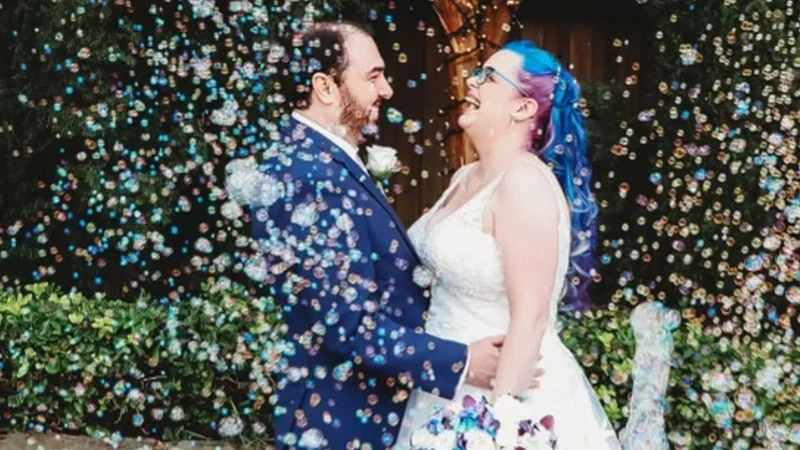
A bunch of friends – neurodivergent and non-neurodivergent – recommended OkCupid as one of the least problematic platforms. The third person I was matched with is my now husband, Nathan, who at the time didn’t know that he was neurodivergent.
We talked for a few weeks online, then we had a cute date idea of going tenpin bowling: low pressure, fun, and you don’t have to converse if you don’t feel comfortable. He was terrified and we were both so anxious. But because we’d been talking so much, I already felt a connection, so I just went for it and kissed him. I stunned him to silence for about 20 minutes.
We’ve been together for 11 years and married for two. I insisted he propose; I’m a little bit of a traditionalist that way.
We planned our wedding down to the inch to make sure neurodivergent guests were comfortable. I had support people in my bridal party, including my best mate, who knows how to deal with my autism when I’m getting stressed.
We had a visual story explaining the order of the day for the guests, a statement of inclusion letting everybody know it was OK to be themselves, a quiet room for anyone who needed a moment away, and the option for an autism-friendly meal (chicken tenders and chips because these foods tend to be predictable and safe).
Nathan’s my rock. He’s ridiculously emotionally intelligent, so sometimes he can sense when I’m not doing great before I can. We’re both gamers, so we spend all our leisure time just gaming together, which is so much fun.”
“I wasn’t able to read between the lines”: Laura McKenna, 29
“I was 22 when I was diagnosed with autism, and 25 with ADHD. They were quite late diagnoses – this is common for women – and have explained a lot and improved my quality of life. I used to think I had social anxiety; that I was a more shy person.
I had one or two long-term relationships before my early 20s. Nothing overly toxic, but I wasn’t able to read between the lines and see when someone was trying to take advantage of me or genuinely liked me.
For the past three years, I’ve been in a healthy, long-term, long-distance relationship, and have a daughter from my previous relationship. When I met my partner on Tinder, I was about to give up on the apps, and he took me out on a proper date. We were vibing really well, and I felt comfortable enough to tell him about my neurodivergence. Plus, I wanted to weed out people who wouldn’t really be interested.
Emotional dysregulation is a big feature of ADHD, like feeling emotions strongly. Rejection sensitive dysphoria is another thing: perceived rejection or criticism can feel especially hurtful. But over the years, and with therapy, I’ve learned to deal with it better.
The symptoms of overstimulation or sensory processing issues that can come with autism can be a challenge, like when I can’t get my words out properly or don’t really want to be touched.
My partner knows me well enough that if I really can’t get those words out, if it’s really severe, I can just write a couple of words on a text message and show it to him.
My partner thinks he might have some form of neurodivergence as well; those are the people whom I get along with best.
My favourite thing to do with him is just relaxing. In kids, it would be called parallel play, but just happily doing our separate things, together.”
“We’re very loyal, very attentive – probably to our detriment at times”:
Kris Leigh, 46
“I was diagnosed with ADHD in 2020 during the COVID lockdowns. I went from doing lots of outdoor activities and socialising to being stuck at home, and it put a lot of strain on my relationship.
Getting a diagnosis, medication and counselling were affirming. However, I also felt a massive sense of grief, anger and frustration because I could have done a lot better in my career, schooling, friendships and relationships if I’d had a diagnosis earlier.
There are about a thousand things going on in our minds; it can get really overwhelming and create decision fatigue. It may look like we’re being lazy, but it’s because our brain needs time out. It can be hard verbalising what we need, and we can get upset over things that maybe a ‘normal’ person might not.
My most recent ex found ways to make my life a bit easier, such as telling me that we had to be somewhere at least half an hour before the start time, and learning to clearly communicate emotions and needs.
Dating apps are very triggering because they are gamified. So for people like me, they become a bit of a habit.
I’ve noticed more people using words such as ‘neurodivergent’, ‘neurospicy’ or ‘ADHD’ on their profiles, probably because we are talking about it more.
I’m not a fan of labels. If somebody asked me during dating, I would have a conversation with them [about my condition], but I don’t think it needs to be raised straight away.
Neurodivergent people deal with dating, break-ups and rejection very differently; we can feel more things more deeply. We love like crazy; we’re very loyal and attentive, probably to our detriment at times. We put ourselves out there a lot and might not get as much in return.
I’m feeling a bit stuck at the moment with dating. I don’t want to be alone, but you feel broken when you’ve got ADHD. You really feel like you don’t fit in. But I’m trying to do things that fill my cup, like photography, going to the gym, swimming and, this year, walking the Camino de Santiago.”