Trade: Lima
Peru has ratified an upgraded Peru-China FTA, approving a protocol that modernises the 2010 free-trade deal with new rules on digital commerce, supply chains and competition.
Peru Completes Its Ratification
Peru has formally ratified the Optimization Protocol that upgrades its free-trade agreement with China, clearing the treaty through its domestic approval process by Supreme Decree No. 035-2026-RE, published in late July 2026. The decree also instructs the foreign ministry to announce the pact’s entry-into-force date in the official gazette El Peruano.
The protocol modernises a trade relationship that has been governed since March 2010 by the original Peru-China FTA. Rather than replacing that agreement, the upgrade refreshes it with chapters covering areas that barely existed when the first deal was signed.
Ratification is a domestic legal step; the upgraded terms take effect only once both Lima and Beijing complete their internal procedures and set a start date, a sequence the decree explicitly leaves to a later announcement.
What the Upgrade Adds
The Optimization Protocol introduces new chapters on e-commerce, competition, global supply chains, cooperation on standards and conformity assessment, and the environment. The e-commerce provisions bring the digital economy squarely into the treaty for the first time.
It also updates existing rules on customs procedures, rules of origin and trade facilitation, aimed at smoothing the flow of goods and cutting red tape at the border. Peruvian officials have presented the changes as a way to make bilateral commerce faster and more predictable.
For exporters, the supply-chain and customs chapters are the most concrete gains, promising simpler documentation and clearer treatment of goods that move through complex international production networks.
Why China Matters to Peru
China has been Peru’s largest trading partner for more than a decade, buying vast volumes of Peruvian copper and other minerals. Peru is one of the world’s top copper producers, and Chinese demand underpins much of that output.
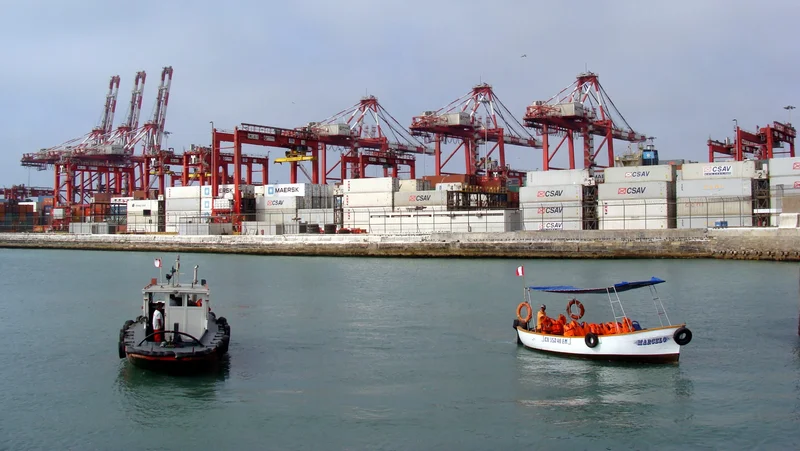
The relationship gained a new anchor in late 2024 with the opening of the Chancay megaport north of Lima, a deep-water terminal built with Chinese investment and operated by shipping group COSCO. The port is designed to cut sailing times between South America and Asia.
Against that backdrop, the FTA upgrade is as much about signalling as tariffs: it reaffirms Peru’s alignment with its biggest customer at a moment when trade routes across the Pacific are being redrawn.
The Digital-Economy Angle
The addition of an e-commerce chapter reflects how much cross-border trade has shifted online since the original 2010 deal. Provisions of this kind typically address electronic contracts, consumer protection and the treatment of digital transactions.
For a mid-sized economy like Peru, embedding digital-trade rules in a treaty with China offers a template for how smaller exporters and online sellers can reach one of the world’s largest consumer markets.
The competition chapter, meanwhile, sets shared expectations on how each side polices anti-competitive behaviour, an area of growing importance as Chinese firms expand their footprint in Peruvian infrastructure and retail.
What Comes Next
The practical impact now hinges on the entry-into-force date, which the foreign ministry must publish once both governments exchange notifications that their internal steps are complete. Until then, the current FTA terms continue to apply.
Business groups will watch whether the upgraded rules translate into measurable gains in Peruvian exports beyond raw commodities, particularly in agriculture and services, sectors Lima has long hoped to diversify into.
More broadly, the ratification cements Peru’s position as one of China’s closest trade partners in Latin America, alongside Chile, and adds to a web of recent deals, including a separate free-trade agreement Peru has advanced with Hong Kong.
Frequently Asked Questions
What did Peru ratify in the Peru-China FTA upgrade?
Peru ratified the Optimization Protocol upgrading its 2010 free-trade agreement with China, via Supreme Decree No. 035-2026-RE, adding chapters on e-commerce, competition, supply chains, standards and the environment.
When does the upgraded agreement take effect?
The decree orders the foreign ministry to publish the entry-into-force date in the official gazette El Peruano once Peru and China complete their internal procedures; until then the existing FTA terms apply.
Why is the China trade deal important for Peru?
China is Peru’s largest trading partner and main buyer of its copper. The upgrade modernises rules on digital trade and customs, reinforcing ties anchored by the Chinese-built Chancay megaport.
Sources: Peru Foreign Ministry (DS 035-2026-RE); MINCETUR; China Daily; Rumbo Minero; gov.cn.
This article was produced by The Rio Times’ automated newsroom system. How we use AI · Report an error