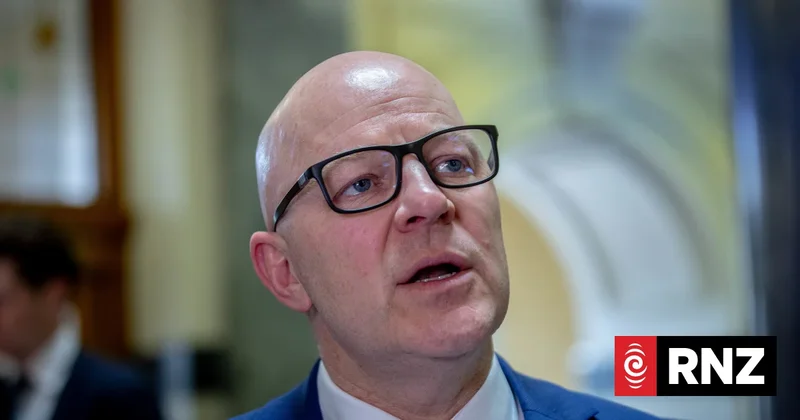
Government launches long-awaited mental health strategy
Matt Doocey has launched a long-awaited plan to improve mental health and addiction outcomes, with a focus on launching AI navigation to help access and scale integrated services across mental health, housing and employment.
He says mental health deserves the same "long-term direction and accountability as the rest of our health system".
The mental health minister released the country's first Mental Health and Wellbeing Strategy along with a three year Implementation Plan on Thursday morning at Parliament.
It will come under the Healthy Futures (Pae Ora) Act, because Doocey said it was a "huge mistake" for mental health not to be included there.
Consultation on the Mental Health and Wellbeing Strategy was launched in April, which had a goal of providing a clear 10-year direction and vision to improve services.
The draft strategy included two strategic actions focused on improving data quality and completeness by ensuring the right information was collected to provide robust population data, in-line with the commission's recommendation.
The finalised three-year implementation plan - released alongside the final strategy - set out actions, milestones, responsibilities and reporting needed to "turn this into real improvements people can see and feel", he said.
Overall it had 50 actions to deliver "faster access to support, more frontline workers, and a better crisis response", Doocey said.
Key areas of focus in the plan will be to:
- Launch AI navigation to enable people to easily access mental health and addiction services
- Scale integrated services across mental health, housing and employment
- Implement a national plan to eliminate seclusion
- Co-design a dedicated youth mental health and addiction roadmap with young people
Doocey explained the recently passed Mental Health Bill prohibited the use of seclusion for people under the age of 18, and he's committed to getting to "zero seclusion for everyone". He said the plan set out how to achieve that.
He also outlined that nearly 23 percent of young people aged 15 to 24 report "high or very high levels of psychological distress".
"We will work with young people to develop a roadmap that ensures their voices are heard and that support is designed around their needs and what works best for them."