When I was growing up, there were few words more devastating than "poser."
I still remember getting called one during my freshman year of high school after showing up in a pair of DC skate shoes. It didn't matter that I genuinely liked them. Someone decided I hadn't "earned" them, that I was trying on an identity that wasn't really mine. Two decades later, I still remember how much it stung.
The internet has always had a vocabulary for sniffing out inauthenticity. First, it was "poser." Then came "try-hard," "hipster," and, more recently, "NPC" and "industry plant." Now there's a new favorite: "larper."
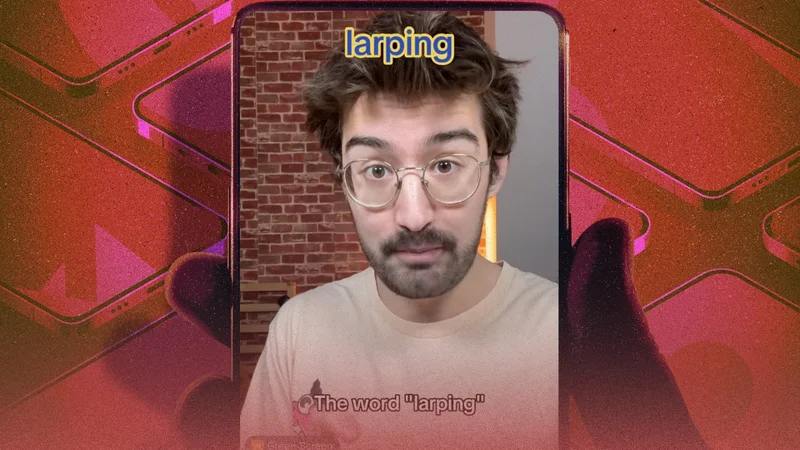
The word originally referred to people who participate in live-action role-playing (LARP), dressing up as fantasy characters and acting out fictional worlds. But online, "larper" has taken on an entirely different meaning. Today, it's one of the internet's quickest ways to accuse someone of performing an identity instead of living it — someone who watches a single anime and suddenly presents themselves as an expert, a self-proclaimed cinephile who only knows the films everyone else loves, or a creator who adopts an entirely new personality because it's trending online.
This Tweet is currently unavailable. It might be loading or has been removed.
This Tweet is currently unavailable. It might be loading or has been removed.
In other words, Gen Z and Gen Alpha didn't invent the idea of calling someone fake. They just gave it a new name.
We asked you to predict what Apple will do next. See the results and find out how to get a shot at winning an Apple Watch!
So what is a "larper"?
Originally, a LARPer was exactly what the acronym suggests: someone who participates in live-action role-playing, dressing up as fantasy characters and acting out fictional stories with other participants.
There's nothing inherently negative about the term. For thousands of people, LARP is simply a hobby. It's a chance to touch grass and step into another world for a weekend.
Online, though, the definition has evolved. Calling someone a "larper" rarely has anything to do with fantasy role-playing. Instead, it's become shorthand for someone who's seen as performing an identity rather than genuinely inhabiting it.
This Tweet is currently unavailable. It might be loading or has been removed.
This Tweet is currently unavailable. It might be loading or has been removed.
One of the top definitions on Urban Dictionary describes a "larper" as someone who "does something that is way out of their capability but genuinely thinks they can do it," adding, "Dude, stop Larping."
The specifics change, but the accusation stays the same: You're playing a role.
How "larper" escaped fantasy
Like so much internet slang, "larper" didn't suddenly appear out of nowhere. It slowly migrated from one corner of the internet to another.
The term circulated for years in gaming communities and online forums before gradually becoming part of internet slang. By the early 2020s, it was commonly being used to describe people perceived as performing expertise, status, or entire identities — whether in politics, tech, fitness, or fandom spaces.
Eventually, the internet realized the joke worked almost everywhere. Now, almost any identity can become the subject of a "larper" accusation. Spend enough time on X, Twitch, or Reddit, and you'll eventually find someone accusing another fan of larping as a weeb, a lifelong gamer, or a movie buff because they only recently discovered the hobby.
Why "larper" feels different from "poser"
In many ways, "larper" is simply the modern evolution of "poser."
But there's an important difference. Being called a poser usually meant you didn't belong in a particular scene. Maybe you wore the wrong band shirt. Maybe you couldn't name three songs from a band you just discovered. Maybe you bought the skateboard but never learned to ollie.
"Larper" goes a step further. It doesn't just question whether you belong in a community; it questions whether your entire identity is authentic. That's a particularly powerful accusation in an internet where identity itself has become content.
A particularly powerful accusation in an internet where identity itself has become content.
Platforms don't just encourage us to share what we do. They reward us for becoming instantly recognizable. You're encouraged to cultivate an aesthetic, develop a niche, build a personal brand, and make your personality legible in the span of a few seconds.
The result is feeds full of hyper-specific identities: The person who suddenly becomes a Formula 1 expert after one season of Drive to Survive; the coffee enthusiast who buys a $500 espresso machine and starts lecturing everyone about extraction; the self-described music snob who first heard of a band a month ago but now acts like they've been there since the beginning.
This Tweet is currently unavailable. It might be loading or has been removed.
Some of those identities are completely genuine. But the more polished they become, the more audiences begin looking for evidence that they're just performances. Of course, "larper" isn't always aimed at people who are obviously faking it. Across social media, that skepticism has turned into a kind of gatekeeping, where enthusiasm itself becomes suspect. New fans, beginners, and people discovering a hobby can all find themselves dismissed as "larpers" before they've had the chance to simply enjoy being new.
The internet has become obsessed with authenticity
The rise of "larper" says less about fantasy role-playing than it does about the internet itself.
After years of influencer culture, personal branding, carefully curated aesthetics, and now AI-generated content, people have become increasingly skeptical of what they see online. It's no longer enough to ask whether a photo is edited or whether a video is sponsored. The question now is whether the person behind the account is authentic in the first place.
Ironically, that expectation has created a new kind of performance. Creators are no longer rewarded just for looking polished; they're rewarded for looking real. Vulnerability, behind-the-scenes glimpses, and carefully curated "messy" moments have become just as valuable as glossy perfection.
That's what makes "larper" such a potent insult. It's accusing someone of performing authenticity itself. Calling someone a "larper" has become one of the internet's quickest ways of saying, I don't believe the person you're pretending to be.
But aren't we all performing a little?
The problem, of course, is that the internet asks all of us to curate our identities.
Whether you're posting your latest read on Goodreads, documenting marathon training on Strava, sharing concert photos on Instagram, or building a career on LinkedIn, you're making decisions about what to share and what to leave out. Every profile is, to some degree, a performance.
So where does self-presentation end and "larping" begin?
One person's authentic passion is another person's carefully constructed persona.
There's no obvious answer. The line between genuine enthusiasm and performative identity is deeply subjective, shaped as much by who's watching as by what you're posting. One person's authentic passion is another person's carefully constructed persona.
Maybe that's why the word has exploded now. Growing up, being called a poser made me wonder whether I belonged. Being called a "larper" asks a different question altogether: not whether you belong, but whether the version of yourself you've chosen to share was ever real in the first place.
From YouTubers and TikTok stars to streamers and podcasters
, Mashable talks to creators about
how they built their platforms, the
gear they swear by, and the
trends they see coming next. Read more of our
creator coverage, sign up for our
Trending Nowand
Top Stories newslettersor
get Mashable push alertsto discover the internet's most exciting voices.
Crystal Bell is the Digital Culture Editor at Mashable, where she leads coverage of the creator economy, internet culture, and digital life. Her work focuses on the people, platforms, and communities shaping modern entertainment, from YouTube creators and livestreamers to fandoms, social media trends, and the evolving relationship between technology and culture. She also oversees the Mashable 101, the publication's annual list recognizing the internet's most influential creators.
Previously, she was the entertainment director at MTV News, where she helped expand the brand's coverage of fan culture, K-pop, and the internet's most passionate communities. Her work has appeared in Teen Vogue, Rolling Stone, PAPER, NYLON, ELLE, Glamour, NME, W, The FADER, and elsewhere on the internet.
She's exceptionally fluent in fandom and will gladly make you a K-pop playlist and/or provide anime recommendations upon request. Crystal lives in New York City with her two black cats, Howl and Sophie.