Africa · Southern
Key Facts
—The Meeting. Tony Blair met President Daniel Chapo in Maputo on 20 July 2026 to discuss investment and governance reforms.
—The Endorsement. Blair stated Mozambique has “a solid foundation” for growth based on energy, mining, agriculture and tourism.
—The Institute. Blair’s TBI is training officials on the Mphanda Nkuwa hydropower project, backed by £400,000 in UK government funding.
—The Resource Base. Mozambique could become the world’s fourth-largest gas exporter and holds vast hydropower and renewable potential.
—The Outlook. The World Bank projects GDP growth recovering to 2.5% by 2028, driven by agriculture, services and resumed LNG construction.
Mozambique growth prospects received a high-profile endorsement on 20 July 2026 when former British Prime Minister Tony Blair met President Daniel Chapo in Maputo and declared the country a strategically important territory with enormous economic potential, provided it pursues governance reforms and leverages its natural resources effectively.
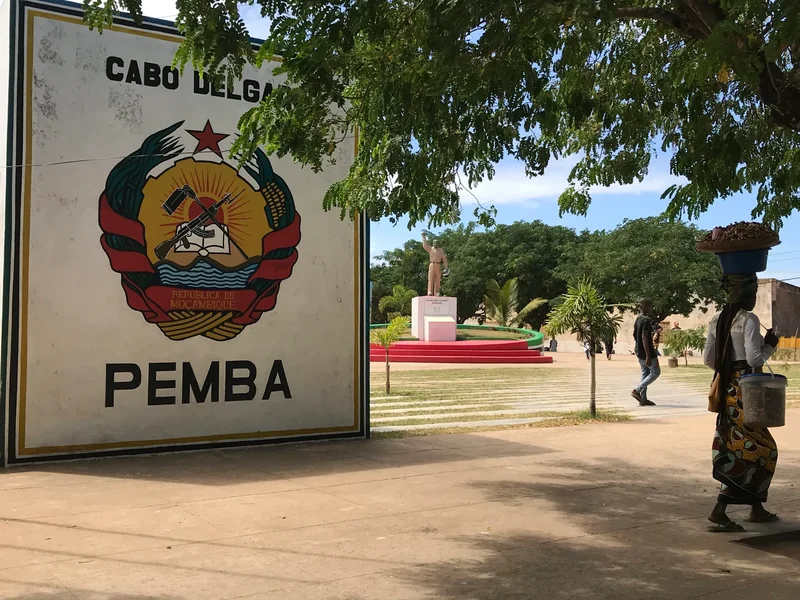
Mozambique's Growth Prospects Endorsed by Tony Blair (Photo internet reproduction)
One-stop reference
Company Intelligence
Every listed company in Latin America — financials, ownership and structure for 1,450+ companies across 26 exchanges, in one place.
RTAsk Rio TimesMarkets, currencies and the economy›
RT
Ask Rio Times
Latin American markets, currencies and companies.
×
Markets todayThe currencyRates \& inflationEconomy outlook
The Maputo Meeting: What Blair Told President Chapo
Tony Blair, in his capacity as Executive Chair of the Tony Blair Institute for Global Change, praised Mozambique’s “Inclusive National Dialogue” as a mechanism for building the stable governance environment that investors demand. He identified energy, mining and minerals, agriculture and tourism as the four pillars of Mozambique’s economic future, arguing that the country possesses “enormous resources” capable of supporting a “better and brighter future” if developed correctly.
The Mozambican Presidency framed the encounter as part of a broader push to consolidate international partnerships aimed at structural reforms, public administration modernisation and investment promotion. Blair’s language was carefully calibrated: he spoke of Mozambique’s “growing strategic importance” internationally, not only in energy but across multiple sectors, describing it as “a strategically important territory” at a moment when global powers are competing intensely for access to critical minerals and energy supply chains.
The Tony Blair Institute’s Deepening Footprint in Mozambique
Behind the diplomatic choreography lies a concrete technical assistance operation that is reshaping how Mozambique structures its energy sector. TBI is currently training officials from the Mphanda Nkuwa Hydroelectric Project Implementation Office in the economics of the electricity sector, aiming to strengthen the project’s viability and appeal to international financiers.
The Institute is also supporting Mozambique’s first competitive auction programme for 120 megawatts of solar and wind capacity, working alongside the public utility EDM to finalise technical and regulatory specifications. In December 2025, UK trade envoy Calvin Bailey MP visited Mozambique to formalise a deal involving £400,000 in British government funding for TBI, earmarked specifically for advancing the Mphanda Nkuwa hydropower initiative downstream from the Cahora Bassa dam.
The Resource Arithmetic: Gas, Hydropower and Critical Minerals
Mozambique’s resource endowment is not speculative. Official UK government documents note that the country could become the world’s fourth-largest gas exporter if planned LNG projects fully materialise, while the Zambezi River offers hydropower with the highest economic potential for national and regional development.
The Mphanda Nkuwa dam is framed as one of Africa’s most ambitious clean energy projects, and Mozambique’s Energy Transition Strategy targets universal access, green industrialisation and clean transport adoption. For Latin American readers accustomed to debates over pre-salt oil and lithium triangles, the parallel is clear: Mozambique sits at the centre of a new resource frontier where Africa: The New Scramble for energy and minerals is drawing in state-backed capital from Britain, China, the Gulf states and beyond.
Blair’s Africa Legacy and the Money-Power Loop
Blair’s current role in Mozambique cannot be separated from his record as prime minister from 1997 to 2007, when Africa became a major symbolic policy area for the UK. His government tripled aid to the continent, made Africa the priority of its G8 and EU presidencies in 2005, and pushed through 100% debt cancellation for eligible poor countries—with Mozambique among the main beneficiaries, its net aid roughly tripling between 2000 and 2011.
Critical scholarship, however, stresses that this aid surge was compatible with significant British arms exports to African states and coincided with London’s deepening role as a centre of money laundering and capital flight. Today’s arrangement—UK government funds flowing to TBI, which then shapes Mozambique’s energy investment frameworks—reproduces a familiar pattern in which technical assistance and governance reforms keep procurement and major project contracts aligned with Western financial and strategic interests.
The Geopolitical Stakes: Gas, the Green Transition and Great-Power Competition
Blair and TBI articulate a view that African gas cannot simply be ignored in the energy transition, insisting that development and decarbonisation must not be set in opposition. This stance legitimises continued LNG buildout in Mozambique even as climate-policy communities warn that time is running out to expand gas infrastructure while remaining within global carbon budgets.
The UK–Mozambique Development Partnership Summary of July 2023 explicitly frames the bilateral relationship as a vehicle for “mutually beneficial long-term prosperity,” capturing the dual logic of development assistance and commercial interest. For BRICS-watchers, Mozambique’s positioning is significant: a Southern African state with vast gas and hydropower resources is being courted by Western technical assistance providers even as Chinese and Gulf capital circles its infrastructure and extractive sectors.
What to Watch: Governance, LNG Timelines and Regional Power Plays
The World Bank projects Mozambique’s GDP growth will recover gradually, reaching 0.9% in 2026 and 2.5% by 2028, driven by agriculture, services and the resumption of LNG construction. Inflation is expected to rise to 7.5% in 2026 due to flood-related food disruptions and higher fuel costs linked to Middle East tensions.
Longer-term scenarios are more bullish: the Institute for Security Studies suggests average annual growth of 6% between 2023 and 2043 could triple GDP to around $48.2 billion with gas revenue, while Mozambique’s own National Development Strategy envisages 9.2% annual growth. The key variable is whether the Inclusive National Dialogue that Blair praised can consolidate sufficient stability to unlock final investment decisions on LNG trains and the Mphanda Nkuwa dam, or whether insurgency in the gas-rich north and governance challenges will continue to delay the resource dividend.
Frequently Asked Questions
What did Tony Blair say about Mozambique’s economic potential?
Blair stated that Mozambique has “a solid foundation” for economic growth based on the diversity of its natural resources, identifying energy, mining, agriculture and tourism as the main pillars. He argued that people see Mozambique as a country with enormous potential and a great future ahead if that potential is developed in the right way, and described it as a strategically important territory with growing international significance.
What is the Tony Blair Institute doing in Mozambique?
TBI is providing technical assistance on energy sector governance, including training officials from the Mphanda Nkuwa Hydroelectric Project Implementation Office in electricity-sector economics. It is also supporting Mozambique’s first competitive renewable energy auction programme for 120 MW of solar and wind, with funding from the UK government—£400,000 was formalised in December 2025 specifically for advancing the Mphanda Nkuwa hydropower initiative.
How fast is Mozambique’s economy expected to grow?
The World Bank projects GDP growth of 0.9% in 2026, rising to 2.5% by 2028, driven by recovery in agriculture and services and the resumption of LNG construction. Longer-term scenarios are more optimistic: the Institute for Security Studies suggests average annual growth of 6% between 2023 and 2043 could triple GDP to around $48.2 billion, while Mozambique’s own National Development Strategy targets 9.2% annual growth and a transition to middle-income status.