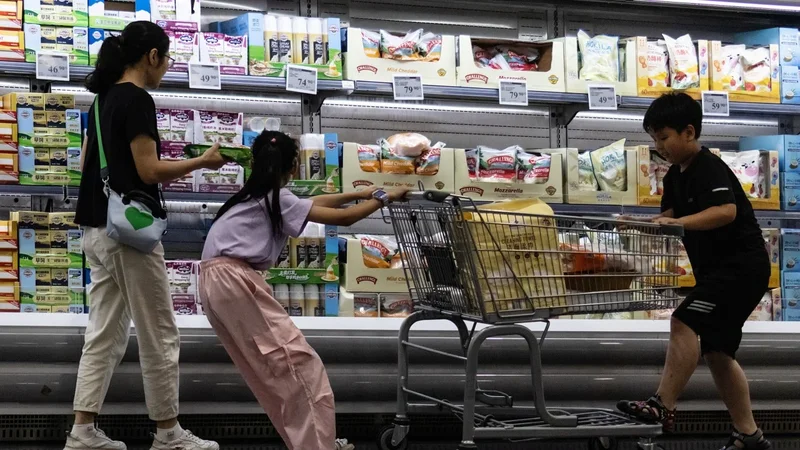
This year, the central government allocated 99.9 billion yuan (US$14.8 billion) to the programme, which provides families with 3,600 yuan annually for each child under three. According to state media, the families of more than 25 million babies have received the subsidy as of last month.
For families struggling with the cost of nappies, milk, clothes and healthcare, any assistance is welcome. The programme is also significant because it establishes
a nationwide system rather than leaving support to a patchwork of local initiatives.
However, if China hopes the subsidy will persuade more couples
to have children, 300 yuan a month will not be enough. The true cost of motherhood is measured not only in money, but also in time, lost opportunities and damage to a woman’s career.
China’s birth rate has continued to fall despite the replacement of the one-child policy with
a two-child policy in 2016 and
a three-child policy in 2021. This should have taught policymakers an important lesson: permission to have children is not the same as the ability or desire to have them.
Many women are not rejecting motherhood itself. They are rejecting
the unequal terms on which motherhood is too often offered.