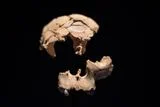
The Gran Dolina cave is home to some of the earliest fragments of human civilization in Western Europe. Chunks of bone dug out of the cave in the Burgos region of northern Spain date back roughly 850,000 years.
Paleontologists have been digging in the area for over 50 years, but the cave is still giving up its secrets. Researchers recently announced the discovery of 24 new human fossils from Gran Dolina. All the fossils are from Homo antecessor, an ancient human species first identified at Gran Dolina.
Researchers say they are especially excited by the discovery of adult fossils, which add a new perspective on the humans that called Gran Dolina home. The new findings improve researchers’ understanding of the biology and sociology of H. antecessor, especially as some of the fossils show signs of cannibalism.
“Each excavation season helps us complete a puzzle that still has many missing pieces. The increase in the number of individuals, and especially the addition of more adults, allows us to begin understanding this population from a much more complete perspective than ever before,” said Andreu Ollé, a researcher at the Catalan Institute for Human Palaeoecology and Social Evolution (IPHES-CERCA) and co-leader of the project, in a statement.
Read More: Ancient Humans May Have Turned to Cannibalism For A Deeper Meaning
Bones With Signs of Cannibalism
Researchers first identified H. antecessor in Gran Dolina in 1994. The cave is filled with ancient sediment to a depth of around 82 feet (25 meters). The earliest excavations in Gran Dolina, which found the first H. antecessor fossils, examined the Aurora Layer. This year, scientists returned to this layer. Even though only a small section of the upper part of the layer was worked through this year, the effort still produced four fossils in quick succession.
Overall, the dig revealed ancient bones from the skull, spine, limbs, and teeth.
Previously, most of the bones identified had been from infants or children. The latest dig identified at least six additional adult fossils. In total, Gran Dolina has now revealed fossils from between 13 and 15 individuals. Many of these fossils were marked with signs of cannibalism, and the new findings suggest that both adults and children were eaten after death.
What Else Was in the Cave?
Human remains weren’t the only thing unearthed during the dig. Scientists unveiled stone tools made of quartz, sandstone, and flint. The dig also revealed remains of animals that were hunted by or lived alongside H. antecessor, including species still common in modern-day Spain, like deer and horses, and more exotic ones, like hyenas, beavers, and even rhinos.
This combination of ancient finds is key to the discovery's strength, said Ollé.
“The relationship between the stone tools, faunal remains and the bones of Homo antecessor allows us to reconstruct a human occupation site from 850,000 years ago with extraordinary detail,” he said.
Excavation work at the site is planned to continue for many more seasons, which researchers hope will continue to cement the cave’s status as a leading site for archaeological discovery.
“We have only just begun excavating this new area, and the first results already demonstrate its enormous scientific potential,” said Marina Mosquera, director at IPHES-CERCA and co-director of the project, in a press statement.
Read More: Ice Age Europeans Ate Their Enemies Around 18,000 Years Ago
Article Sources
Our writers at Discovermagazine.com use peer-reviewed studies and high-quality sources for our articles, and our editors review for scientific accuracy and editorial standards. Review the sources used below for this article:
- This article references information from IPHES-CERCA:Atapuerca reveals a much more complete Homo antecessor population and confirms that cannibalism also affected adults