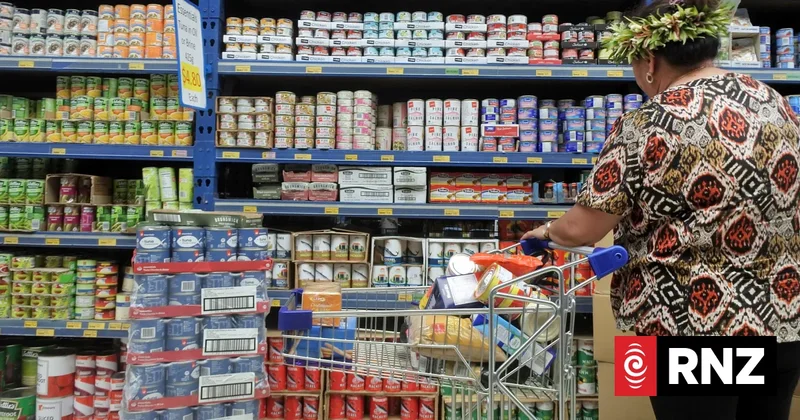
With less than a week to go before around 9000 Cook Islanders head to the polls, the cost of living remains the dominant issue for voters.
The Cook Islands will hold its 2026 general election on Wednesday, 12 August (Thursday NZ time).
Cost of living dominiant issue for Cook Islanders in election
More than 60 candidates from over two dozen constituencies are vying for a seat in the Cook Islands 24-member parliament.
Rashneel Kumar, the editor of the islands' only daily newspaper, the Cook Islands News, told Pacific Waves, the election campaign period for the country's four-yearly election is well underway, with campaign rallies held across Rarotonga and the Pa Enua (outer islands).
Kumar said global conflicts, contributing to resource restraints and costs, have a flow-on effect on local customers.
"With the Middle East conflict, obviously, we have seen a impact on small island nations, and Cook Islands is not spared as well," he said.
"We end up the supply chain, so we do absorb a lot of additional cost - and by the time the goods land here, the prices does have an impact as well as price of energy through the increase of petrol has affected the people.
"So cost of living obviously is number one issue."
He said public infrastructure, including roads and outer islands development, has also been a prominent feature of many campaigns.
The issue of water tariffs has also emerged as a contentious election topic, after the introduction of user levies following upgrades to Rarotonga's water network.
According to Cook Islands News, the Brown government's newly-introduced "user-pay" water tariff system provides households with 38,000 litres of water each month free of charge, with fees applying to additional usage.
Kumar said the change is receiving criticism from some residents and has become a campaign topic for opposition parties.
"Since there has been an upgrade in the in the water system and a setup of a Rarotonga water authority, To Tatou Vai, this fee has come in, so there has been a bit of pushback from some people, and I think that is [becoming] a campaign issue for opposition parties."
Social media
Kumar added social media has become an increasingly influential source of information during election campaigns, but it has also made it harder for voters to distinguish fact from fiction.
Misinformation surrounding local water charges had complicated public understanding, after social media posts had been claiming prices were soon to increase. The local water authority said was inaccurate, and related to outdated documents.
Kumar encouraged Cook Islands voters to rely on local media producing balanced stories, over individual opinions posted on social media.
"It's a bit different when it comes to newspapers like ours. We obviously look into claims made by the candidates as well as parties and we verify it, or we try and balance it to ensure that readers get the accurate information," he said.
"We (Cook Islands News) do have the luxury for that, but I guess in other mediums like radio, [we] do not. But [with] social media misinformation is quite an issue."
Prime Minister Mark Brown is seeking a re-election and Cook Islands Party has fielded the highest number of candidates at 20.
Advance and postal voting is already underway, having commenced on 17 July and closing on 11 August at 1pm, local time.