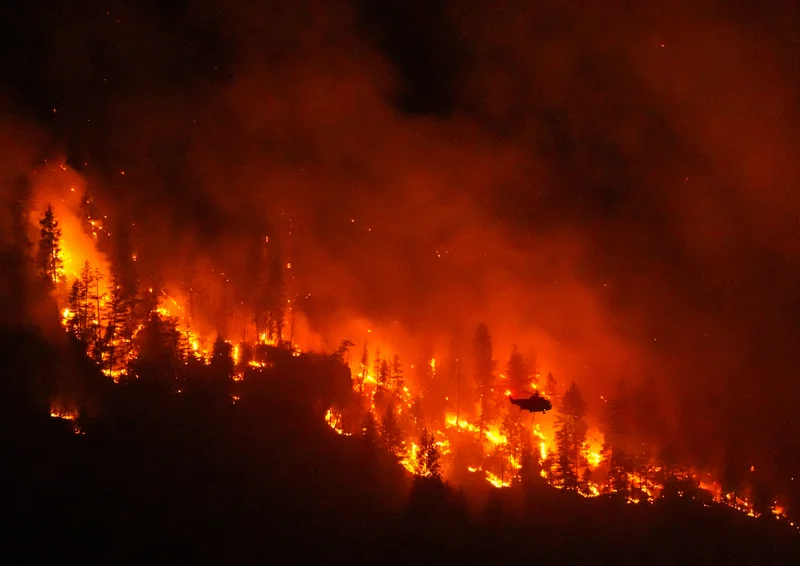
With wildfires at the doorsteps of several B.C. communities, hundreds of additional firefighters from Mexico, New Zealand and Australia are joining local teams to battle the blazes.
But some Canadian firefighters are asking why the province keeps bringing in foreign help.
There are currently around 200 Mexican firefighters assisting local wildland firefighters in B.C. and Ontario battling blazes, said Awa Cissé, a spokesperson for the Canadian Interagency Forest Fire Centre.
Around 200 more firefighters from Mexico and about 40 from New Zealand and Australia are on their way to help in B.C.
“We do need international help,” Ms. Cissé said. “We have 10 provinces, three territories, and all of the resources that can be used are currently being used across the country.”
The wildfire season in B.C. has already taken a toll on communities, with 120 properties lost in the South Cariboo, 230 homes destroyed in the North Okanagan and thousands of displaced evacuees.
Major fires continue to rage in the Fraser Canyon, Thompson-Nicola and East Kootenay regions near communities including Boston Bar, Clinton, Vernon and Kimberley.
B.C.’s Forests Minister Ravi Parmar said the international firefighters are helping during a challenging wildfire season.
“I’m proud of the wildland firefighters from Canada and Mexico who are not thinking about borders but are answering the call, as we do when our neighbours need us.”
International help arrives after provinces or territories request additional resources, including personnel, aircraft and equipment from the CIFFC. It is a non-profit owned and run by the federal, provincial and territorial agencies responsible for managing wildland fires.
The CIFFC communicates with provinces and territories to see if any resources can be redistributed, if none are available, the agency requests aid from international partners.
Last year, 1,600 international firefighters helped Canada, Ms. Cissé said. That compares with around 600 in 2024 and 5,500 in the record-breaking 2023 wildfire season, according to CIFFC reports.
But bringing in international help isn’t the quickest way to increase capacity, said Sebastian Kallos, a wildland firefighter with 15 years of experience and a representative at the BC General Employees Union, which represents firefighters.
“By the time they arrive, the firestorm is done. We’ve received rain, or there’s been a downturn, or it’s cooler conditions, and so you really need to have the local resources to ultimately be successful,” Mr. Kallos said.
He said bringing in firefighters from other countries takes time. The crews need to undergo a series of briefings, off-site and on-site, which can slow down their response to an active fire.
The assistance isn’t only reactionary, Rachel Woodhurst, spokesperson for the BC Wildfire Service, said in an e-mailed statement.
“Out-of-province assistance further allows all personnel working within the province to take their mandatory days off so they can begin another cycle of fire response operation,” the statement said.
About 111 firefighters from Alberta, 62 from Quebec, and 28 from the Yukon will also help B.C., the statement said.
The Australian and New Zealanders will form two incident management teams.
The resources don’t “decrease opportunities available to contractors or partners in the province, as they are brought in for a unique function or need,” the statement said.
Chad Thomas is a veteran wildland firefighter and the founder of Yukon First Nations Wildfire, a company that helps train and equip Indigenous wildfire crews from across the territory.
He said thousands of Indigenous firefighters from private contractors like the YFNW can’t help because of restrictive contracts that prevent them from leaving their own traditional territory, even when the fire hazard in their home communities is low.
He said it’s frustrating to see foreign firefighters being flown in from as far away as Mexico while his own crews are denied the chance to help, and to earn valuable frontline experience while doing it.
“The hardest pill to swallow is when you’re in a low-risk environment and you’re sitting back and you look at all these firefighters coming from all over the world, and you can’t go and help out when you’re a day and a half drive away,” Mr. Thomas said. “That makes no sense.”* *
With reports from The Canadian Press