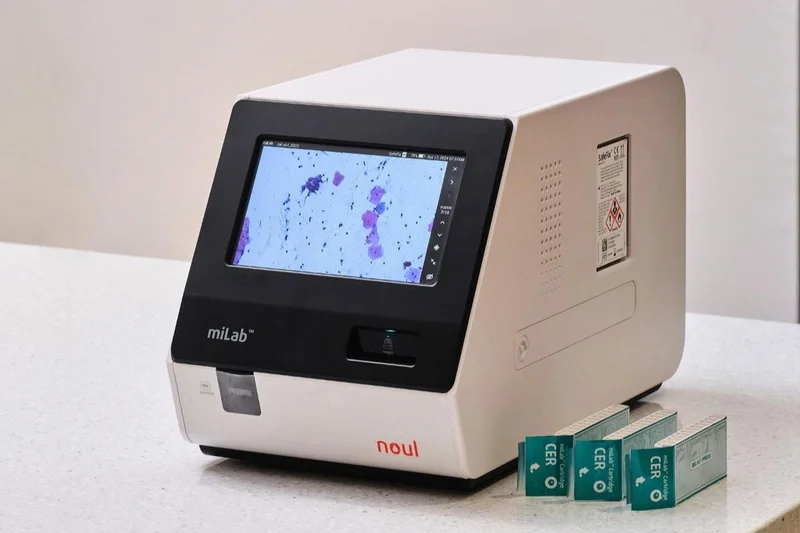
Noul, a Seoul-based developer of artificial intelligence (AI)-powered blood and cancer diagnostic devices, has signed a supply agreement with a medical device distributor in East Africa to provide its cervical cancer screening and blood analysis solutions to four Indian Ocean island nations: Mauritius, Madagascar, Seychelles and Comoros, the company said Thursday.
The deal marks the company's first sale of a cervical cancer diagnostic product in Africa, where its business had previously centered on malaria testing.
Noul said the agreement signals an expansion into higher-value cancer diagnostics on the continent.
The company will supply its miLab CER cervical cancer screening device and miLab BCM blood analysis device under the deal.
Both are built on Noul's miLab platform, an all-in-one, point-of-care testing device that automates the full process of a microscope-based diagnosis — from preparing and staining a sample to digital imaging and AI-based analysis — and delivers lab-grade results in under 15 minutes, according to the company.
Noul said the island nations targeted in the deal are popular destinations for European tourists and have relatively high incomes and growing investment in premium medical infrastructure by regional standards, but face persistent shortages of trained medical staff due to their geography — driving demand for automated diagnostic equipment.
"Starting to supply cervical cancer diagnostic solutions in Africa marks an important turning point in our push to move beyond our malaria-centered business and into higher-value fields like cancer diagnostics," the company said.
It added that following growing sales of the company's cervical cancer solution in Latin America, Noul plans to target other emerging markets with strong demand and growth potential, including African countries and, eventually, Indonesia, to build a business mix weighted toward higher-margin products.
Noul's miLab CER was one of the products recommended for use in a 2024 report by the World Health Organization and Unitaid, a global health initiative that finances access to diagnostics and treatment in developing countries, alongside cervical cancer screening products from Roche and Hologic.
Founded in 2015, Noul says its miLab platform is used in more than 30 countries by pharmaceutical companies, hospitals, diagnostic labs and government agencies.
This article was published with the assistance of generative AI and edited by The Korea Times.