Councillors reject 'double-dipping' claims to approve $1.3m for local govt reform proposal
New Plymouth councillors have brushed off accusations of "double-dipping" and "conflicts of interest" to vote narrowly in favour of spending $1.3 million on an alternative 'Pathfinder' proposal on local government reform.
Territorial authorities have until Sunday to submit proposals for the government's 'Head Start' pathway and retain some control over their own destiny.
To meet Head Start criteria, proposals must be submitted by two or more territorial authorities, with regional councils - which are being disestablished - unable to make submissions.
New Plymouth District Council and the Taranaki Regional Council have worked together on the Pathfinder proposal, which stipulates no preference for a future structure, instead putting off a more detailed plan aligned with the government's Head Start timeline or Back Stop pathway until March 2027.
The TRC would share the cost of the Pathfinder proposal, more than half of which was headed into the pockets of outside consultants. That didn't sit well with councillor Dinnie Moeahu, who voted against the funding.
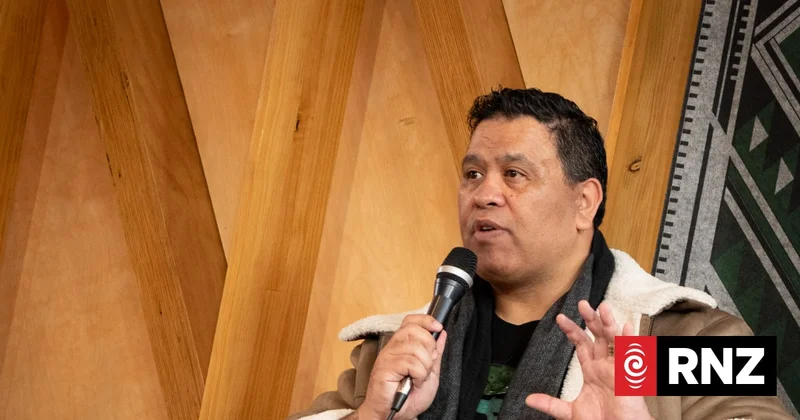
He told councillors it appeared to be a case of "double-dipping".
"So $1.3 million - not just from the New Plymouth district ratepayers, but every ratepayer across Taranaki - to just do our one [proposal]... I don't think that's fair and it definitely didn't go out to the community."
Moeahu also questioned whether NPDC chief executive Steve Ruru, who - in a New Zealand first - was also the boss of the regional council, had a conflict of interest.
"Territorial authorities are supposed to lead this, not any regional council, and this is being lead by the Taranaki Regional Council. It's been signed off by the chief executive of the Taranaki Regional Council.
"It's not eligible, doesn't meet the criteria - I think that's a real big issue. We've just approved, signed off $1.3 million on a proposal that doesn't meet the criteria."
Ruru denied he had a conflict of interest.
"No, I don't. I'm providing advice to both councils on the various issues and I'm very conscious of that, and the conflicts again are not necessarily that great.
"What I'm doing is providing advice on reform and encouraging that the functions of both councils be looked at, and in a very considered and structured way."
Stratford District Council and South Taranaki District Council have teamed up to make a Head Start proposal for a two unitary council model for Taranaki.
They want one rural unitary council based on their footprint in central and south Taranaki, and one urban unitary council for New Plymouth.
Ruru said he had no preference.
"This is a solution for the next 30 years, and I think it is really important that good analysis is done to work through the pros and cons of different options."
The Pathfinder proposal included three options - two involving two unitary councils and one for a single council.
Mayor Max Brough voted in favour of spending the money, but reluctantly.
"I don't feel good about it, but it's in the existing work budgets," he said. "We're just stopping doing some other work on other things internally and the external costs, I'll be working hard to make sure it doesn't hit that number.
"I don't agree with it, but we're just acknowledging that this is a cost the government is imposing on us and being transparent about it."
During the meeting, Brough strongly favoured a single unitary council for Taranaki, but his stance softened after the funding decision.
"I guess I did, but actually I think we should make a decision on all the information and we don't have it yet, we don't have robust information."
Pushed, he expanded.
"As a New Plymouth-centric, like, I represent New Plymouth. The best place for New Plymouth, based on what I know, is coming down the track in the cost structures is for two unitary councils.
"If I look at a Taranaki-based view for the long term of local government and the people who are going to live here for the next 30 years, it should be one Taranaki. It's that simple from a financial perspective."
Kerry Vosseler, who was voted onto council on a rates-caping and cost-cutting platform, voted for the funding, which it was acknowledged would have an impact on rates.
"I think it's coming down the line, regardless of what we decide as a local council. It's decided by central government and we have to make that investment to be on the front foot."
She admitted some people who voted for her wouldn't be happy.
"I don't think they'll like it, but I can't betray what my gut feeling is and, ultimately, I'm doing this for the betterment of the ratepayers. I'm certainly not someone who throws around money willy nilly."
The funding was passed nine votes to six.
The government would decide in September which proposals should move on to a detailed design phase, before final decisions were made in 2027.