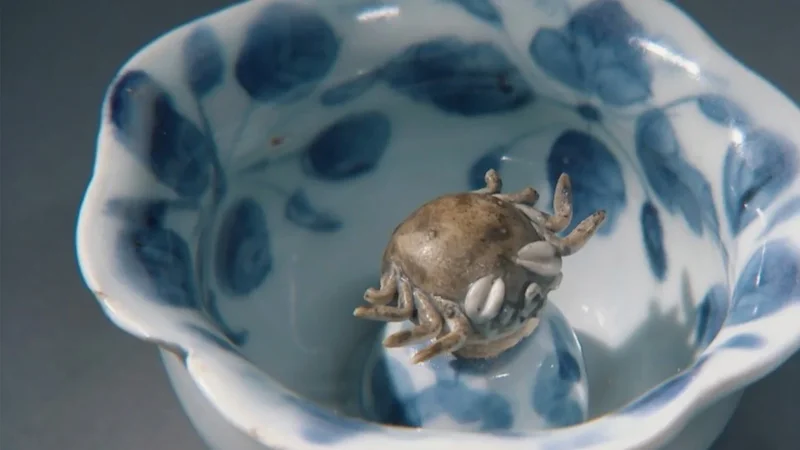
Escape artist: ancient Chinese cup features ‘swimming’ crab evolved from ‘dancing fairy cup’
Many view the ‘floating crab cup’ as a celebration of their ancestors’ ability to enjoy life’s pleasures
Four hundred years before modern interactive design became a trend, a remarkable ceramic crab was already captivating audiences in ancient China. Placed inside a porcelain cup, this ingenious creature would float and dance to life the moment wine was poured, transforming a simple drink into a mesmerising and joyful spectacle.
Between 2018 and 2022, archaeologists unearthed the cup in the ruins of Zhouqiao Bridge along the Bianhe River in Kaifeng city, located in today’s central Chinese Henan province.
Kaifeng was the capital of eight dynasties in Chinese history and served as a secondary capital during the early Ming dynasty (1368–1644).
The Zhouqiao Bridge, a famous landmark first constructed in the Tang dynasty (618–907), was destroyed and buried multiple times throughout history due to wars and Yellow River floods, most recently buried during the Ming dynasty before its recent discovery.
Thus, the site contained cultural artefacts from various periods.
The cup, known as the “floating crab cup,” was in remarkable condition upon its discovery.