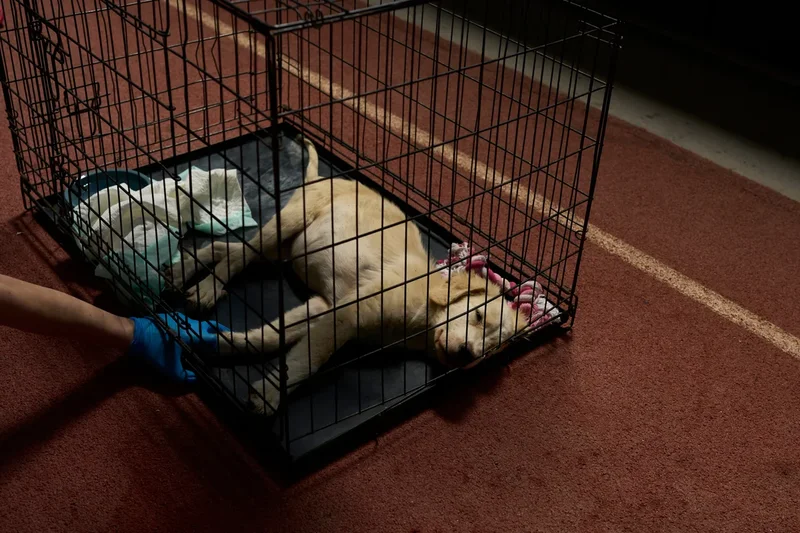
As final containment lines were stood down on Wednesday following a wildfire across mountainous and coastal areas near Athens, Sasa, an alert, floppy-eared mixed-breed puppy, had yet to return home.
The pup was among hundreds of domestic pets and wild animals rescued by volunteers during the emergency, which forced multiple evacuations.
At its peak, the blaze burnt across five fronts, destroying dozens of homes and over 100 square kilometres (39 square miles) of land. It marks the latest devastation in a severe summer for Europe, where widespread blazes—even in typically cooler nations—have alarmed animal welfare groups.
In Megara, 40 kilometres (25 miles) west of Athens, rescue organiser Elena Dede said local volunteers saved more than 280 animals, mostly dogs, during scorching heat and high winds.
Sasa and other rescues were housed on an indoor sports court inside collapsible wire cages, provided with metal water bowls and rubber play balls.
“There was so much heat and the fire was so aggressive. It was changing directions all the time,” Dede said.
Richard Parr, director of the U.K.-based Center for Wild Animal Welfare, described these animal rescue efforts by firefighters and local charities as “heroic” but argued that hotter summers are increasing the risk facing millions of animals.
“At the moment, all too often, it is ad hoc, and it falls on the shoulders of private individuals, small charities,” he said. “The scale of the challenges they’re facing in terms of the number of animals affected and the areas of fire is gigantic and completely out of step.”
The organization is campaigning for a dedicated European Union animal rescue service and funding to address the problem.
“There’s just a massive mismatch between the huge scale of this problem and the resources and the capacity that are available to respond to it,” Parr said.
He also urged governments to consider setting up “fire refuges” for animals, such as ponds and rock piles that could offer shelter.
In Greece, the blaze has left rescuers with a logistical headache: where to return displaced animals like Sasa. Dede said local authorities were helping match missing-animal notices with rescued animals and find temporary homes until the process was completed.
However, she said she was mindful that the dogs at the stadium were among the fortunate.
“It was really hard for every volunteer and every person involved to survive the smoke and the stress,” she said.
“I will never forget the animals that we knew were left behind. I’m just hoping they were saved and ran free."