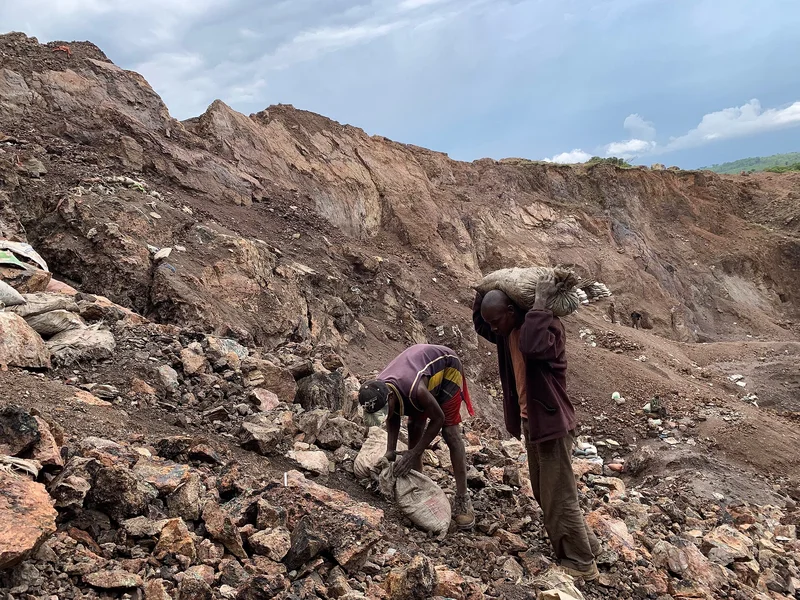
DR Congo Mine Deadline Passes With Worker Stakes Undelivered
DR Congo · Critical Minerals
Key Facts
- Deadline passed.Mining companies in the Democratic Republic of Congo had until 31 July 2026 to transfer 5% of their share capital to Congolese employees and file proof with the Ministry of Mines.
- Legal basis.The rule stems from Article 71 bis of the 2018 Mining Code and Article 144 bis of the Mining Regulations, which require 10% Congolese participation in mining capital.
- Eight years of inaction.No mining company has complied since the provision was introduced in 2018, according to the African Natural Resources Observatory.
- Telecoms next.President Félix Tshisekedi has directed regulators to negotiate the same 5% employee stake in telecommunications companies.
- High stakes.The DRC produces roughly 70% of the world’s cobalt and is a top copper supplier, making compliance a global supply-chain question.
The DRC mining worker equity deadline expired last Friday with no public evidence of mass compliance. Mining companies were ordered to hand 5% of their capital to Congolese employees by 31 July, a rule that has sat unenforced in the Mining Code since 2018.
The deadline was set in a 30 January letter from Mines Minister Louis Watum Kabamba to operating companies. It gave them six months to complete the transfers and to submit updated statutes, shareholder agreements and registers valid under Congolese law and the OHADA Uniform Acts.
As of this week, neither the ministry nor any major producer has announced completed transfers. The silence turns a legal deadline into a test of whether Kinshasa is prepared to enforce its own code.
What the law actually demands
The requirement is older than the current government. The March 2018 revision of the Mining Code introduced mandatory Congolese participation of 10% in mining company capital, split into two halves.
That revision was itself fiercely contested, raising royalties and the state’s free-carried interest over industry objections. The worker-ownership clause was its social counterpart, designed to give mine communities a direct stake beyond wages and taxes.
Five percent must go to individual Congolese shareholders in a position to acquire shares. The other 5% must go to the company’s own workforce, and compliance is formally a prerequisite for holding an operating permit.
The January letter did not create a new obligation. It activated one that companies have been able to ignore for eight years without losing their permits.
Why nothing has moved since 2018
The African Natural Resources Observatory, known as Afrewatch, documented the failure in a 2022 report. It found that no mining company had implemented the provision in the four years after adoption.
The barriers it identified are practical rather than legal. Employees are often unaware of their rights, support policies are absent, financing and training are limited, information is scarce and incentives for Congolese investment in mining are weak.
That diagnosis matters now. Transferring shares on paper without financing structures or trustee arrangements would create nominal ownership that workers cannot use or sell.
Kinshasa widens the net
The government is not treating mining as a special case. At the same 30 January Council of Ministers meeting, President Tshisekedi ordered the Posts and Telecommunications minister and the regulator ARPTC to negotiate a 5% employee stake with telecom companies.
Tshisekedi framed the years of non-implementation as a “legal and social anomaly”. The presidency argues it denies workers a right guaranteed by law, entrenches governance imbalances and weakens social dialogue inside companies.
The political logic is clear ahead of a demanding electoral calendar. Worker ownership converts an abstract resource-nationalism debate into pay slips and dividend cheques.
Why the world is watching
The DRC is not a marginal producer. It supplies roughly 70% of the world’s cobalt and ranks among the largest copper exporters, so any change to ownership structures touches the battery and energy-transition supply chains.
Operators now face a genuine dilemma. Compliance dilutes existing shareholders and raises valuation questions for listed parents, while defiance risks permits at a moment when Kinshasa is renegotiating its entire minerals posture.
Buyers are paying attention too. Chinese firms dominate the processing of Congolese cobalt, and any change to ownership registers feeds directly into offtake negotiations and financing terms.
The regional context reinforces the trend. Zimbabwe has shown how resource policy can shift export earnings dramatically, as The Rio Times documented in its report on Zimbabwe’s lithium export earnings jumping to US$782 million, and tracking across Central Africa.
What to watch
First, the ministry’s next circular. If Watum Kabamba grants a grace period, the deadline was leverage; if he suspends permits, it was law.
Second, the telecoms track. A negotiated template there could become the model the mining sector is told to follow.
Third, whether any major cobalt or copper house breaks ranks and announces a completed transfer. The first mover will set the market’s pricing of compliance risk, a story that sits inside the wider New Scramble for Africa in 2026.
Frequently Asked Questions
What is the DRC mining worker equity rule?
The 2018 Mining Code requires 10% Congolese participation in mining company capital, split between 5% for individual Congolese shareholders and 5% for the company’s workforce. Compliance is a formal prerequisite for holding an operating permit.
What was the 31 July 2026 deadline?
Mines Minister Louis Watum Kabamba gave mining companies until 31 July 2026 to complete the 5% employee share transfer and file proof, including updated statutes, shareholder agreements and registers valid under Congolese law and OHADA rules.
Have any companies complied?
Not publicly. A 2022 report by the African Natural Resources Observatory found no company had implemented the rule since 2018, citing low employee awareness, missing support policies and weak financing and incentives.
Does the rule extend beyond mining?
Yes. President Félix Tshisekedi has directed telecommunications regulators to negotiate a similar 5% employee stake with telecom companies. He called years of non-implementation a legal and social anomaly.
This article was produced by The Rio Times’ automated newsroom system. How we use AI · Report an error
LatAm Markets: Live Signals → — real-time movers, turnover leaders and FX across Latin America.