Park, a 62-year-old nurse at a long-term care hospital in Seoul, is in no hurry to retire.
After raising her children, she returned to the workforce in her 50s, putting a nursing license she had obtained years earlier to use.
Nearly a decade later, she still has no plans to retire.
"I'll start receiving my pension in a few years, but it won't be enough to support the kind of retirement I'd like, so I'd rather keep working," she said. "Besides, work keeps me active. Staying at home all day isn't for me, and I enjoy meeting people. I'd like to keep working for as long as I'm physically able."
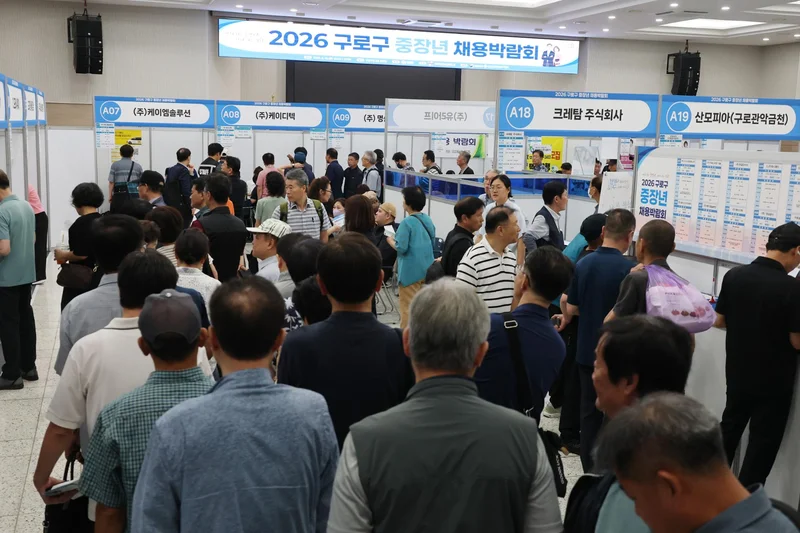
Park is one of a growing number of older Koreans who want to remain in the workforce beyond what was once considered a retirement age.
According to the Ministry of Data and Statistics, Thursday, the number of employed people aged 55 to 79 reached 10.13 million in May, surpassing 10 million for the first time since the annual survey began in 2005.
The figure rose by 345,000 from a year earlier and has increased by about 50 percent over the past decade, from 6.72 million in 2016.
The employment rate for the age group stood at 59.5 percent, matching last year's record high, as the population of older adults continued to grow. The number of Koreans aged 55 to 79 reached 17.02 million, up 570,000 from a year earlier.
The survey also found that nearly seven in 10 older Koreans hope to continue working, with their desired retirement age rising to 73.6.
This marked the highest figure since the question was first included in the survey in 2011.
Money was the main motivation. More than half of respondents, or 53.4 percent, said they wanted to continue working to supplement their living expenses, while 36.7 percent said they enjoyed working. Smaller shares cited staying active (4.3 percent) or contributing to society (3.2 percent).
The findings reflect not only changing attitudes toward work in later life, but also the financial realities facing many older Koreans, experts said.
"People are living longer and staying healthier, making it possible to work later in life. But the bigger reality is that many older Koreans are not working because they want to, but more because they have to," Hur Jun-soo, a professor of social welfare at Soongsil University, said, pointing at a widening gap between retirement age and pension eligibility.
According to the National Pension Research Institute, Koreans retired from their primary career at an average age of 52.9 in 2025, while the pension benefits begin between 61 and 65, depending on a person's year of birth.
That leaves many retirees facing a decade or more without stable income.
Even after pension payments begin, the average monthly benefit was 880,000 won ($620), well below the estimated minimum monthly living cost of 1.54 million won for a single-person household.
"The sad reality is that many older Koreans have little choice but to stay in the workforce well into their 70s," Hur said.
To address the issue, the professor said raising the mandatory retirement age to 65 from the current 60 would be a step in the right direction, but stressed that it should be accompanied by broader pension reform.
"In the long run, Korea needs to move toward a 'pay more, receive more' pension system," he said.
The Ministry of Employment and Labor plans to submit legislation later this year to gradually raise the statutory retirement age to 65.
The proposal, however, remains contentious. Labor unions argue that extending working lives is essential in a rapidly-aging society, while businesses warn that raising the retirement age could increase labor costs and reduce opportunities for younger workers.
"We will continue discussions with the goal of submitting the bill in the second half of the year. We will pursue a retirement-age extension that benefits both older and younger workers," Labor Minister Kim Young-hoon said during a policy briefing Tuesday.