While Elon Musk has consistently painted a utopian picture of AI’s future, many other tech leaders and governments have been sounding the alarm about the technology’s dangers.
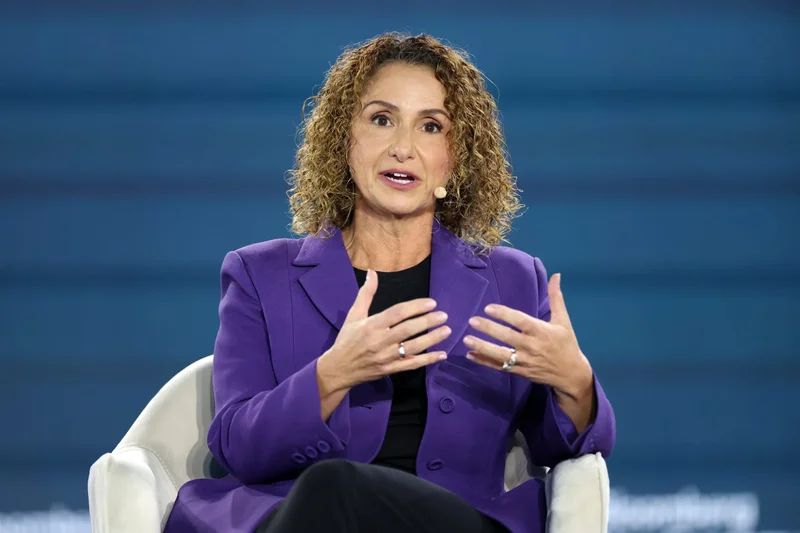
Google DeepMind’s chief AI readiness officer, Lila Ibrahim, even signed a 2023 statement declaring that mitigating the risk of human extinction from AI should be treated as seriously as nuclear war—and now she’s revealing just how likely she thinks that doomsday scenario actually is.
“It’s not zero,” Ibrahim told Fortune. “Anything beyond that is just me guessing… that’s the engineer in me.”
Although three years have passed since Ibrahim signed the Center for AI Safety’s statement, alongside OpenAI’s Sam Altman and Anthropic’s Dario Amodei, she said it would still “be irresponsible of us not to talk about existential risk.”
Geoffrey Hinton, the so-called “godfather of AI,” has put the odds of human extinction at 10% to 20% within just three decades. Amodei said there’s a 25% chance the future (i.e. our existence) will go “really, really badly.” Even the late physicist Stephen Hawking—who relied on AI to share his respected views with the world—warned it could end mankind, nearly a decade before ChatGPT came on the scene.
“The two things that keep me up at night are: Are we doing everything we can to mitigate the risks? And are we doing everything we can to maximize the opportunity? Those two, in my mind, go hand in hand,” Ibrahim said.
The company’s first COO said the pandemic was a reminder catastrophic risks aren’t always the ones you see coming—and that businesses have a history of not talking enough about what could go wrong during previous waves of technology, like the rise of the internet and then social media.
“We didn’t sit around the table when we were making investment decisions and talk about the risks in the way that we should have. Sometimes we can be so much in the here and now,” Ibrahim said, adding we should instead be looking at apocalyptic science fiction Hollywood movies as cautionary tales.
“If we don’t do anything to mitigate that or to invest in the good things along the way, then we’re ending up exactly where we don’t want to go,” she added. “There’s a lot of things that could go wrong.”
Elon Musk says money won’t matter by 2036. Ibrahim says nobody actually knows that either
If Ibrahim is cautious about putting an exact percentage prediction to how likely it is AI will result in humanity’s downfall, she’s equally skeptical of the other extreme: a post-scarcity paradise.
Musk has repeatedly floated a future in which AI and robots produce so much abundance that work becomes optional, and wages become irrelevant. And he even recently put a 10-year deadline on robots taking over the workplace and making salaries obsolete.
“Money won’t matter in 2036,” Musk just told The Economist, adding goods will be so cheap we will enter an era of deflation and governments will dish out a universal high income to its citizens who have been freed from the daily grind of working.
Likewise, Amazon founder Jeff Bezos has predicted that by 2045, “millions of people” will be living in space, with robots handling the daily commute—since, in his vision, we’ll be commuting to other planets rather than the office. And in less than 10 years’ time, OpenAI’s Altman says college graduates will be working “some completely new, exciting, super well-paid” job in space.
But Ibrahim isn’t buying it. Despite having a front-row seat to AI’s biggest breakthroughs at Google DeepMind—an advanced AI lab dedicated to solving major scientific problems—Ibrahim says the technology is moving too fast for anyone to know what comes next with any real accuracy.
“I don’t think we can really predict what a future state looks like,” she told Fortune.
Her focus, she said, is less about which planet we might be living on in two decades, and more about how these new technologies can practically be used to make the world we are currently living in a better place: solving concrete problems like extreme weather conditions and industrial waste, while making sure the benefits don’t just flow to the handful of people running these powerful AI companies.
“I would rather we put our attention towards how we use technology as a tool to maximize human potential,” Ibrahim said. “That’s going to be where we need to be investing and spending our time—having the debates around what are the diseases that we can solve by having this new tool that can find patterns that we as humans haven’t.”
“I think a lot about how we get to a future versus what the future is,” she added.
breaks the traditional barrier between audience and newsroom. The show transforms
Fortune DailyFortune’s trusted reporting into actionable, conversational, and entertaining insights for an emerging class of business leaders.
Watch here.