- See more This is Money on Google - save us as a Preferred Source
Sales of new-build homes in London are dropping sharply, according to the latest figures from property consultancy Molior.
A total of 5,606 new homes have been sold in the first six months of this year compared to 8,840 in the same period last year, a drop of nearly 37 per cent. In 2022, some 20,380 were sold.
A record 4,629 newly completed homes remained unsold across the capital in the three months to June representing an estimated £3.5billion of housing stock, Molior calculated. It said this was the highest level it had ever seen.
Housebuilders are now scaling back on new projects and some are even stopping halfway through the build.
Molior says that 56 developments have now been halted in the capital with gates padlocked. They contain 3,913 partially built homes.
A collapse in buyer demand and rising construction costs are the main causes of concern.
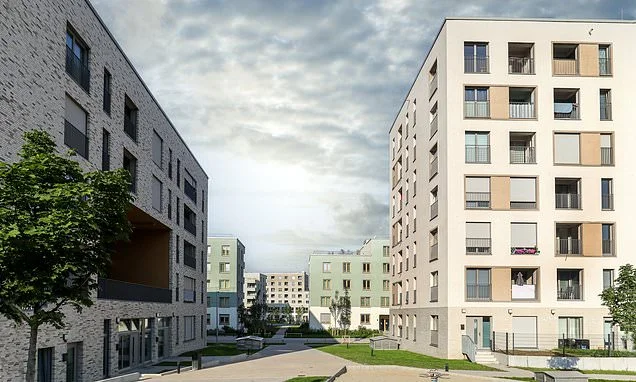
Gathering dust: There are 4,629 homes completed but unsold, this is the highest level Molior has ever seen
Last month, a construction industry source, who wishes to remain anonymous, told This is Money that the cost of building a home in London has increased by 75 per cent since 2016.
They explained the cost of building a typical two-bed flat of 70 square metres has gone from £245,000 in 2016 to around £430,000 today.
During that time, the average value of a flat in London has fallen, according to Land Registry figures.
The total number of homes under construction has fallen dramatically. There are 33,000 private homes being built at the moment.
Of those, 20,700 homes will complete between now and the end of 2027 leaving just 8,750 homes forecast to be on site in January 2028 alongside any developments that begin between now and then.
British home buyers are barely buying at all in London
Buyers have disappeared from the market whether they be home movers, landlords, overseas buyers or built to rent companies.
Only 3,220 new builds in London were bought by British owner-occupiers in the whole of last year, including first-time buyers and home movers.
This year, we are on course to see this number fall even further with just 1,219 new build sales to British home buyers in the first six months of 2026.
In 2022 there were 7,942 new build sales to British owner-occupiers. Some 4,223 of those were purchased via the help to buy scheme which was coming to an end the next year.
A reticence among buyers to purchase leashold homes, which accounts for the majority of flats, is a major contributor.
Leasehold homes have been plagued with a number of issues in recent years, from unsafe cladding to escalating service charge costs.
When polled by estate agent membership body Propertymark, 90 per cent of the 1,200 leaseholders surveyed said they regretted buying their home.
Jeremy Matallah, co-founder of rent-to-buy scheme Keyzy, says that, aside from leasehold issues, buying a home has become too expensive.
He says: 'For many first-time buyers, the biggest obstacle is saving for a deposit while paying London’s sky-high rents.
'Every day we speak to people who can afford the monthly cost of homeownership but can’t raise the deposit.
'With sales to UK individuals having reduced by almost 40 per cent in two years, it’s clear how difficult it has become for ordinary Londoners to buy.'
Investors don't want to buy
What appetite remains for new build homes in London seems to be driven largely by companies.
Molior says that individuals now account for just one in five new-build sales in London with companies buying up the bulk of what is selling.
There were 3,825 new builds bought by companies in the first half of this year, which includes landlords and build to rent providers. This is compared to 1,781 bought by individuals, including overseas buyers.
Tim Craine, director at Molior, says landlords are selling rather than buying - and to compound the issue, the properties they are selling are competing with new-builds for buyers' attention.
'Many investors are selling properties acquired five to 15 years ago, often at prices 20 per cent below comparable new-build homes,' says Craine.
'Today in Canary Wharf, for example, about 1,000 second-hand new-build apartments are for sale.
'This excess competition suppresses market prices and discourages new development from commencing.'
Build to rent providers are behind 2,636 of new build purchases this year. These are large-scale corporate landlords funded by pension schemes and other institutional investors. They buy or build blocks of flats and, instead of selling them, derive a long-term income from renting them out to tenants.
Tough sell: New builds are competing with much cheaper second-hand homes for buyers
However, even build to rent investment looks to be on the decline in the capital.
Build to rent accounted for 2,636 new build purchases in the capital in the first six months of this year. Last year it was behind 2,524 sales by this point.
But it is clear investment is on the wane. In 2022, there were 7,442 new build homes swallowed up by build to rent. This fell to 4,422 in 2023 and 4,292 in 2024.
Stamp duty is a further disincentive
Jeremy Matallah of Keyzy suggests that the upfront cost involved in buying is simply too much for many buyers.
Most people buying in London not only have to contend with saving towards a deposit but also have to cover the stamp duty.
A British based buy-to-let investor or second home buyer purchasing a £600,000 London property could expect to pay £50,000 in stamp duty. An overseas investor would have to pay £62,000.
But the cost is still brutally high for home movers and first-time buyers - in both cases they would have to fork out £20,000 on stamp duty in order to buy a £600,000 home.
But it's when prices go above £925,001 that stamp duty really ratchets up. This is because the portion from £925,001 to £1.5 million is charged at 10 per cent with anything above that at 12 per cent.
A second homebuyer then pays the additional 5 per cent surcharge on top of that while overseas buyers pay an extra 7 per cent.
Someone moving to a £1.6 million house in London would have to stump up £105,750 in stamp duty even if it was their first or only home.
'The fact that thousands of completed homes remain unsold suggests the issue is why more first-time buyers aren’t able to buy those homes themselves,' adds Matallah.
'New approaches that reduce the upfront barriers to buying can benefit everyone, they help people on to the ladder while allowing developers to recycle capital into building more homes.'