Get the Popular Science daily newsletter💡
Breakthroughs, discoveries, and DIY tips sent six days a week.
By signing up, you confirm you are 16+, will receive newsletters and promotional content and agree to our Terms of Use and acknowledge the data practices in our Privacy Policy. You may unsubscribe at any time.
It’s relatively easy to see a digital IMAX showing of Christopher Nolan’s new film The Odyssey, although at this point you’ll likely need to reserve a seat well in advance. But only the truly dedicated cinema buffs will catch the summer blockbuster on actual 70mm film as the acclaimed director intended. That’s because only 41 theaters in the entire world are properly fitted with the projection technology.
That global IMAX scarcity isn’t an intentional ploy to drum up ticket prices. It’s actually because there are hardly any places left capable of manufacturing the necessary machinery, let alone people who know how to work them. And while it may come as a surprise, IMAX isn’t a new cutting-edge technology. It dates back to the 1960s.
“There’s certainly more demand. The problem is they haven’t made new IMAX film projectors in about 50 years,” IMAX CEO Richard Gelfond recently explained to Variety. “So we retrofit them [and] rebuild them, and part of our strategy is to see how far we can take it.”
Given that IMAX screenings are typically reserved only for major studio releases that feature the latest CGI and movie-making magic, it’s easy to mistake IMAX itself a new marvel that requires equally modern equipment. Most IMAX use dual 2K digital projectors on a 1.90:1 aspect ratio screen—technology that is comparatively easy to build and repair. True 70mm IMAX projectors are a different story. These machines don’t resemble the classic image of traditional 35mm designs in any way. At over 5.5 feet tall and nearly 6.5 feet long, an IMAX projector weighs as much as two tons and uses a xenon lamp requiring its own pump and water cool.
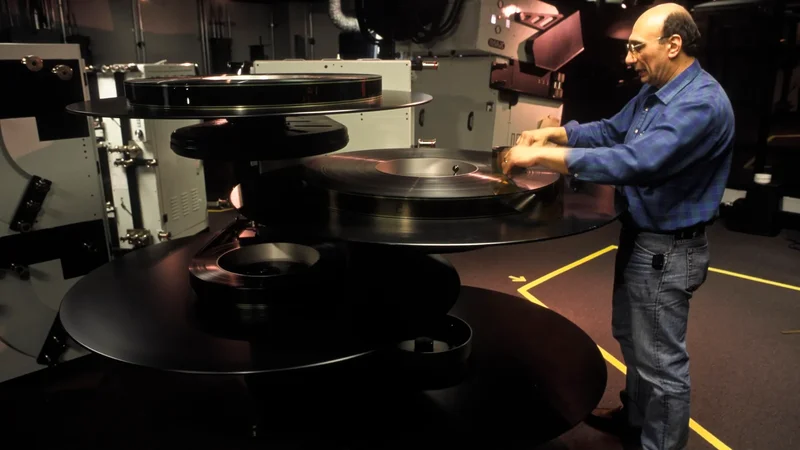
The film reels themselves are equally massive, too. They must be shipped to theaters in multiple portions that are then hand-spliced together over several hours into a single, four-to-six foot-wide platter that is then handled with a special forklift. A 2.5 hour film reel easily spans nearly 10 miles long, weighs around 550 pounds., and costs about $36,000 to print. For reference, The Odyssey clocks in at nearly three hours long.
And that’s a problem if any component breaks. While it’s still known as the “film” industry, physical film itself lost out to digital projection decades ago. With that came not only a loss of film manufacturers, but the institutional knowledge needed to support the remaining theaters that handle the outdated technology. This is even more exacerbated when it comes to IMAX.
“Simply put, a 15/70mm projector isn’t just another mechanical assembly you can spin up on a modern production line in a factory somewhere,” Redshark News recently wrote. “It’s a bespoke engineering solution to a bespoke physical problem, and that solution was designed for, and built in, a manufacturing era that ended decades ago.”
So if you do end up seeing The Odyssey in its true 70mm IMAX format, consider yourself privileged. Not only are you watching a historical epic, you’re watching it thanks to epic historical technology.
2025 PopSci Best of What’s New
The 50 most important innovations of the year