Wall Street was never going to enjoy Kevin Warsh’s new, minimum viable communications approach at the Federal Reserve. Even if some analysts could understand why Warsh’s strategy might benefit the central bank, it remains uncomfortable for them to operate with reduced guidance in a time of economic uncertainty.
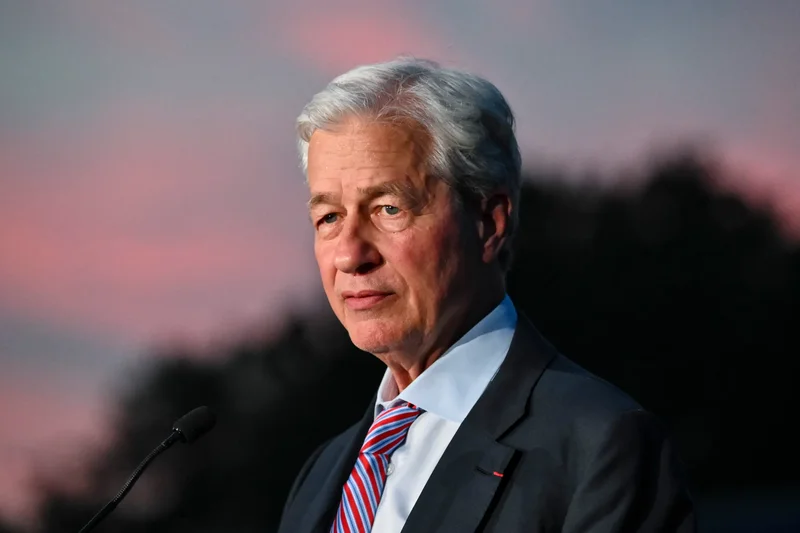
But Jamie Dimon, the CEO of JPMorgan Chase, is backing the new chairman’s methods despite criticism from some of his peers. Dimon, the leader of America’s largest bank, said he “thinks the world” of Warsh and added his approach makes “tremendous sense.”
Dimon’s backing comes amid a turbulent adjustment to Wall Street’s relationship with the rate-setting central bank. Warsh, new to the role of chairman but a veteran of the Fed, has pulled back from the practice of forward guidance (indicating the path of rates and, as such, giving investors confidence that the Fed is taking its mandate of 2% inflation and maximum employment seriously). This has been seen by various critics as diminishing transparency and a dismantling of policy progress.
Treasury markets bristled during Warsh’s post-Federal Open Market Committee (FOMC) press conference last week, in part in response to Warsh’s suggestions that inflation frameworks might change, and because markets were being asked to “play the ball, not the referee.”
Dimon’s premise is that the Fed is doing what it needs to fight inflation—which hasn’t been below its 2% target since February 2021.
“If you give anyone a job, take a step back, look at it, think what you did, how it should be done,” Dimon told CNBC, “That’s the job of a leader, and I think he’s doing the right thing.”
“I think he’s raising the right issue with the task force. I’m not greatly in favor of a task force, but it’s the right idea to look [at] how we measure inflation, what the issues are, the balance sheet. So I wish them the best. They will, over time, do the right thing.”
Dimon is referring to the five task forces Warsh has announced. The first—currently drawing the ire of Wall Street—is examining communication and how the Fed conveys policy deliberations. Other task forces include improving data quality, analyzing the bank’s balance sheet, examining new productivity drivers like AI, and revisiting inflation frameworks.
The scope of the work is large, and the task forces have a relatively short timeframe to work within—Warsh has indicated their deliberations will be shared early next year. Additionally, 15 leaders across the task forces have been announced, meaning analysts and investors could receive a spectrum of opinions on the topics Warsh has outlined.
Reaction to uncertainty
Dimon’s caveat that Warsh’s work will be right “over time” is also key: Markets and analysts are already ill at ease over the mere suggestion of changes at the Fed.
But Dimon was blunt: “I don’t think it makes that much of a difference about signaling to the Fed. I think the people are squealing like stuck pigs on that one.”
Apollo Global Management’s Torsten Sløk has also been firm in his support of Warsh’s approach. In a note yesterday titled “Warsh is right” the economist argued the new Fed chairman was being “unfairly criticized,” adding: ” The decision to eliminate forward guidance isn’t reckless. It’s pragmatic.” Slok argued reducing forward guidance restores real market signals, ends false certainty, and gives the Fed flexibility.
That said, Slok highlighted the Fed could reduce volatility by providing clearer framework guidance. “Even without providing explicit forward guidance, central bankers still have an obligation to explain the economic framework behind their decisions,” agreed Jeremy Siegel, emeritus professor of finance at the Wharton School of the University of Pennsylvania. Writing for WisdomTree, where he serves as senior economist, he added: “On that score, this press conference fell well short.”
breaks the traditional barrier between audience and newsroom. The show transforms
Fortune DailyFortune’s trusted reporting into actionable, conversational, and entertaining insights for an emerging class of business leaders.
Watch here.