Organisers of some of Japan’s biggest summer festivals are reportedly preparing to introduce new safety measures in the wake of rising bear activity across the northeastern part of the country.
Millions of visitors are expected to gather for the annual celebrations.
The concern is particularly acute in Sendai, where the three-day Sendai Tanabata Festival begins on Thursday and is expected to draw more than two million visitors.
Sendai city authorities recorded 216 bear sightings between April and July this year, a roughly 40 per cent increase compared with the same period in 2025.
In recent years, bears have been spotted in urban areas across northeastern Japan, prompting alerts in Fukushima, Iwate, and Aomori prefectures. Bear encounters have grown increasingly dangerous, with 238 attacks last year leaving hundreds of people injured and at least 13 dead.
Officials say bears have increasingly been using riverside vegetation as cover before moving into urban neighbourhoods.
The growing risk was underscored in April, when a bear measuring about 1.5m remained near a residential condominium around one kilometre from Sendai City Hall for nearly 10 hours, local media reported.
To reduce the chances of bears approaching the festival area, organisers are introducing a series of precautions for the first time.
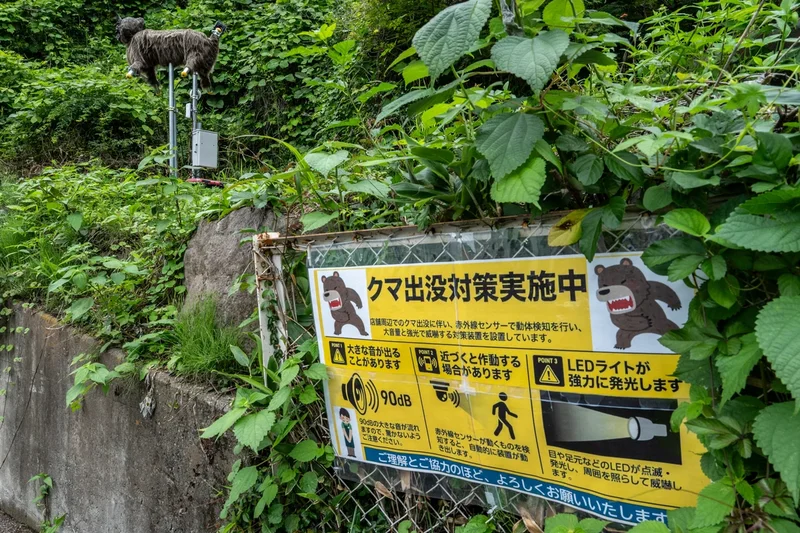
An electronic whistle will be sounded for an hour each morning along the river bordering the venue in an effort to scare the animals away, Jiji Press reported.
Bear-repellent bottles will also be placed at 20 locations along the riverbank, while bear spray will be available at a tourist information centre.
Festival-goers are also being urged through social media to dispose of their rubbish responsibly and avoid leaving behind food waste that could attract wildlife, according to The Japan Times.
The organisers have also linked surveillance cameras to an alert system that automatically emails city officials, police and festival organisers whenever a bear is detected.
The festival could be cancelled if a bear is sighted within one kilometre of the venue.
Despite the additional precautions, organisers acknowledge there is no certainty they will work. “We’re still figuring things out as we go,” an unidentified official told Jiji Press.
The previous bear attacks in northeastern Japan have left the residents scared, especially in Iwate and Akita prefectures. It was reported previously that they were carrying bags with bells to scare off the animals.
Japan also deployed its Self-Defence Forces (SDF) to Akita prefecture to help contain an increase in the deadly attacks, as bear sightings in the region jumped sixfold to over 8,000 last year till November.
Meanwhile, in the Tohoku region, similar preparations are underway. At the Akita Kanto Festival, municipal staff will be patrolling the surrounding area twice a day carrying bear spray.
Organisers are reportedly prepared to issue warnings, suspend events or cancel festivities depending on where a bear is seen.
In neighbouring Aomori, however, organisers of the six-day Aomori Nebuta Festival have not introduced dedicated anti-bear measures, believing the loud drums and music are likely to discourage the animals.
The Aomori Nebuta Festival is one of Japan’s best-known summer festivals, attracting thousands of visitors each year. According to the festival website, it is famous for its giant, brightly illuminated Nebuta floats – some measuring up to 9m wide, 7m deep and 5m high – depicting historical figures, legendary warriors and Kabuki characters.
The floats are paraded through Aomori’s streets alongside energetic Haneto dancers and traditional Nebuta bayashi music.