Men walked one by one through the metal detector into the airport departure hall. The man in uniform moved another detector up and down. It beeped at the coat pocket of a man in a suit. The man in the suit raised his hands and turned around. He was holding his boarding pass in his mouth.
Everyone was looking at him when he entered the departure hall. After he sat down he looked toward the metal detector. They were checking another man in a suit. The man corrected his sitting posture as he watched.
A woman’s voice said through the intercom that the airplane was ready for boarding.
Irene was wondering which one of the men she could sleep with. The men were getting up one by one. She examined them again in the light of this question. She saw something repulsive in each of them, things she had not seen before.
The older men had dark career rings around their eyes. Their faces had been firm for many years. That they had aged in that state comforted Irene.
Irene saw an older man wearing a big gold ring on his little finger. She imagined herself lying in bed and waiting for this man. She saw the man undressing. Hanging his jacket on the back of a chair. The pants on the seat of the chair. The shirt over the jacket. Letting his underwear and his socks fall on the carpet under the chair because he was used to despising them. Approaching the bed and realizing he had forgotten to take off his glasses. Using this forgetfulness to pull his gold ring from his finger, and to put it down on the table next to his glasses.
Irene heard herself saying: The gold ring must be there when you do it.
The conveyor belt was humming empty. The suitcases were not coming yet. Irene looked through the glass pane at the land outside. Her head was heavy as if the clouds were too close. As if gray, crumpled clouds were passing through her head.
Irene suspected she had only made up the story with the man, the glasses, and the gold ring because of the presentiment, reaching down into her fingertips, that Franz’s face would be behind the door. And that it would still not be there even when Irene stood very close in front of his lips.
Franz wasn’t there. His face wasn’t close to the exit.
There was a man next to the exit holding a sign in front of his chest. The sign said: Irene.
Irene looked down with the feeling that her name was too common and that it wasn’t meant for her.
And Irene wanted to let the woman who was expected take her time. She wanted to see her going up to that man. What she looked like.
Irene heard the conveyor belt humming. All the passengers had walked past her.
Irene tried to remember when it had first happened that she couldn’t stand something. And if she had then suspected that it would happen again and again. And if she had thought about what she should do with herself if she couldn’t stand it anymore.
Suddenly, Irene remembered one of the sentences in the books. A sentence that she had carried along all these years and changed: “But I wasn’t young anymore.”
It was as it is so often, as usual, as always when something is over: there was a wish on the roof of her mouth. Irene didn’t know what it was. She only knew that it was hiding something from her.
An aftertaste had shrouded her in.
Yes, it was as it usually is, as always when something is over: grey in grey images would pop up too late and blow into each other. A trace of them got stuck in Irene’s larynx.
Irene saw a wide, empty area with white markers.
Two men wearing suits moved toward each other through the grass on a strangely divided lawn. The grass was yellow and blew away. The men walked slowly, unintentionally keeping in step with each other. They walked. They were not looking forward to their meeting. When they came closer, they acted as if they did not see each other.
When the tips of their shoes stood facing each other, almost touching, they hugged, one man looking over the shoulder of the other into the empty void.
They stood there hugging. Motionless. It was like a small everyday gesture you don’t notice anymore.
Irene recognised the one face turned toward her.
It was the face of the dictator that had expelled her from the other country.
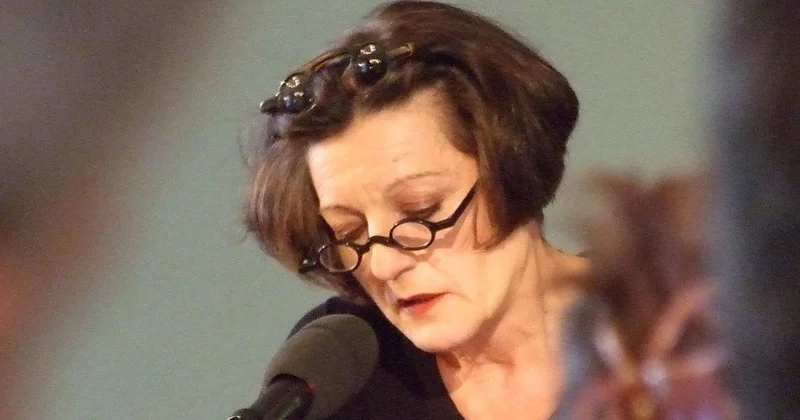
Excerpted with permission from Traveling on One Leg, Herta Müller, translated from the German by Valentina Glajar and André Lefevere, Aleph Book Company.
We welcome your comments at letters@scroll.in.