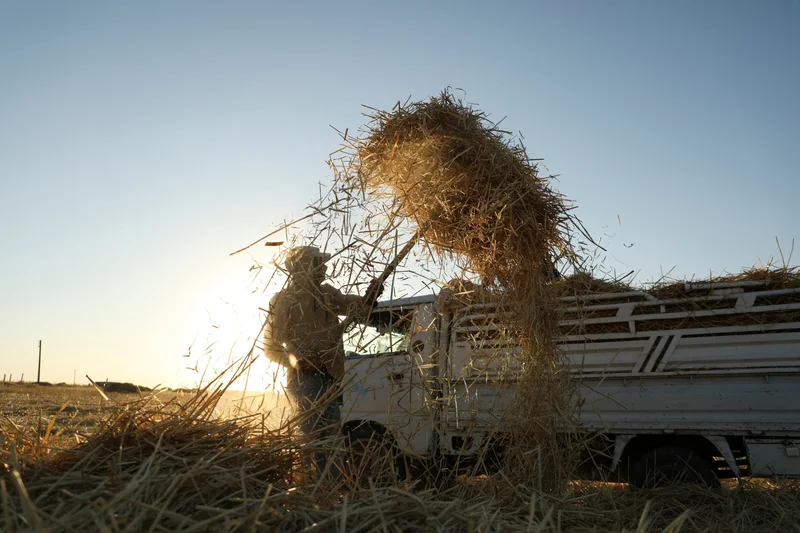
Syria has achieved self-sufficiency in wheat production for the first time since the outbreak of its civil war in 2011, an agriculture official said Thursday, marking a milestone for the country's food security after years of depending on imports.
As well as the war hitting the agriculture sector hard, Syria has seen drought in recent years, with the United Nations saying 2025 saw the country's worst climate conditions in decades, also impacting wheat-growing land.
"There won't be any need for (wheat) imports this season," said Ahmed Qadoun, deputy general director of the Syrian Grain Establishment, adding that Syria had last been self-sufficient in 2010.
On Wednesday, state news agency SANA reported that the grain establishment had received 2.7 million tons of wheat from across Syria during this year's harvest, exceeding the national annual requirement of 2.55 million tons.
Before the civil war erupted in 2011, Syria was self-sufficient in wheat, producing an average of 4.1 million tons annually.
But after the conflict and drought disrupted production, Syria's dictator Bashar Assad used to rely on imports, particularly from ally Russia, for wheat.
Syria's new authorities took power in 2024, and the country said last year that it had received wheat shipments and donations from countries including Russia and Iraq.
The United Nations said in June that more than 13 million Syrians, or over half the population, were facing acute food insecurity.