Wealthier shoppers are giving Wayfair an unexpected boost as many Americans remain cautious about the economy and continue cutting back on big purchases.
While budget-conscious consumers hold off on major spending, higher-income shoppers are still investing in furniture and home upgrades, helping drive growth for the online retailer. Wayfair reported a stronger-than-expected second quarter, with its U.S. business seeing its best growth since the pandemic-era home shopping boom, CEO Niraj Shah said during a call with analysts Tuesday, Retail Dive reports.
The company’s U.S. revenue climbed nearly 9 percent year over year, while overall revenue increased 7.5 percent to $3.5 billion.
Wayfair’s luxury brand Perigold has become one of the company’s biggest growth drivers, with sales climbing more than 35 percent compared with the same period last year, Shah said. Since launching in 2017, Perigold has grown at a double-digit rate every year, including more than 20 percent growth in both 2024 and 2025. Today, Perigold offers about 3.5 million products from 1,500 brands.
“Because the luxury customer’s bar for service is even higher than it is for the rest of our business, we built free white-glove delivery into the model, along with proactive high-touch order monitoring on larger purchases, which has driven meaningfully higher repeat rates and post-delivery satisfaction scores,” Shah said, per Digital Commerce 360.
The luxury platform has become a key part of Wayfair’s growth because Perigold customers spend about three times more annually than customers who shop on Wayfair’s main website, Shah said.
“We have a clear line of sight to grow Perigold into a multibillion-dollar business in the years ahead,” Shah said.
Perigold is also attracting new shoppers to Wayfair, with about 40 percent of its customers each year new to the company’s platform.
“This isn’t just a repackaging of existing demand,” Shah said. “We’re pulling in a customer we would not otherwise reach, one who is more affluent and resilient across economic cycles.”
The growth marks a turnaround for Wayfair after a tough few years. When the pandemic-era home shopping boom faded, rising prices, higher interest rates and a slower housing market led many shoppers to put off big-ticket purchases like furniture and home upgrades.
However, the company still has work to do. Despite stronger sales, Wayfair reported a $1 million net loss for the quarter, compared with a $15 million profit during the same period last year.
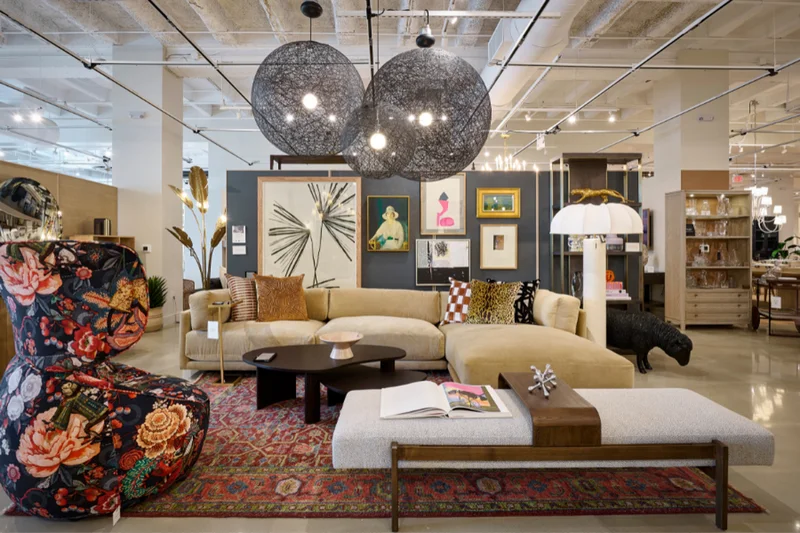
As Wayfair looks to grow beyond its online roots, the company is also expanding Perigold into physical stores. The retailer already opened two Perigold locations in Houston, Texas, and West Palm Beach, Florida, and plans to add more in the coming years.
“Those stores are already showing us average order values even higher than what we see online,” Shah said of the brick-and-mortar locations.
The company also plans to roll out a dedicated Perigold loyalty program later this year.