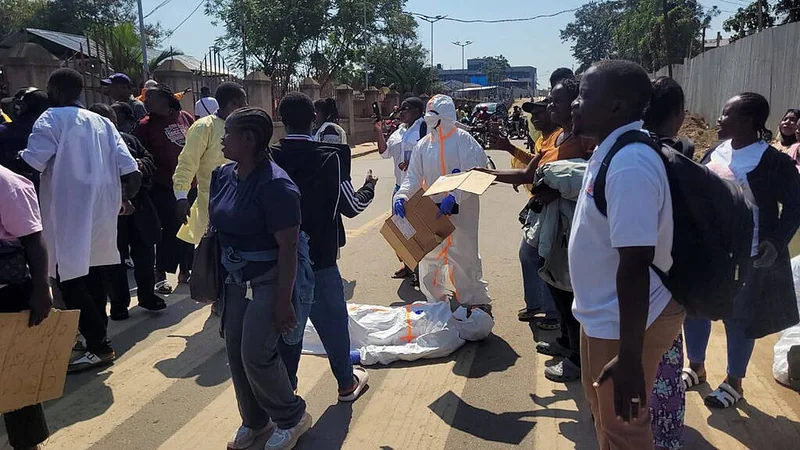
Health authorities in the Democratic Republic of the Congo are monitoring passengers travelling on a boat stationed near Kinshasa after a traveller died with symptoms matching the Ebola virus.
The Democratic Republic of the Congo has been battling an Ebola outbreak since May, declared the fastest in history in terms of transmission, with confirmed cases reaching 4,000, including more than 1,800 deaths, according to Dr Jean Kaseya, director-general of Africa CDC.
The passenger had disembarked after getting sick in Pimu, in the province of Mongala, more than 1,000 kilometres (621 miles) from Kinshasa, Dr Kaseya said on Thursday, adding that the capital has no confirmed Ebola case.
The boat had been travelling for nearly three weeks along the Congo River with nearly 200 passengers on board.
They have been tested for Ebola and are in quarantine while awaiting their results.
“We decided to do that even if some of them didn’t have symptoms because we want to make sure that we don’t miss anything,” Dr Kaseya added.
Ebola is highly contagious and spreads in the human population through contact with bodily fluids such as vomit, blood or semen, and with contaminated surfaces and materials such as bedding and clothing.
News of the passenger’s death caused panic in Kinshasa, which is far from the eastern region hit by the outbreak, the second-largest outbreak on record, behind the 2014-2016 West Africa outbreak that recorded more than 28,000 cases, including more than 11,000 deaths.
Authorities say 60-70% of new cases in the current outbreak are recorded outside of contacts being monitored, and that the outbreak is spreading at an “alarming” rate faster than efforts to track it.
With this way of managing things, Ebola will not end in this province. We ask the authorities to get involved at all levels so that a solution is found quickly
Meanwhile, dozens of health workers at the epicentre of the outbreak in Ituri province staged protests on Thursday to demand payment for their wages, abandoning several health facilities and further disrupting critical care.
The health workers were protesting at the governor’s office in Bunia, the capital of Ituri province, which accounts for nearly 90% of the Ebola cases in the country.
They are the latest group to walk off their jobs since protests over pay issues began weeks ago.
The health workers, including nurses providing critical care to Ebola patients, said they have not received wages and bonuses for their work fighting Ebola since the outbreak was declared in mid-May in one of the Democratic Republic of the Congo’s most remote and vulnerable areas ravaged by rebel conflict.
“With this way of managing things, Ebola will not end in this province. We ask the authorities to get involved at all levels so that a solution is found quickly,” said Edouige Makosi, one of the protesters.
Officials have in the past blamed logistical issues for the payment delays.
Authorities did not immediately respond to an inquiry for comments on Thursday.
Poor welfare for front-line workers has been a key source of concern in the outbreak.
Apart from the payment issues, many health workers and facilities have been attacked by rebels and angry mobs.
During his visit to the Democratic Republic of the Congo on Wednesday, World Health Organisation director-general Tedros Adhanom Ghebreyesus urged authorities to prioritise care and support for the responders.
The medical charity Doctors Without Borders said this week that the outbreak is still “spreading at an alarming and unprecedented rate” and that the response, which has been expanding, “is still not reaching communities quickly enough to break transmission chains”.
Government data shows 674 patients are currently in isolation, most of them in Ituri.
At least 75% of contacts are being traced after their exposure to patients, the data showed.
A bigger concern, though, according to officials, is that contact tracing has not been effective as most new cases are coming from sources not being monitored and from remote localities where rebel conflict and mining-related movements are limiting access.