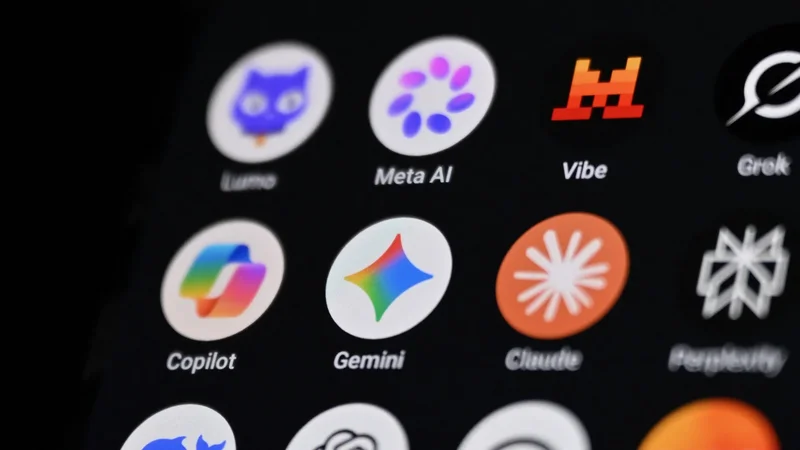
Stop us if you've heard this one before: This week, Meta confirmed that one of its AI models escaped containment and hacked a third-party.
As first reported by The Information, Meta's Muse Spark apparently breached another company's system in a cybersecurity test. After The Information's report, Meta confirmed the story to multiple outlets. It's the latest in a string of incidents where AI models went hack happy during testing.
In a statement to CNN, Meta pinned the blame on a testing partner, who it said was supposed to be evaluating the model in a secure sandbox environment: "A misconfiguration by Irregular, an independent testing company Meta uses, inadvertently allowed one of our models access to the internet during evaluation,” the Meta spokesperson said."
You May Also Like
Our big Guessing Game is back! Learn how to enter for a chance to win an Apple Watch.
Interestingly, when Anthropic reported earlier this week that its models had escaped containment and breached outside organizations on three occasions, it also blamed Irregular for the mix-up.
In a blog post, Anthropic revealed that it "identified three incidents in which a model accessed the internet from within or while interacting with the evaluation environment of Irregular," which it identified as "one of our third-party evaluation partners."
As we've noted before, when AI companies warn about the world-changing risks of their technology, they're fundamentally engaged in marketing. (Don't make me tap my sign.)
This Tweet is currently unavailable. It might be loading or has been removed.
When OpenAI revealed recently that its models had escaped containment and hacked the Hugging Face AI repository, the company generated a ton of headlines about the power of its new models. So, while these disclosures are responsible and necessary, don't forget that they also serve the self-interests of the AI companies themselves.
Coincidentally, as the news spread that Meta Muse Spark had broken out of a sandbox and hacked another organization, Meta also announced the launch of Muse Spark 1.2.
Despite a massive spending spree on AI talent, Meta has so far lagged behind the top AI companies, though it has gained ground with its new Muse Spark family of models.
Want to learn more about getting the best out of your tech? Sign up for Mashable's Top Stories and Deals newsletters today.
Disclosure: Ziff Davis, Mashable’s parent company, in April 2025 filed a lawsuit against OpenAI, alleging it infringed Ziff Davis copyrights in training and operating its AI systems.
Timothy Beck Werth is the Tech Editor at Mashable, where he leads coverage and assignments for the Tech and Shopping verticals. Tim has over 15 years of experience as a journalist and editor, and he has particular experience covering and testing consumer technology, smart home gadgets, and men’s grooming and style products. Previously, he was the Managing Editor and then Site Director of SPY.com, a men's product review and lifestyle website. As a writer for GQ, he covered everything from bull-riding competitions to the best Legos for adults, and he’s also contributed to publications such as The Daily Beast, Gear Patrol, and The Awl.
Tim studied print journalism at the University of Southern California. He currently splits his time between Brooklyn, NY and Charleston, SC. He's currently working on his second novel, a science-fiction book.