ESPN staff was hit by another round of layoffs this week, which in some sense barely registers as news given that the network is stuck in a constant state of downsizing. This round of cuts was notable, however, due to some of the recognizable names that were let go: Karl Ravech, David Lloyd, Stephania Bell, Cam Newton, Ryan Clark, and Tom Pelissero were among the cuts.
Whether you wish to cheer or jeer any particular departure, there's no denying the significance of ESPN cutting loose someone like Ravech, who has been with the network since 1993 and became synonymous with its baseball coverage. Lloyd started with ESPN in 1997 and has become one of the more familiar faces on SportsCenter; Bell pioneered fantasy-focused injury analysis and turned that into a gig that lasted nearly 20 years; Pelissero is an NFL insider who is just as plugged in as Ian Rapoport and Adam Schefter. These are people sports fans have real relationships with.
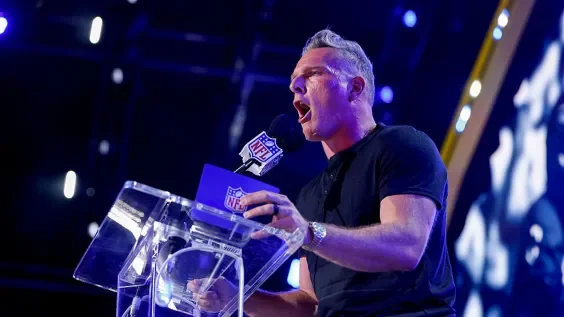
It is also impossible not to think about these layoffs in the context of some other recent news about ESPN. In June, The Athletic's Andrew Marchand reported that the network was in the midst of negotiating a new contract for host Pat McAfee, which would pay him more than $60 million per year. Even McAfee himself wasn't immune to making this connection, and attempted to defend his worth during Tuesday's episode of his daily television show:
The first time we licensed the show through ESPN, one of these [layoffs] happened, we got blamed.
OK, OK. Thank you. I feel like you don’t fully understand budgets and where things are coming from, but I do appreciate that. This time, we’re getting blamed as well. Which I guess I can understand, but I mean, there’s billions and billions of dollars in these companies, and hard decisions have to get made. And we don’t like any of them, and we hope we’re an asset to the company going forward.
As annoying as it is to hear McAfee talk about anything, his diagnosis of the situation isn't wrong. Disney does indeed have access to billions and billions of dollars that can be used to turn ESPN into whatever type of network Bob Iger and Jimmy Pitaro want it to be. It is not scarcity that puts someone like Ravech out of job after three decades, but a shift in priorities. ESPN is making these cuts while also throwing absurd sums of money at McAfee and Stephen A. Smith because it wants ESPN to look like McAfee and Smith's version of the network.
This isn't all that different from how ESPN has always operated. I am old enough to remember when the investment in Skip Bayless and proliferation of First Take was a grim signal of the network's priorities, and when the failure of The Six taught executives all the wrong lessons. The difference today is in just how much narrower ESPN's vision has become.
ESPN has never been perfect, or even all that well-run, but something you could always appreciate about it in years past was how expansive it felt. At its best, ESPN felt like a place where everything was happening, and where any kind of sports sicko could find something that particularly interested them. I may have personally been disgusted by anyone so fantasy football–brained that they religiously checked ESPN.com for Bell's latest column, but someone else may have been just as horrified to discover that I genuinely enjoyed watching Stump The Schwab. Plenty of people my age used to schedule their summer evenings around episodes of Baseball Tonight; whatever was happening on First Take in the morning couldn't have mattered less to us.
The irony is that ESPN licensing McAfee's show is quite in line with the experimental spirit that used to make the network feel so large and lively—it's just that all the other experiments have been choked off. When's the last time ESPN debuted an inventive or interesting television show? Who is the last compelling young writer to come up through the ranks? Is it even possible for ESPN to produce the next Karl Ravech?
It's hard to imagine now, but ESPN used to be the kind of place that was messy and daring enough to throw a bunch of money at Jason Whitlock while asking him to launch "black Grantland." Now it's just a place that is slowly winnowing itself down in pursuit of a future in which 24 hours of programming are divided evenly between Pat McAfee hooting libelous jokes in a hangar-sized studio, and Stephen A. Smith detailing his increasingly alarming political ambitions. I know which version of ESPN I preferred.