A team of hundreds of researchers measuring the magnetic properties of the muon particle has won a $3 million Breakthrough Prize, confirming key aspects of the standard model of particle physics. Despite the precision measurement of the muon's 'g-factor' to 127 parts per billion, puzzles remain as two calculation methods still disagree. The award celebrates decades of international collaboration across Fermilab, CERN, and Brookhaven, with scientists eager to continue probing these fundamental mysteries.
Science
Muon Magnetic Mystery Nets $3M Prize

Sources (1)
More from Science
-
Snail Species Protection Sparks Debate

Scientists are locked in a debate over the classification of certain threatened mollusks crucial to an Indigenous community's survival. The outcome could redefine legal protections for these species, impacting conservation efforts and Indigenous rights. As the discussion unfolds, stakeholders await decisions that may set new precedents for environmental law.
-
New Termite Trap Nets 95% Kill Rate
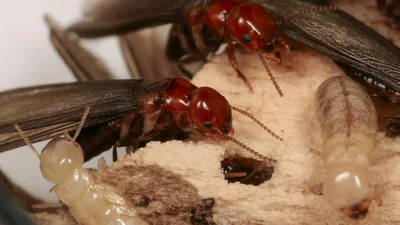
Scientists at UC Riverside have developed a breakthrough method to combat western drywood termites by using pinene, a tree-derived scent, to lure termites into insecticide-treated wood. This approach boosts mortality rates from around 70% to over 95%, offering a cheaper and more targeted alternative to fumigation. The innovation promises safer, more effective termite control with fewer chemicals, potentially reducing reinfestation risks. Researchers plan to refine this strategy for broader pest management applications.
-
Mushrooms Might Help Make It Rain

New research from Virginia Tech reveals that some fungi, specifically from the Mortierellaceae family, have borrowed genes from bacteria to produce proteins that trigger ice formation in clouds. This ice nucleation process is crucial for rain development, suggesting mushrooms could influence weather patterns. Unlike bacterial proteins, fungal versions are smaller and water-soluble, potentially offering a safer alternative for cloud seeding. Scientists emphasize more studies are needed but see promise in harnessing these fungal proteins to control rainfall more naturally.
-
Nanodiamonds Defy Diamond Rigidity

New research from Zhengzhou University reveals that diamonds shrink to just a few nanometers become surprisingly elastic, losing about 30% of their stiffness. This challenges the long-held belief that diamonds are always rigid and opens new possibilities for their use in flexible quantum devices and novel electronics. The study, involving over 100 nanodiamonds compressed under diamond-tipped cylinders, highlights how surface atoms weaken bonds, making these tiny gems squishier than their bulk counterparts. As synthetic diamonds grow cheaper, this discovery could spark a wave of innovative applications.
-
Salmon on Coke: Wild Swim Surge
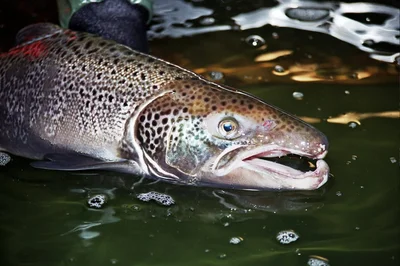
Scientists from the Swedish University of Agricultural Sciences have revealed that Atlantic salmon exposed to cocaine and its metabolite benzoylecgonine swim nearly twice as far as unexposed fish in the wild. This groundbreaking study, published in Current Biology, highlights how water pollution from human drug use is altering fish behavior, potentially disrupting ecosystems. The metabolite caused even stronger effects than cocaine itself, raising urgent questions about environmental risks. Researchers plan to explore how these changes impact survival and ecosystem dynamics next.
-
Cocaine Pollution Alters Salmon Behavior
Salmon in affected waterways are exhibiting unusual behaviors due to cocaine contamination, raising alarms among ecologists. This drug pollution disrupts natural patterns, potentially impacting salmon populations and the broader ecosystem. Scientists emphasize the urgent need for monitoring and mitigation to protect these vital fish species.
-
Genes Behind Extreme Morning Sickness Uncovered

A groundbreaking genetic study involving nearly 11,000 people with hyperemesis gravidarum (HG) has pinpointed 10 key genes linked to this severe pregnancy sickness, with the hormone gene GDF15 emerging as the primary culprit. This discovery overturns previous assumptions about hCG and estrogen's roles and opens new avenues for targeted treatments. Researchers, led by Marlena Fejzo, plan clinical trials using metformin to reduce symptoms, offering hope for millions affected worldwide.
-
Vitamin B7: Cancer's Hidden Weakness
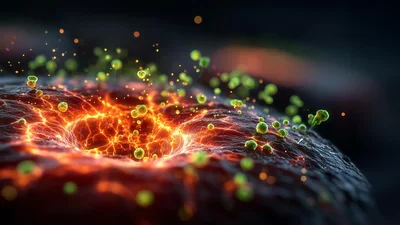
Researchers at the University of Lausanne have discovered that depriving tumor cells of vitamin B7 halts their growth by disabling a key enzyme, pyruvate carboxylase. This enzyme allows cancer cells to bypass their glutamine addiction, a known metabolic vulnerability. The study, led by Dr. Miriam Lisci, also links mutations in the FBXW7 gene to increased glutamine dependence, explaining why some treatments fail. These insights pave the way for new cancer therapies targeting multiple metabolic pathways simultaneously.
-
Bacteria Rewire DNA to Shape Cells
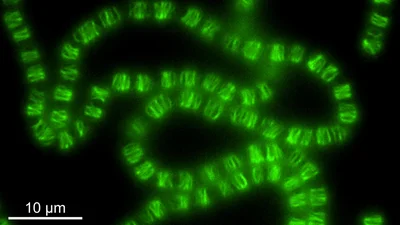
Scientists at ISTA have discovered that cyanobacteria, key players in Earth's oxygenation, have repurposed an ancient DNA segregation system to control their cell shape. This system, renamed CorMR, forms a cytoskeleton-like network beneath the cell membrane rather than moving DNA. The finding sheds light on evolutionary innovation and multicellular development in these bacteria. Researchers plan to explore how this mechanism influences cyanobacterial adaptability and ecosystem roles.