The US House Foreign Affairs Committee has advanced bipartisan bills aimed at tightening export controls on AI technology to China, reflecting growing congressional concern over tech transfers. The legislation targets loopholes that allow China access to advanced US chips, including those from Nvidia, and proposes tougher penalties and whistleblower incentives. This move signals escalating tensions over technology security, with potential pushback expected from the White House and industry. Next steps include further legislative debate and possible negotiation with the administration.
AI & Machine Learning
US House Pushes AI Export Limits to China

More from AI & Machine Learning
-
OpenAI Unveils Game-Changing Workspace Agents

OpenAI has launched Workspace Agents, a powerful new AI platform integrated into ChatGPT Business and Enterprise plans that automates complex, multi-step tasks across apps like Slack, Salesforce, and Microsoft Office. Powered by the Codex model, these agents can run persistently in the cloud, handle workflows independently, and be shared across teams, marking a shift from individual GPTs to organizational AI resources. The feature is free until May 6, 2026, after which it will adopt credit-based pricing, with further enhancements planned to deepen integration and automation capabilities.
-
Single-Agent AI Beats Swarm Systems

New research from Stanford University reveals that single-agent AI systems can match or outperform multi-agent architectures when given the same compute budget. The study shows multi-agent systems often consume more resources without delivering proportional gains, leading to what researchers call a 'swarm tax.' This finding challenges the assumption that more agents always mean better AI performance and suggests developers should reserve multi-agent setups for tasks with degraded or fragmented data. Going forward, single-agent models with optimized reasoning budgets may become the more cost-effective choice for complex AI reasoning.
-
Sony's Ace Robot Smashes Table Tennis Pros
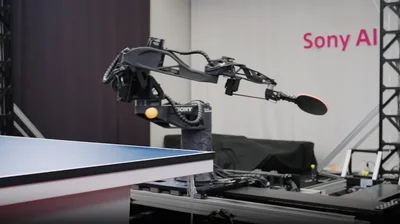
Sony's AI-powered robot Ace has stunned the sports world by defeating top-tier human table tennis players in official matches. Equipped with advanced sensors and lightning-fast reflexes, Ace combines model-free reinforcement learning with a highly agile robotic arm to outplay elite competitors. This breakthrough marks a major leap for physical AI, proving machines can now compete in real-world, fast-paced sports. Sony aims to further refine Ace, potentially challenging world champions next.
-
Warren Warns: AI Could Trigger Financial Crisis

Senator Elizabeth Warren has issued a stark warning about the financial risks posed by the AI industry's rapid growth and massive borrowing. Speaking at a Washington event, she highlighted parallels to the 2008 financial crisis, emphasizing that AI companies' heavy debts and opaque financing could spark widespread instability. Warren advocates for strong regulatory measures, including cutting financial ties between AI firms and traditional banks, to prevent a potential meltdown. Congress is urged to act decisively to avoid another crisis fueled by unchecked AI sector risks.
-
Mozilla’s AI Hunt Nets 271 Firefox Flaws

Mozilla has patched 271 security vulnerabilities in Firefox 150 discovered by Anthropic’s Mythos AI, a cutting-edge model restricted to select partners under Project Glasswing. This breakthrough shows AI can outpace human researchers by rapidly uncovering bugs that were previously costly and slow to find, signaling a shift in cybersecurity dynamics. Firefox CTO Bobby Holley claims this marks the beginning of the end for zero-day exploits, as defenders gain a decisive advantage. The challenge now is ensuring these powerful AI tools stay in the right hands to keep browsers safer.
-
Google Launches Dual TPUs for AI Agents

Google has unveiled two new specialized TPUs—TPU 8i for inference and TPU 8t for training—designed to power the next generation of autonomous AI agents. These chips optimize efficiency and speed for multi-step AI workflows, marking a strategic split in TPU design to better serve distinct AI workloads. With advanced memory and energy-efficient architecture, Google aims to scale AI inference capacity rapidly, supporting services like Gemini and YouTube. The new TPUs, expected by late 2027, signal a major leap in AI infrastructure as demand for real-time, agentic AI grows.
-
AI: A Fascist Tool in Disguise?

At recent talks, critical voices like Ali Alkhatib argue that AI is not just a neutral technology but a political artifact embedded with fascist tendencies. The technology’s design and deployment often reinforce centralized power and authoritarian control, echoing fascist structures. This perspective challenges the notion that AI can be simply reclaimed or democratized, highlighting the risks of its current trajectory. As AI continues to shape society, understanding its ideological underpinnings is crucial for future governance and resistance.
-
SAP Exec: AI Needs Context to Win

Irfan Khan, SAP's president and chief product officer, warns that AI's speed alone won't deliver business value without a strong data fabric providing essential context. He argues that without this context, AI can make fast but flawed decisions, undermining return on investment. Companies are now shifting from mere data aggregation to building interconnected data fabrics that preserve business semantics, enabling smarter, coordinated AI-driven decisions. This evolution marks a critical step for AI to truly transform enterprise operations.
-
Wall Street Law Firm Admits AI Errors

Elite Wall Street law firm Sullivan & Cromwell has revealed that a major court filing contained errors caused by AI-generated hallucinations, including inaccurate legal citations. The mistakes were uncovered by rival firm Boies Schiller Flexner during a high-profile case involving the Prince Group fraud scandal. Sullivan & Cromwell apologized and submitted corrected documents, highlighting the challenges of relying on AI in legal work. This incident raises serious questions about trust and oversight in AI-assisted legal filings.