The artificial intelligence sector is undergoing rapid expansion, with major technology companies committing billions of dollars to AI infrastructure and integration, particularly in software development. Tools like Kiro are revolutionizing engineering workflows by enhancing developer productivity, which is crucial given the high costs of software development labor. Despite this growth, there is a strong emphasis on safety and responsible adoption, as regulators and companies seek to mitigate risks associated with AI deployment. Meanwhile, some AI ventures, such as Elon Musk's xAI, face leadership challenges, and market volatility has led to significant losses in big tech valuations amid uncertainty. This dynamic highlights both the transformative potential and the complex challenges of AI's evolving landscape.
AI Industry Growth and Safety

Sources (7)





More from AI & Technology
-
Apple 50th Anniversary and Product Launch
 research →
Apple is gearing up for a landmark year in 2026, marking its 50th anniversary amid significant technological evolution. The company plans to launch 11 new products this year, including the highly anticipated iPhone 18 Pro, iPad 12, new Mac models, and Apple Watch updates, signaling a major refresh across its device lineup. This milestone comes at a pivotal moment as Apple faces the challenge of integrating advanced artificial intelligence into its ecosystem, highlighted by the recent hiring of a former Google AI executive to lead its AI product marketing. Additionally, Apple is preparing to unveil a smarter, chatbot-enhanced version of Siri with the upcoming iOS 27, aiming to redefine user interaction. These developments underscore Apple's ongoing influence in shaping technology and consumer habits while navigating the future of AI innovation.
-
OpenAI Business Focus and Revenue Growth
 research →
OpenAI is strategically narrowing its product focus to prioritize revenue-generating business applications, moving away from consumer features such as erotica and video generation. This shift follows technical challenges and content moderation issues, leading to the cancellation of projects like the Sora video app and the winding down of a $1 billion Disney deal. Concurrently, OpenAI's advertising pilot in the U.S. has rapidly surpassed $100 million in annualized revenue within just six weeks, highlighting strong monetization potential. These moves contrast with rival Anthropic's struggles with financial sustainability and competition, underscoring OpenAI's growing commercial momentum and pragmatic approach to AI deployment. The company's ability to capitalize on business demand while managing risks signals its intent to solidify market leadership amid an increasingly competitive AI landscape.
-
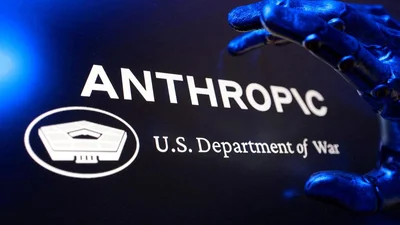
Anthropic Legal Victory Over Pentagon
 research →
In a significant legal ruling, a U.S. federal judge temporarily blocked the Pentagon from blacklisting AI startup Anthropic by designating it a national security supply chain risk. This decision came after the Pentagon labeled Anthropic a threat despite having awarded the company a $200 million contract just months earlier. The ruling, which cited constitutional concerns including free speech protections, is seen as a crucial precedent for AI companies maintaining safety guardrails against government overreach. However, legal experts caution that the company still faces ongoing risks due to the unresolved supply chain risk designation. The case highlights the complex intersection of AI innovation, national security, and constitutional rights in the evolving tech landscape.
-
Government AI and 6G Roadmaps
 research →
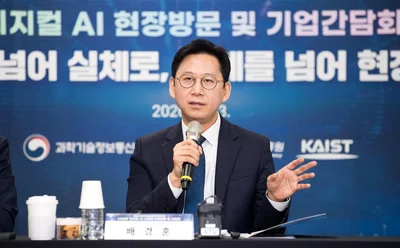
South Korea's Ministry of Science and ICT has unveiled a comprehensive three-year national roadmap aimed at transforming the country from an ICT powerhouse into one of the top three global leaders in artificial intelligence by 2028. The plan emphasizes accelerating 6G commercialization, enhancing AI technologies, and driving AI adoption across all industries. This strategic initiative reflects the government's commitment to maintaining technological leadership amid increasing global competition, particularly from China and major tech corporations. The roadmap also aligns with broader trends in AI infrastructure development and innovation, underscoring the critical role of AI and next-generation connectivity in economic growth and national security.
-
German Public Sector Reduces US Tech Reliance
 research →
The German public sector is actively seeking to reduce its dependence on US-based technology providers due to concerns over data sovereignty and privacy. Currently, many German government agencies at both state and federal levels use software from US companies, which raises the risk of sensitive data being accessible to US authorities under laws like the CLOUD Act. This move reflects growing unease about foreign access to German governmental data and the desire to strengthen national digital autonomy. The issue is part of a broader context of Germany's efforts to safeguard its technological infrastructure amid global geopolitical and economic shifts. The decision also aligns with wider European discussions about reducing reliance on dominant US tech giants.
-
Uncommon ChatGPT Developer Uses
 research →
While most developers use ChatGPT for common tasks like writing code, fixing bugs, and explaining errors, there are many lesser-known, high-leverage applications that can significantly boost productivity. One notable uncommon use is transforming vague product requests—such as rough meeting transcripts or informal Slack messages—into detailed, actionable engineering specifications including user stories, edge cases, API requirements, and analytics events. This capability helps developers and product teams clarify ambiguous requirements and streamline the development process. The shift towards leveraging AI for specification writing rather than just coding signals a broader transformation in software development workflows, as highlighted by industry leaders. Understanding and adopting these uncommon uses can give developers a strategic advantage in managing complex projects more efficiently.
-
Multi-Model AI Chat Platforms
 research →
In 2026, multi-model AI chat platforms have emerged as essential tools for developers, researchers, and analysts who want to compare outputs from different AI models like GPT-5, Claude, Gemini, and open-source alternatives such as Llama in a single workspace. These platforms streamline the workflow by allowing users to send one prompt and receive side-by-side responses, enabling faster experimentation and improved output quality. This approach addresses the challenge that no single AI model consistently delivers the best answer, making comparative analysis crucial for accuracy, creativity, and reasoning. As AI adoption becomes ubiquitous in software development and business applications, multi-model platforms help users navigate the growing complexity and variety of AI tools available. Their rise reflects the broader trend of AI integration into professional workflows and the need for more sophisticated, user-friendly interfaces to manage diverse AI capabilities.