Senator Elizabeth Warren has initiated a probe into the Chinese cryptocurrency mining giant Bitmain, raising concerns over potential national security risks. Warren sent a letter to the US Commerce Department requesting documents and communications related to Bitmain, which is a major manufacturer of Bitcoin mining equipment globally. This inquiry follows earlier reports that Bitmain has been under federal scrutiny due to its China-based operations and the sensitive nature of its technology. The investigation highlights growing US apprehension about foreign tech companies' influence on critical infrastructure and the broader implications for crypto mining security. The probe reflects heightened vigilance amid ongoing geopolitical tensions and concerns over technology transfer.
Bitmain US Security Probe

More from Crypto & Fintech
-
Spot Bitcoin ETFs Outflow
 research →
Spot Bitcoin exchange-traded funds (ETFs) experienced a notable reversal in investor sentiment during the week ending March 28, 2026, with net outflows totaling $296.18 million. This ended a strong four-week inflow streak where more than $2.2 billion had been invested, reflecting a cautious shift as capital avoids directional risk amid broader market uncertainties. The pullback comes in a context of heightened geopolitical tensions due to the U.S.-Iran conflict and volatile traditional markets, which have also spurred interest in alternative investment strategies like managed futures. Meanwhile, Morgan Stanley is preparing to launch a new spot Bitcoin ETF with the lowest fee in the U.S. market at 0.14%, signaling intensified competition and potential renewed inflows in the near future. This development underscores the evolving landscape of Bitcoin investment products and investor appetite for digital assets amid macroeconomic challenges.
-
BNP Paribas Crypto ETNs Launch
 research →
BNP Paribas, the French multinational universal bank, has introduced six new exchange-traded notes (ETNs) linked to Bitcoin and Ether, expanding crypto investment options for retail clients in France. These ETNs provide regulated exposure to the two largest cryptocurrencies and are accessible through standard securities accounts, including for individual investors, entrepreneurs, private banking clients, and users of BNP Paribas's digital platform Hello bank!. The launch marks a significant step in mainstream financial institutions integrating cryptocurrency products into their offerings, potentially increasing crypto adoption among traditional investors. BNP Paribas may also extend these products to wealth management clients outside France, signaling broader ambitions in the crypto investment space. This move comes amid a dynamic crypto market environment where institutional interest and regulatory frameworks are evolving rapidly.
-
US Crypto Regulation Concerns
 research →
The failure to pass the CLARITY Act, a proposed US crypto market structure bill, has raised concerns among industry advocates like Coin Center about potential future regulatory crackdowns on cryptocurrency. Peter Van Valkenburgh, executive director of Coin Center, warned that rejecting developer protections in favor of short-term business interests could lead to a less industry-friendly environment under future governments. This uncertainty contrasts with other countries like Canada, which recently proposed banning crypto donations in political campaigns to prevent foreign interference. The regulatory landscape remains a critical factor for the crypto industry's stability and growth, especially as the market experiences volatility and emerging technological threats like quantum computing loom.
-
AI Autonomous Agents Accountability
 research →
As autonomous AI agents become integral to complex workflows, ensuring their accountability has emerged as a critical challenge. Current multi-agent systems often lack distinct, cryptographically verifiable identities for each agent, making it difficult to audit actions, assign responsibility, and maintain secure operations in multi-tenant environments. Recent technical discussions emphasize the need for cryptographic identity systems to prevent identity collapse, improve traceability, and enable robust auditing of autonomous agent activities. This accountability gap matters because as AI agents take on more autonomous roles—from code deployment to security audits—organizations must trust and verify their actions to prevent errors, security breaches, and operational conflicts.
-
xStocks Tokenized Private Shares
 research →
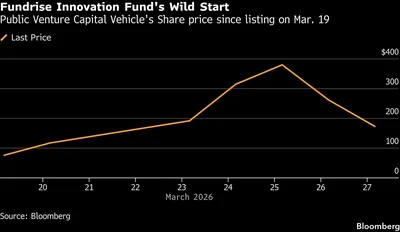
The tokenized equities platform xStocks has partnered with alternative investment platform Fundrise to bring the Fundrise Innovation Fund on-chain. This fund, which recently began trading on the NYSE, holds private shares in prominent late-stage tech companies such as Anthropic, Databricks, and SpaceX. The new tokenized asset, VCXx, is set to launch on xStocks shortly, enabling broader access to private market investments through blockchain technology. This development marks a significant step in merging traditional private equity with decentralized finance, potentially increasing liquidity and investor participation in private markets. The Fundrise Innovation Fund's stock has experienced notable volatility since its public debut, highlighting investor interest and market dynamics.
-
Enterprise Wallet Infrastructure
 research →
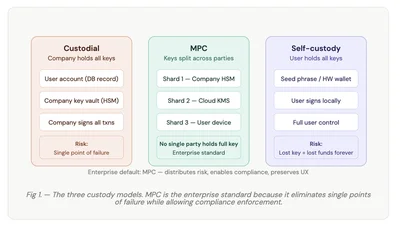
Building wallet infrastructure for enterprises such as banks and fintechs involves complex challenges, particularly in key management, compliance, and multi-chain support. Unlike consumer wallets like MetaMask, enterprise solutions require robust custody models and advanced cryptographic techniques such as multi-party computation (MPC) to securely manage keys. This infrastructure is critical for enabling secure, compliant, and scalable on-chain financial products. The complexity of key management often becomes a major bottleneck for developers, overshadowing other technical concerns like smart contracts or gas optimization. Understanding and addressing these challenges is essential for the growth of institutional blockchain adoption.
-
Morgan Stanley Bitcoin ETF Fee
 research →
Morgan Stanley has proposed launching a spot Bitcoin exchange-traded fund (ETF) with a fee of just 0.14%, which would be the lowest in the US market if approved. This fee undercuts the current cheapest Bitcoin ETF, Grayscale Bitcoin Mini Trust, by one basis point and is significantly lower than BlackRock's iShares Bitcoin Trust ETF by 11 basis points. The move is seen as a strategic effort to gain market share and pressure competitors to reduce their fees. Industry analysts predict the Morgan Stanley Bitcoin Trust (MSBT) could launch as early as April 2026, marking a significant development in the growing Bitcoin ETF market. This fee reduction could attract more investors amid recent fluctuations in Bitcoin ETF inflows.