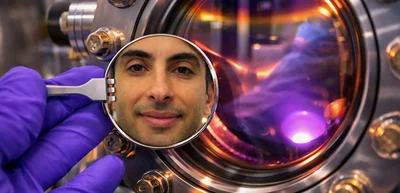
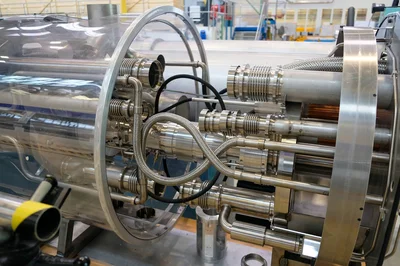
In 2026, significant strides in neuromorphic computing and AI hardware are reshaping the future of artificial intelligence. Researchers at the University of Cambridge have developed a hafnium oxide-based memristor that mimics brain neuron efficiency, drastically reducing AI energy consumption compared to traditional chips. Meanwhile, Australian biotech firm Cortical Labs demonstrated living human neurons grown on silicon chips playing the video game Doom, showcasing adaptive, real-time learning capabilities. These innovations address the critical energy and data bottlenecks faced by conventional AI systems, as highlighted by CERN's use of tiny AI models embedded in silicon for real-time data filtering at the Large Hadron Collider. Together, these developments signal a shift from massive datacenter-dependent AI towards more efficient, brain-inspired hardware architectures that could enable decentralized, self-owned AI minds.
Neuromorphic Computing Advances

Sources (5)


More from Science
-
AI Agent Memory Systems
 research →
In 2026, AI developers and researchers have identified memory as the critical bottleneck limiting AI agents' effectiveness, despite advances in reasoning capabilities. Most AI models remain stateless, forgetting previous interactions and thus failing to build persistent context, which leads to unreliable and inconsistent behavior in practical applications. Efforts such as the development of Anamnesis v0.3.0—a cognitive architecture inspired by clinical approaches—and multi-agent memory systems distributed across nodes are pioneering ways to give AI agents persistent, shared, and clinically-informed memory. These innovations aim to bridge the gap between impressive AI demos and reliable production systems, transforming AI agents from forgetful tools into collaborative colleagues. This shift is significant as it addresses fundamental challenges in AI usability, safety, and scalability across diverse domains.
-
Exoplanet Discoveries and Extraterrestrial Life
 research →
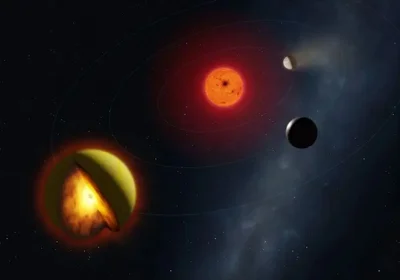
Recent scientific advances have shed new light on the search for extraterrestrial life and the nature of exoplanets. The discovery of exoplanet L 98-59 d, located about 35 light years away, reveals a new class of planets with a persistent magma ocean, challenging previous understandings of planetary composition and longevity. Concurrently, a study published in Nature Astronomy provides concrete evidence of oceans and atmospheric gases on distant exoplanets, suggesting the potential for alien life. These findings, alongside NASA's detection of ancient water flows on Mars, deepen our understanding of planetary environments beyond Earth and guide future missions in the quest to find life elsewhere in the universe.
-
Lead to Gold Transmutation
 research →
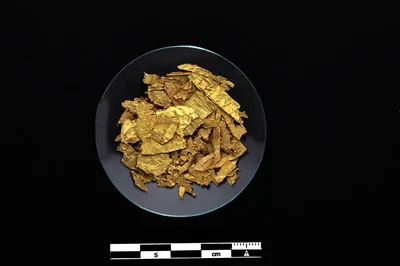
Scientists conducting experiments simulating conditions similar to the Big Bang have accidentally succeeded in turning lead into gold by removing three protons from lead atoms. This breakthrough fulfills a centuries-old alchemical dream, now achievable through nuclear physics rather than chemistry. The discovery highlights the potential of advanced particle manipulation techniques and could open new avenues in element transmutation and materials science. While the practical applications and scalability remain to be explored, this achievement marks a significant milestone in understanding atomic structure and nuclear reactions.
-
New Non-Opioid Pain Therapy
 research →
A groundbreaking preclinical study has developed a gene therapy that targets pain-processing regions in the brain without the use of opioids, thereby avoiding the addiction risks associated with narcotic drugs. This innovative approach offers potential relief for over 50 million Americans suffering from chronic pain, a condition often described as an incessant, overwhelming sensation. Traditional opioid treatments, while effective at reducing pain, carry significant side effects and high addiction potential, making this new therapy a promising alternative. The findings mark a significant advancement in pain management, potentially transforming treatment protocols and improving quality of life for chronic pain patients.
-
Human Neurons Playing Doom
research →
Australian biotech company Cortical Labs has demonstrated a groundbreaking achievement by growing 200,000 living human neurons on a silicon chip that played the classic 1993 first-person shooter game Doom. The neurons controlled the game character in real time, exhibiting adaptive and goal-directed learning despite frequent in-game deaths. This milestone highlights the potential of neuromorphic computing, which mimics the brain's architecture to create more energy-efficient AI systems. Given AI's rapidly increasing energy demands, this approach could revolutionize how AI learns and operates, moving beyond traditional silicon chips. The experiment marks a significant step toward integrating biological neural networks with computing hardware, potentially transforming AI development and applications.
-
NASA Mars Water Evidence
 research →
NASA's Perseverance rover has discovered some of the oldest evidence of flowing water on Mars by detecting an ancient river delta beneath the surface of Jezero Crater. Using ground-penetrating radar, the rover revealed geological features up to 35 meters underground, confirming that this northern hemisphere region of Mars was once flooded and hosted a lake basin. This discovery provides crucial insights into Mars' watery past, which is essential for understanding the planet's potential to have supported life. The findings also support ongoing efforts to explore Mars' geology and prepare for future human missions. Such evidence of ancient water flows is a significant milestone in planetary science and astrobiology.
-
AI-Driven Carbon Structure Discovery
 research →
Researchers at Xi'an Jiaotong University in China have developed an advanced AI-driven framework capable of systematically discovering new solid carbon structures, including one predicted to be harder than diamond. This innovative approach enhances existing AI models to explore material configurations that traditional methods cannot easily access. The discovery of such novel carbon allotropes could lead to materials with unprecedented properties, potentially impacting industries from manufacturing to electronics. This breakthrough exemplifies the growing role of AI in accelerating materials science research and unlocking new technological possibilities.