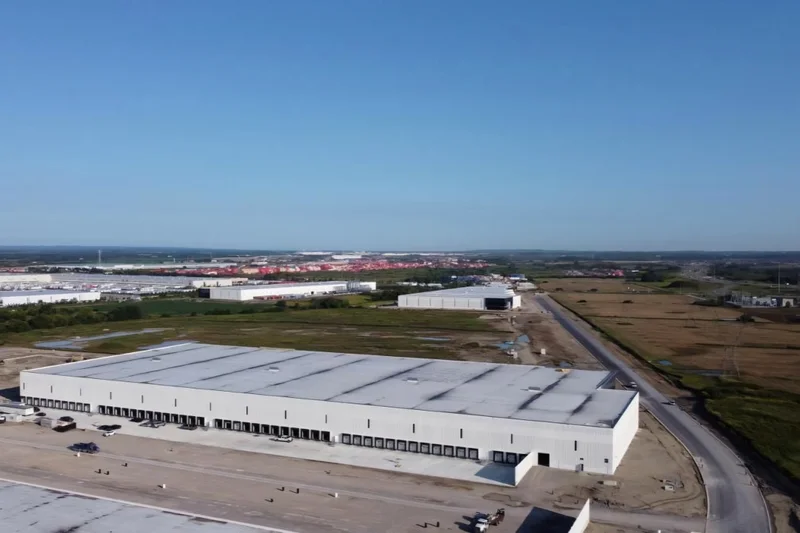
Hanon Systems, a global auto parts maker under Korea's Hankook & Company Group, said Friday it has secured 10 million Canadian dollars ($7.1 million) in government funding to support its first electric compressor plant and research center in Canada.
Innovation, Science and Economic Development Canada, a federal department, announced the funding for Hanon Systems' Canadian unit to back the facility in Vaughan, Ontario, part of the Greater Toronto Area.
The project, including Hanon Systems' own direct investment of 155 million Canadian dollars plus related costs eligible for federal funding, totals 198.75 million Canadian dollars.
The plant will focus on vapor-injected electric compressors for electric and hybrid vehicles, with capacity to produce up to 1.5 million units a year by 2034.
The funding comes through Canada's Strategic Response Fund, part of the government's push to strengthen the domestic electric vehicle supply chain and support its broader zero-emission vehicle strategy.
"This new Hanon Systems facility will be a key hub driving innovation in Canada's electrified parts manufacturing and creating good local jobs," Canadian Industry Minister Melanie Joly said, adding she expects the project to mark an important step in establishing Canada as a leader in the global zero-emission vehicle ecosystem.
Founded in 1986, Hanon Systems already operates two plants in Belleville, Ontario, and one in Concord, Ontario, alongside the new Vaughan site, employing about 900 people across its four Canadian locations.
"This government support will significantly strengthen our electric compressor supply capabilities in the North American market," said Lee Soo-il, vice chairman and CEO of Hanon Systems.
"We will continue to deliver differentiated value to global automakers through next-generation thermal management technology for eco-friendly vehicles."
Hanon Systems, a thermal energy management supplier that joined the Hankook & Company Group in January 2025, posted 10.88 trillion won in revenue in 2025. The company runs 50 manufacturing plants and 23 engineering centers across 21 countries, employing more than 20,000 people.
This article was published with the assistance of generative AI and edited by The Korea Times.