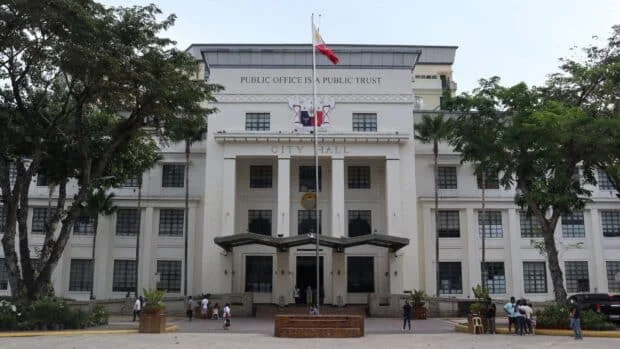
Public EV charging stations at City Hall: Council OKs MOU
CEBU CITY, Philippines — The Cebu City Council approved a resolution authored by Councilor Nyza “Nice” Archival authorizing Mayor Nestor Archival to sign a Memorandum of Understanding (MOU) for the planned installation of public electric vehicle (EV) charging stations at the City Hall.
However, the Council limited its approval to the preliminary MOU, requiring any subsequent definitive agreements, including those covering specific sites, commercial terms, or operational arrangements to return to the legislative body for separate authorization.
Councilor Mikel Rama proposed the amendment during deliberations, arguing that while the MOU merely establishes a framework for negotiations and creates no binding obligations, any future definitive agreement should still require the Council’s approval before the mayor can sign it.
Rama noted that while the City Legal Office correctly classified the document as a preparatory contract, the resolution’s wording appeared to authorize not only the MOU but also future agreements with AC Mobility.
“Maybe we can reword the resolution specifically to state just the MOU. Any subsequent definitive agreement will still require the authority, a separate authorization from this body,” Rama said.
Archival, the resolution’s proponent, accepted the amendment.
The presiding officer then clarified that the council’s approval would cover only the MOU.
“Any other actions after that will go back to us,” the presiding officer said before the council approved the measure.
Questions on locations
Before the amendment, Councilor Franklyn Ong expressed support for the project but questioned the absence of identified sites for the charging stations and the possible traffic implications of their eventual locations.
Ong pointed out that the MOU assigns the city government the responsibility of identifying and allocating suitable parking spaces for the facilities.
“My manifestation is that this is a very good project to have, but we have to understand and know asa gyud nila ibutang (where they will actually put it) and where they will get the power supply,” Ong said.
Because the charging stations may be used by the public and will not be reserved for City Hall officials or employees, Ong said the city should first determine the appropriate locations and consult the concerned departments before proceeding.
READ: Electric dreams: The EV surge in Cebu
“Kay kun wa man gyud ta kaila, mo-traffic” (Because if we don’t know, it could create traffic), he said.
Archival responded that the city has not yet identified the final sites because the MOU only initiates discussions between the parties.
“Wala pay specific site (There is still no specific site). This is just an initial agreement,” she said.
She explained that negotiations on the locations would continue after the MOU’s signing and that the council would still review the proposed sites.
“Mobalik pa ni sa Council kung asa gyud ang specific site (This will still return to the Council to determine the specific sites),” Archival said.
Framework only
The proposed MOU states that AC Mobility intends to install, own, finance, operate and maintain publicly accessible EV charging stations in strategic locations identified by the city government.
The draft initially identifies two surveyed locations within the Cebu City Hall complex—a two-slot AC Type 2 charging station and a two-slot DC fast-charging station—with plans to expand to additional city-designated sites in the future.
However, the agreement also provides that the final number, type and configuration of chargers will depend on engineering studies, site assessments, power availability, regulatory approvals and future written agreements between both parties.
Under the MOU, AC Mobility will finance, design, install, operate and maintain the charging infrastructure while securing the necessary national permits and utility connections.
The city government, meanwhile, will identify and allocate suitable installation sites, coordinate with concerned offices and assist the company in securing local permits and clearances.
The document also explicitly states that, except for its confidentiality clause, the MOU creates no legally binding obligations and serves only as the framework for negotiating future definitive agreements.
The City Council ensured that those future agreements will undergo another round of legislative scrutiny before the city formally commits to the project.
READ: Joining the EV race
Disclaimer: The comments uploaded on this site do not necessarily represent or reflect the views of management and owner of Cebudailynews. We reserve the right to exclude comments that we deem to be inconsistent with our editorial standards.