Paraguay · Business
Key Facts
—Export value. Raw soybean exports hit US$2.273 billion in H1 2026, up from US$1.506 billion a year earlier.
—Volume shipped. Paraguay moved 5.89 million tonnes of raw soybeans abroad, a 43.5% rise from 4.11 million tonnes.
—Top buyer. Argentina absorbed 86% of Paraguayan soybean exports, using them for its domestic crushing industry.
—Economic weight. Soybeans and the broader soy complex accounted for roughly US$2.67 billion of Paraguay’s total US$10.16 billion in exports.
—Price factor. Stronger international prices combined with a recovered harvest to amplify export revenue.
Paraguay’s raw soybean exports soared 50.9% in the first half of 2026, reaching US$2.273 billion, as a sharp harvest recovery and insatiable demand from neighboring crushing giants transformed the landlocked nation’s trade balance.
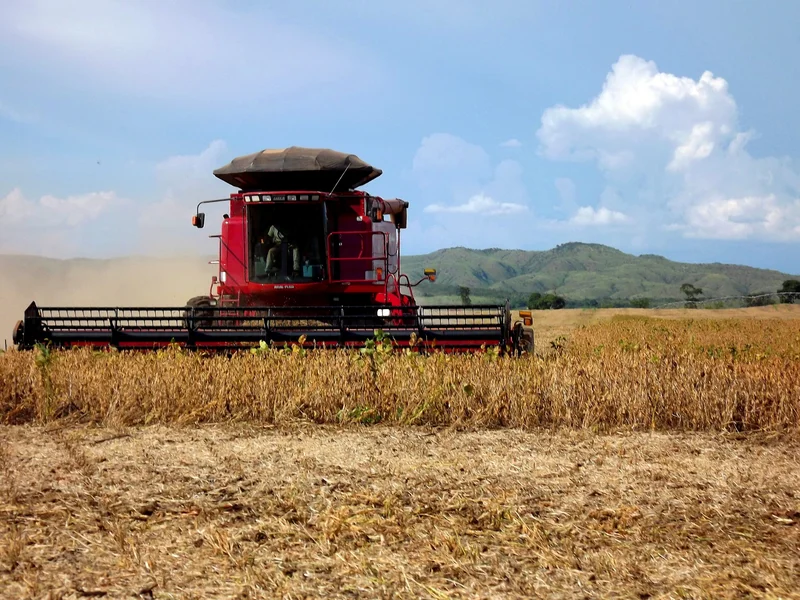
Paraguay is a major global exporter of soybeans, a key crop in its agricultural economy.
One-stop reference
Company Intelligence
Every listed company in Latin America — financials, ownership and structure for 1,450+ companies across 26 exchanges, in one place.
RTAsk Rio TimesCost of living, safety, visas across Latin America›
Why Soybeans Dominate Paraguay’s Economy
Paraguay is the world’s sixth-largest soybean producer, but the crop’s importance to the national economy far exceeds that ranking. The country of just over six million people relies on the soybean complex for roughly one in every four dollars it earns from exports.
The grain is grown mostly by medium and large-scale farmers across the fertile eastern departments of Alto Paraná, Itapúa, and Canindeyú. Because Paraguay has a small domestic processing industry, it exports the vast majority of its harvest as raw beans, making it uniquely dependent on the crushing capacity of its larger neighbors.
Argentina: The Indispensable Customer
Argentina bought 86% of all raw soybeans that Paraguay shipped abroad in the first six months of 2026. That concentration reflects a deeply integrated regional supply chain: Argentine crushing plants in the Rosario hub depend on Paraguayan beans to keep their processing lines running at capacity.
Brazil took a further 9%, while the remaining 5% was split among Saudi Arabia, the United States, Vietnam, Uruguay, Chile, and South Korea. For Argentina, importing Paraguayan soybeans is cheaper and logistically simpler than trucking beans from its own distant northern provinces, cementing a commercial relationship that both economies now treat as essential.
A Harvest Rebound Meets Firm Prices
The 2025/26 growing season delivered a dramatic turnaround after a drought-stricken previous cycle. Paraguay’s soybean harvest bounced back to roughly 10.5 million tonnes, restoring exportable volumes that had been severely depleted and giving traders ample supply to meet foreign orders.
At the same time, international soybean prices firmed on supply concerns in Brazil and steady global meal demand. The combination of more tonnes and better prices amplified export revenue, lifting the broader soy complex — including oil and meal — to US$2.977 billion.
What the Soy Windfall Means for Paraguay
Total Paraguayan exports reached US$10.16 billion in the first semester, a 23.6% year-on-year jump. Soybeans alone contributed US$2.67 billion, making them the single largest source of foreign exchange for the central bank’s reserves.
The influx of dollars strengthens the guaraní, Paraguay’s local currency, and gives the government fiscal breathing room. It also underpins employment in transport, port logistics, and the financial sector, all of which orbit the soybean trade and would contract sharply without it.
Background: Paraguay’s Place in the Global Soybean Trade
Landlocked Paraguay has quietly become an agricultural powerhouse by exploiting its vast, underpopulated eastern plains and direct river access to the Atlantic via the Paraguay-Paraná waterway. Barges loaded with soybeans depart from private ports near Asunción and head downstream to Argentine crushing hubs, keeping freight costs competitive despite the country’s lack of a coastline.
This river highway is a strategic asset that few outsiders appreciate. For expat investors and agribusiness professionals, understanding that Paraguay’s soy competitiveness hinges on barge logistics — not just farm yields — is key to grasping why the sector keeps expanding even when global prices dip.
What It Means for Expats, Investors, and the Guaraní
For foreigners living in Paraguay or considering a move, the soybean boom translates into a stronger guaraní and a more stable macroeconomic environment. A robust trade surplus helps the central bank accumulate reserves, which in turn keeps inflation in check and preserves the purchasing power of dollar-earning expats.
Investors eyeing Paraguayan farmland, logistics, or agritech should note the extreme concentration of export destinations. Argentina’s 86% share is both a strength and a vulnerability: it guarantees steady demand but means any policy shift in Buenos Aires — such as export taxes or currency controls — ripples directly into Paraguayan farm gate prices.
Frequently Asked Questions
Why does Paraguay export raw soybeans instead of processing them locally?
Paraguay has limited domestic crushing capacity. Neighboring Argentina and Brazil possess vast processing industries, so it is more profitable for Paraguay to ship raw beans to their plants. Building local crushing facilities would require heavy capital investment and would still struggle to compete with the scale and efficiency of the Rosario hub in Argentina.
How much of Paraguay’s economy depends on soybeans?
The soybean complex generates roughly one-quarter of Paraguay’s total export revenue. It is the country’s main source of hard currency and a pillar of rural employment and transport activity. When soybean harvests falter, as they did during the previous drought cycle, the entire economy feels the strain through weaker trade figures and pressure on the guaraní.
Where do Paraguay’s soybeans go besides Argentina?
After Argentina’s 86% share, Brazil takes about 9%. Small volumes also reach Saudi Arabia, the United States, Vietnam, Uruguay, Chile, and South Korea, often for niche food-grade or re-export purposes. These secondary markets provide modest diversification, but Argentina’s crushing industry remains the overwhelmingly dominant buyer.