Mexico · Business
Key Facts
—Net profit. MX$15.55 billion (US$888.6 million) in Q2 2026, a 6% year-on-year increase.
—Loan portfolio. Performing loans grew 8% to more than MX$1.27 trillion (US$72.8 billion).
—Net interest income. Reached MX$37.61 billion (US$2.15 billion) for the quarter.
—Exchange rate. Banorte’s results used a closing rate of 17.50 pesos per US dollar at end-June 2026.
—Capital move. The bank recently raised fresh funds through a capital-notes issuance to bolster its balance sheet.
Banorte, one of Mexico’s largest financial groups, closed the second quarter of 2026 with a net profit of MX$15.55 billion (US$888.6 million), a 6 percent rise from a year earlier as more Mexicans took out credit cards and personal loans.
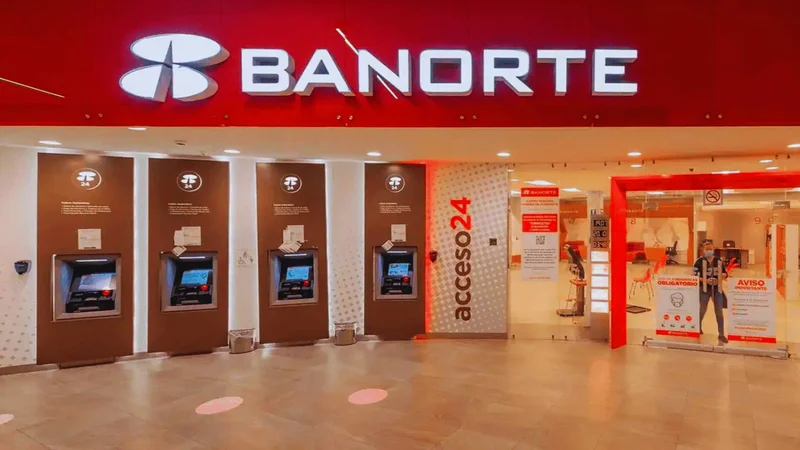
Banorte provides banking and financial services to individuals and businesses across Mexico.
RTAsk Rio TimesMarkets, currencies and the economy›
RT
Ask Rio Times
Latin American markets, currencies and companies.
×
Markets todayThe currencyRates \& inflationEconomy outlook
Where the Growth Came From
The engine behind the result was a performing loan book that expanded 8 percent year-on-year to more than MX$1.27 trillion (US$72.8 billion). Consumer lending led the charge, reflecting a domestic economy where households felt confident enough to borrow and spend.
Net interest income, the money a bank earns from lending minus what it pays on deposits, reached MX$37.61 billion (US$2.15 billion) in the quarter. That steady spread between loan yields and funding costs kept the core business humming.
A Closer Look at the Numbers
The Monterrey-based lender converted its results at an exchange rate of 17.50 pesos per US dollar, the level quoted by Reuters for the end of June 2026. For a foreign investor holding Banorte shares, the US$889 million bottom line offers a clear view of the bank’s earning power in hard currency.
While the group did not publish a detailed breakdown of loan-loss provisions, the 8 percent portfolio expansion suggests credit quality held up well enough to support the profit jump. A sharp rise in bad loans would have eaten into the gain, and that did not happen.
Live Company IntelligenceGrupo Financiero Banorte S.A.B. de C.V — the full investor dossierInside: live share price, market cap, three-year financials, valuation, ESG and peer benchmarks — plus the latest Rio Times coverage.
G
◆ Live Company Intelligence
Grupo Financiero Banorte
MX: GFNORTEOGFNORTEFinancial ServicesBanks – Regional35,176 employees
Valuation \& profitability
Market capMX$499.73B
Revenue (TTM)MX$141.10B
P / E ratio8.3
Profit margin41.8%
Return on equity23.5%
Price \& risk
52-wk low
$145.5652-wk high
$199.00
Beta (volatility)0.15
200-day average$185.03
Revenue trend · 6y
20202025
Latest MX$247.47B
Ownership
Institutions43.1%
Shares outstanding2.77B
Dividend
No regular dividend — earnings reinvested for growth.
What Grupo Financiero Banorte does. Grupo Financiero Banorte, S.A.B. de C.V., through its subsidiaries, engages in the provision of banking and financial products and services in Mexico and internationally. It offers retail banking services, including checking and deposit accounts; credit and debit cards; mortgage, car, payroll, and personal loans; SME loans; payroll accounts; and car, home, life,…
Banorte’s Broader Strategy
The strong quarter adds context to a recent capital-notes placement that shored up the group’s funding base. That operation was a tactical move to lock in long-term resources, not a response to any immediate stress.
With a balance sheet already exceeding MX$1.27 trillion (US$72.8 billion) in loans, the bank is positioning itself to keep financing Mexico’s consumer and business sectors. The fresh capital simply gives it more room to grow without stretching its ratios.
What It Means for Foreigners
For expats, tourists, and international investors watching Mexico, a profitable Banorte signals a banking system that is lending and expanding. That usually tracks with broader economic activity, from new shopping centers in Mérida to factory expansions in Querétaro.
The peso’s level near 17.50 to the dollar also matters. A relatively strong currency means dollar-based returns on Mexican bank stocks translate favorably when profits are reported in US-dollar terms.
Mexico’s Consumer Story and the Banking Sector
Banorte’s consumer-credit surge fits into a larger narrative of financial inclusion in Latin America’s second-largest economy. As more Mexicans enter the formal banking system, credit cards and personal loans become the first products many use, creating a long runway for loan-book expansion.
The bank, founded in 1899 in Monterrey, has grown into one of the country’s top financial groups alongside BBVA México and Santander. Its performance often serves as a bellwether for the health of Mexico’s domestic demand, since its loan book is heavily tied to household consumption and small-business activity.
What Happens Next
Analysts will now watch whether Banorte can sustain its loan growth without a rise in non-performing loans, especially if Mexico’s central bank adjusts interest rates later in the year. Lower rates could compress net interest margins, but they might also spur even more borrowing.
For foreign stakeholders, the bank’s capital-notes issuance and steady profit growth suggest a management team focused on long-term stability. The coming quarters will test whether the consumer spending momentum that lifted these results has further room to run.
Frequently Asked Questions
How much profit did Banorte make in Q2 2026?
Banorte reported a net profit of MX$15.55 billion, which equals roughly US$888.6 million at the end-of-June 2026 exchange rate of 17.50 pesos per dollar. That represents a 6 percent increase compared to the same period a year earlier.
What drove Banorte’s earnings growth?
An 8 percent year-on-year increase in performing loans, especially in consumer credit, powered a 6 percent rise in net profit by boosting the bank’s net interest income. The performing loan book surpassed MX$1.27 trillion, with credit cards and personal loans leading the expansion.
Why did Banorte recently issue capital notes?
The capital-notes issuance was a strategic move to strengthen the bank’s funding base, giving it more flexibility to support future loan growth without pressure on its capital ratios. It was a proactive step to lock in long-term resources rather than a response to any immediate financial stress.