Guwahati
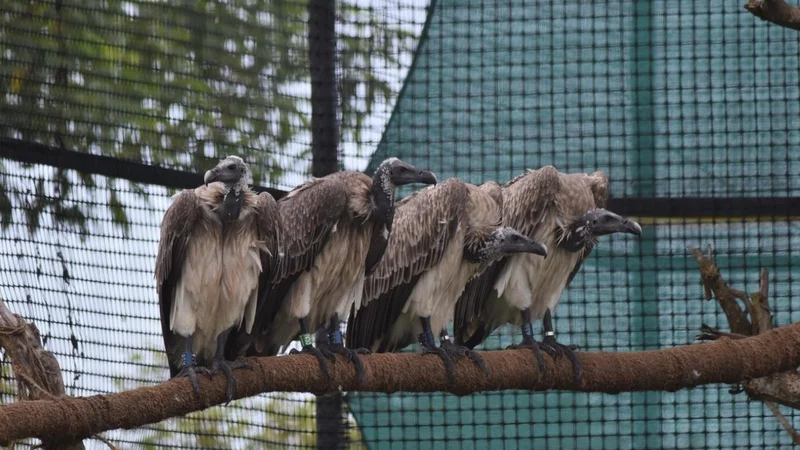
Five slender-billed vultures bred in captivity at the Bombay Natural History Society (BNHS)’s conservation facility in Assam were released into the wild on Friday, marking the first such release anywhere in the world.
The birds, along with five captive-bred white-rumped vultures, were transported from the Vulture Conservation Breeding Centre at Rani near Guwahati and released at the Jatayu Soft Release Centre in the Biswanath Division of Kaziranga National Park and Tiger Reserve.
BNHS deputy director Sachin Ranade said that captive-bred white-rumped vultures (Gyps bengalensis) had been released earlier. “This is the first such release of the captive-bred slender-billed vulture (Gyps tenuirostris) in the world,” he said.
He said the 10 scavengers were shifted from the Rani centre three months ago for acclimatisation at a vulture-release aviary in Biswanath’s Tewaripal area. They were released in the presence of Assam’s Environment and Forest Minister Jayanta Mallabaruah, senior Forest Department officials, and others.
The population of Gyps vultures in India has declined by 99% over the last 20 years due to the use of veterinary painkillers. Although the Centre banned four such drugs—diclofenac, aceclofenac, ketoprofen, and nimesulide—pesticide poisoning remains a threat to vultures in Assam. The BNHS has identified these dangers and has collaborated with the State’s Forest Department on the vulture breeding conservation programme since 2007.
“All the vultures have a numbered, blue ring around the leg and a tag on their backs. These vultures are expected to stay in the area and mix up with the vulture populations around,” Mr Ranade said.
More than 700 vultures, including Himalayan griffons, have died in Assam due to accidental secondary poisoning since 2018. These mass deaths usually happen when these birds feed on carcasses laced with toxic pesticides, often used illegally to target stray or feral dogs.
Wildlife officials said awareness drives are conducted periodically to prevent people from using banned medicines for livestock or from spraying pesticides on dead animals. “We tell people to let the vultures take care of carcasses, their natural food,” an official said.
Published - August 07, 2026 07:31 pm IST