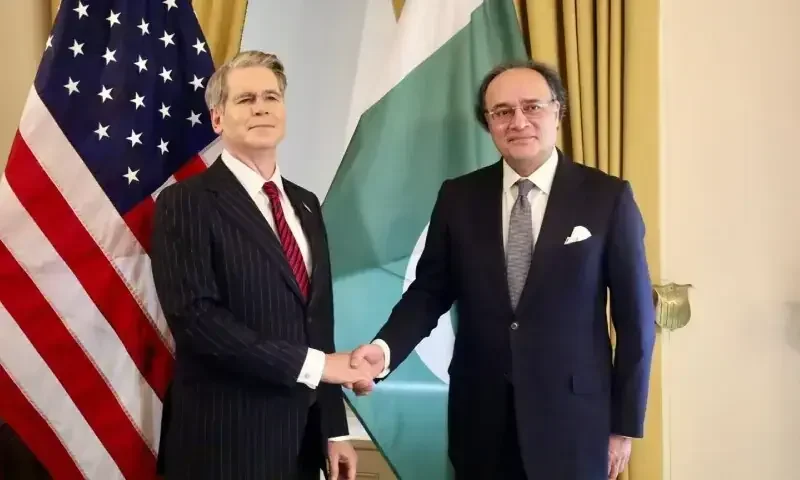
US Treasury Secretary Scott Bessent met Finance Minister Muhammad Aurangzeb a day earlier and welcomed Pakistan’s progress in implementing economic reforms and laying the groundwork for a return to international capital markets, the Treasury said in a statement on Wednesday. According to a statement, Bessent emphasised the “importance of Pakistan’s work to continue its reforms, become more economically self-reliant, boost growth and strengthen its economic resilience”. “Secretary Bessent welcomed the progress Pakistan has made in restoring macroeconomic stability and advancing fiscal consolidation, recognising the government’s efforts to implement significant economic reforms,” Treasury said. The statement added that Bessent also expressed support for Pakistan’s efforts to build greater economic self-reliance and commended the government’s commitment to creating the conditions for a successful return to international capital markets. The statement, however, did not address Pakistan’s request for a $10 billion exchange stabilisation facility. Meanwhile, a statement issued by Pakistan’s Ministry of Finance on Tuesday said that Aurangzeb highlighted Pakistan’s journey from macroeconomic stabilisation to sustainable, export-led growth, while noting the economy’s vulnerability to regional geopolitical developments. The statement added that Senator Aurangzeb sought greater US support for Pakistan’s path to the market, underpinned by improved access to international capital markets, higher foreign exchange reserves and enhanced sovereign credit ratings. It said both sides reaffirmed their commitment to deepening bilateral economic cooperation, promoting greater US investment and advancing strategic projects. The proposed $10 billion exchange stabilisation facility would be a financial mechanism under which the US government, through the Treasury’s Exchange Stabilisation Fund, would provide loans or other backstop facilities to Pakistan to bolster its foreign exchange reserves, ease debt pressures, and help stabilise the economy. Such facilities are primarily used to prevent currency instability and, where necessary, support a partner country’s currency through intervention in foreign exchange markets.
US treasury secretary welcomes Pakistan’s economic reforms, return to capital markets