Chile · Business
Key Facts
—Total investment. Each partner is contributing up to US$500 million for the Mt Holland expansion.
—Output target. Production will double to 760,000 tonnes of spodumene concentrate per year from 2030.
—Joint venture. The project is owned 50/50 through Covalent Lithium, a partnership between SQM and Wesfarmers.
—Technology upgrade. A new ore-sorting facility will recover 3 million tonnes of previously unusable stockpiled material.
—Market context. The decision comes as spodumene prices hovered near US$2,890 per tonne in May 2026.
SQM, the world’s second-largest lithium producer, and Australian conglomerate Wesfarmers have approved a final investment decision to double output at their Mt Holland lithium project in Western Australia, committing up to US$500 million each to the expansion.
SQM is a Chilean mining company that extracts lithium for batteries and other products.
RTAsk Rio TimesCost of living, safety, visas across Latin America›
What the Mt Holland Expansion Delivers
The partners will build a second concentrator and an integrated ore-sorting facility at the remote mine site, roughly 500 kilometers east of Perth. The upgrade lifts annual spodumene concentrate production from 380,000 tonnes to 760,000 tonnes on a 100% basis, with the first new tons expected by 2030.
Wesfarmers pegged its nominal share of capital expenditure at A$645 million to A$715 million (US$450 million to US$500 million). The ore-sorting unit alone will unlock roughly 3 million tonnes of additional spodumene concentrate over the life of the mine by processing material once considered waste.
Why a Chilean Miner Is Growing in Australia
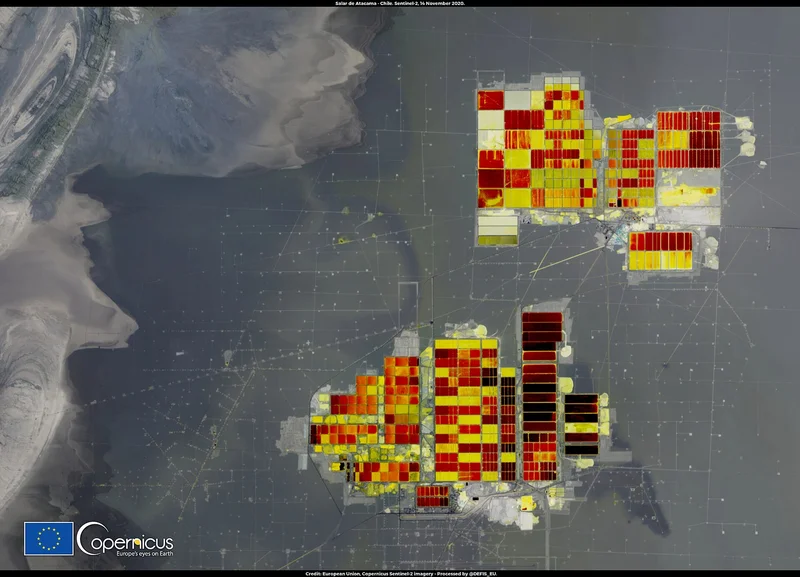
For SQM, the Covalent Lithium joint venture is a deliberate hedge. The Santiago-based company built its reputation on the Atacama salt flat in Chile, where it extracts lithium from brine.
Adding a hard-rock Australian asset diversifies its geographic footprint and shields the firm from political or operational risks in any single country.
Industry analysts describe Mt Holland as SQM’s first major step into Australian lithium. The project gives the company a long-life, low-cost source of spodumene concentrate, the raw material that feeds the battery supply chains of electric vehicle makers across Asia and North America.
Live Company IntelligenceSociedad Quimica y Minera de Chile SA ADR B — the full investor dossierInside: live share price, market cap, three-year financials, valuation, ESG and peer benchmarks — plus the latest Rio Times coverage.
S
◆ Live Company Intelligence
Sociedad Quimica y Minera de Chile
NYSE: SQMSQM-BBasic MaterialsSpecialty Chemicals7,773 employees
$19.66B
Market cap
Analyst target $85.73
Wall Street view
3.9Moderate Buy/ 5
10 Buy5 Hold1 Sell
Avg. price target $85.73 · +20% vs 200-day
Valuation \& profitability
Market cap$19.66B
Revenue (TTM)$5.30B
P / E ratio24.1
Profit margin15.4%
Return on equity13.4%
Price \& risk
52-wk low
$35.4152-wk high
$97.29
Beta (volatility)0.99
200-day average$71.61
Revenue trend · 6y
20202025
Latest $4.57B
Ownership
Institutions34.1%
Shares outstanding143M
Top holderBaillie Gifford \& Co Limited.
Institutional holders5+ funds
Dividend
Yield1.5%
Payout ratio23.2%
Fwd. annual$1.03
What Sociedad Quimica y Minera de Chile does. Sociedad Química y Minera de Chile S.A. produces and sells specialty plant nutrients, and iodine and its derivatives in Chile, Latin America, the Caribbean, Europe, North America, Asia, and internationally. It offers potassium nitrate, sodium nitrate, specialty blends, and other specialty fertilizers under the Ultrasol, Qrop, Speedfol, Allganic, Ultrasoline, Prop, and Prohydric…
Betting on a Price Rebound
The expansion arrives during a prolonged lithium slump. Spot prices for spodumene concentrate have languished well below the peaks of 2022, with one industry data point showing a May 2026 price of US$2,890 per tonne.
That is a far cry from the boom years but represents a modest rally from recent troughs.
Both partners frame the decision as a cost play. Doubling output lowers the unit cost of each tonne produced, which improves margins even if prices stay flat.
The move also positions Covalent to capture cash flow quickly when a sustained recovery in electric vehicle demand tightens the global lithium market.
How SQM Fits into the Global Picture
SQM’s lithium business spans Chile, Australia, and China, supplying giants like LG Energy Solution and Tesla. The company has been racing to expand capacity while rivals pull back, a contrarian bet that it can serve a market expected to triple in size by 2035.
The Mt Holland expansion reinforces that strategy. By securing more hard-rock supply, SQM complements its brine operations and builds a portfolio that can respond flexibly to shifts in battery chemistry and customer demand.
For foreign investors watching Latin America’s commodity champions, the message is clear: SQM is no longer just a Chilean story.
What This Means for Expats and Investors
For expatriates and foreign investors with ties to Latin America, SQM’s Australian expansion signals a maturation of the region’s commodity giants into truly global players. The company is using cash generated from its Chilean brine operations to fund growth in a stable, mining-friendly jurisdiction, which could reduce the risk profile of its overall business.
Investors who track SQM on the New York Stock Exchange should note that the Mt Holland project adds a hard-rock pillar to a portfolio long dominated by brine extraction. This diversification may offer a buffer against regulatory changes in Chile, where lithium nationalization debates have periodically rattled markets.
The expansion also ties SQM more closely to Asian battery supply chains that depend on Australian spodumene.
What Happens Next
Construction on the second concentrator and ore-sorting facility is expected to ramp up over the next several years, with first production targeted for 2030. In the near term, the partners will focus on detailed engineering and procurement contracts, while continuing to operate the existing concentrator at full capacity.
The global lithium market will be watching closely. If electric vehicle sales accelerate in the second half of the decade as many analysts forecast, Covalent Lithium could be bringing new supply online just as demand outstrips current production capacity.
For now, SQM and Wesfarmers are placing a long-term wager that the energy transition remains on track.
Frequently Asked Questions
What is the Covalent Lithium joint venture?
Covalent Lithium is a 50/50 partnership between Chilean miner SQM and Australia’s Wesfarmers, a diversified industrial conglomerate with retail, chemical, and mining interests. The venture operates the Mt Holland mine and processing assets in Western Australia, producing spodumene concentrate for the global battery supply chain.
Why are SQM and Wesfarmers expanding during low lithium prices?
The expansion is designed to lower unit operating costs by spreading fixed expenses over a larger production base. This improves profitability even if prices remain subdued, and it positions the venture to capture significant cash flow quickly when electric vehicle demand pushes lithium prices higher.
How much lithium will the expanded Mt Holland project produce?
Once the second concentrator is online around 2030, the mine will produce 760,000 tonnes of spodumene concentrate per year, double its current capacity of 380,000 tonnes. The new ore-sorting facility will also recover an additional 3 million tonnes of material over the life of the mine from stockpiles previously considered waste.