July 23, 2026 — 5:00am
Save
You have reached your maximum number of saved items.
Remove items from your saved list to add more.
AAA
Bitter rivals? Brothers and sisters in arms in the cause of the political right? Frenemies? How best to characterise the relationship between the Coalition parties and One Nation? It’s not easy to land on the right description. Are they opposed profoundly to each other on policy grounds and their respective visions for Australia or are the areas of overlap more considerable than the differences?
Angus Taylor gave an important speech to the Sydney Institute this month in which he excoriated One Nation. After dancing around awkwardly for five months as he avoided speaking negatively about One Nation and Pauline Hanson, Taylor found a new groove and warned of “an eternity of pain” for the nation should they get anywhere near the reins of power. One Nation would make “things worse” because the party is a “column of smoke”.
Opposition Leader Angus Taylor.Alex Ellinghausen/Michael Howard
Was he speaking from a position of conviction or desperation? It’s not as if Hanson was some new phenomenon with a hitherto unrevealed worldview and set of prescriptions. If he’d come to the leadership in February speaking with such force and certitude, his new stance would be more credible. Instead, at the start he echoed Hanson on immigration and the rejection of climate change as a serious problem. Later, he promised to deny welfare and the NDIS to non-citizens residing in Australia. He was unbothered by preference swaps with One Nation, as were the recently installed Liberal federal president Tony Abbott and the Liberals’ spiritual leader John Howard.
One Nation’s popularity presents plenty of risks for Taylor and his party. If One Nation is now so unacceptable, where does that leave Jess Wilson and the Liberal-National coalition she leads in Victoria? The Victorian election is still four months away but One Nation is polling well. There’s a decent chance that Wilson might have to reach an accommodation with One Nation, depending on how the votes fall. Helping One Nation, which Taylor says is worse than Labor, to gain seats through preference deals would seem inconsistent. Making a formal deal to govern with One Nation’s support or involvement would surely, by Taylor’s lights, be worse.
Common to the Coalition and One Nation is the deep belief that the biggest problem with Australia is the Albanese government. That is to be expected with non-government parties at any time. But it has a special significance now. A wide range of comparable governments all over the world are struggling to break out of varying versions of a low-growth, high-inflation predicament while going through a new industrial revolution via AI and serious disruptions in trade and security architecture thanks to the American president.
Credit to Taylor for keeping to his word on producing policies – so far he’s come up with positions on tax, migration, regulations and energy. But there’s no acknowledgment that the problems we’re experiencing might be systemic or fundamental. No effort is made to comprehend the possibility that an economic model established several decades ago might have lost its utility. That is the key problem for the Liberals who, as the South Australian election and the national polls show, have been relegated to third place behind Labor and One Nation. The Coalition and One Nation seem driven by an attachment to an Australia that used to exist.
Sustained political success cannot be gained by focusing on the past; it has to come from looking to and embracing the future. That requires new ideas and an acknowledgment of the obligation to see the contemporary world as it really is. There are some signs that this has finally dawned on the Albanese government. No economic model, no matter how successful, can last in perpetuity. The Keynesian model of pump-priming that was generally applied in the democratic world after World War II made it to the end of the ’70s but fell away quickly in favour of deregulation of labour and capital markets and privatisation. It worked for a long time but, just as intense competition can lead to monopolistic behaviour by whoever comes out on top, inevitably it led to distortions.
In Australia, the care economy is a burgeoning sector, largely privatised and with a rising number of problems relating to cost and performance. Workers in aged care and childcare need to have their pay subsidised by the state because the businesses they work for can’t or won’t pay them enough. It is dysfunctional. Property prices have been distorted extravagantly by the shift of housing from being chiefly a reasonably priced social good to a monetary asset to be traded and hoarded. So too education. This week we learnt that due to a 30-year-long taxpayer-subsidised expansion of non-government schools in the name of choice, fees have grown so much that increasing numbers of parents are having to ask their elderly parents to help with the payments. Placing the burden of paying to educate a child on two generations is an ultimately unsustainable situation. These are big policy challenges.
Taylor’s policy prescriptions so far are to slash migration, do away with all action to fight climate change and return to a greater reliance on fossil fuels, move towards an open-slather approach to regulations across the economy, kill industry and infrastructure programs, cut spending and hand ever-bigger tax cuts to businesses and wage earners. On Wednesday, he consolidated them in a document called Our Plan, which he will wield at journalists and public meetings for the next few months.
Old wine in new bottles. There are echoes of 12 years ago and the newly elected Abbott government’s first budget, built on the expectation that once the Rudd government was defeated and the nation was de-Laborised, normal service would be resumed. It did not work out. The budget crashed. The Coalition won two more terms by changing leaders but mostly just kept the country and the economic system ticking over. That undistinguished effort is why, in part, the Coalition has progressively lost so much support since the 2022 election, first to Labor and more recently to One Nation. Due to Taylor’s reset, the Coalition is now in active combat with both parties. It could be the making of him. Or it will destroy him.
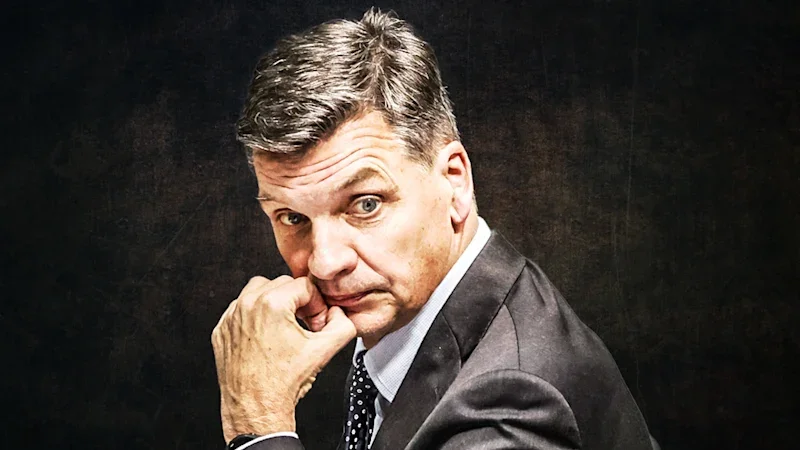
Shaun Carney is a regular columnist, an author and former associate editor of The Age.
The Opinion newsletter is a weekly wrap of views that will challenge, champion and inform your own. Sign up here.
Save
You have reached your maximum number of saved items.
Remove items from your saved list to add more.
Shaun Carney is a regular columnist, an author and former associate editor of The Age.