Recommendations
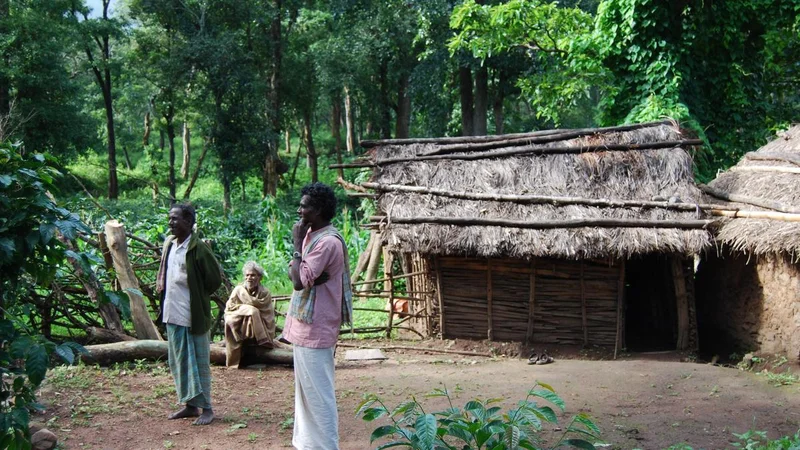
Wildlife conservation is typically achieved by excluding, evacuating or alienating the rights of indigenous people and local communities. A new research article published in the journal Ecosystems and People said this “fortress conservation approach” has led to uprooting, ongoing distress and despondency worldwide, and offers the Soligas in the Biligiri Rangaswamy Temple Wildlife Sanctuary (BRTWS) as a prime conservation exemplar, where tribal people have been living with wild animals, especially tigers, leopards, elephants and managing forest resources for millennia.
It highlighted the need to understand and recognise the importance of Adivasi people’s connections, knowledge and skills in forest management.
The article, ‘Fortress conservation versus traditional forest management: The example of Soliga tribal people from the Western Ghats, India’ authored by Kamaljit K. Sanghaa, M. Balasubramanian, C. Madegowda, Siddappa Setty and Jeremy Russell-Smitha from Research Institute for the Environment and Livelihoods, Charles Darwin University, Darwin, Australia; Centre for Ecological Economics and Natural Resources, Institute for Social and Economic Change, Bengaluru; and Ashoka Trust for Research in Ecology and the Environment, Bengaluru, was published on Monday, July 27.
Engagement over years
The researchers engaged formally and informally with Soliga elders to co-develop insights and solutions for both conservation and community needs through two workshops between 2022 and 2023, in addition to one-on-one talks with key elders in the community during their visits to the B.R. Hills since 2017.
Throughout the Western Ghats, Adivasi people and many local communities (approximately 5,000,000 Adivasi people just in Kerala and Karnataka as per 2011 Census data) have well-established, imbued relationships with the landscape, the researchers pointed out in the article.
Traditionally, the article said, Soligas managed the Biligiri area applying mosaic litter burning and small-scale swidden agriculture, without having to deal with noxious invasive weeds such as L. camara. People used to clear land for two to three years of cultivation, which subsequently enabled the colonisation of palatable grasses that served as food resources for various herbivores and, consequently, carnivores, especially tigers.
“The management of forests and related revered sacred and cultural values is integral to the Soligas’ way of life. They have hundreds of sacred and cultural places embedded within the Biligiri landscape with which people hold ongoing relationships through various customs, cultural practices, ceremonies and norms. Such an integrated coexistence of Soligas with the Biligiri landscape challenges prevailing conservation approaches, which typically rely on principles of human exclusion,” it said.
The article also noted that during workshops and informal conversations, Soliga elders expressed their aspirations to contribute to sustainable forest management outcomes.
“For example, Soligas have well-established local ‘podu’ level committees called ‘Sangha’ which are further grouped into ‘Taluka Sangha’, bringing all Soligas men and women together for decision-making. They have collectively prepared culturally relevant management plans with help from local NGOs that can be discussed with Forest Department authorities. On occasion, Soligas are asked to assist in managing wildfires, applying culturally relevant knowledge and skills. A few get the opportunity to work casually as forest guards,” it said.
Living with the wild
Occasionally, accidents involving wildlife are reported in the Biligiri hills, including annual encounters with tigers or elephants and leopard attacks on livestock. However, one of the perspectives cited in the article said, “We’ve been living with tigers for centuries. We know tiger and elephant behaviour, and they know ours. We know their smell and sound, and we do not go to those places. Many birds ring alarm bells, so we move to different areas. Monkeys and langurs give call sounds. These are life skills. We look after the forest and leave some things for the animals; for example, we do not take all the honey, we leave some for the animals. We worship the tiger, elephant and bison.”
“Involving tribal people with the knowledge and skills to manage their natural systems can offer a win-win situation for supporting people’s well-being and for governments to reduce management costs and protect wildlife in Protected Areas. The BRTWS example demonstrates the cost-effective practical advantages of a collaborative, community-based conservation approach for meeting Sustainable Development Goals (SDGs) and ensuring the delivery of ecosystem services for local communities and wider society,” the researchers said.
Published - July 29, 2026 06:01 am IST