The United States is tightening its grip on Cuba in pursuit of regime change. It is implementing a strategy of gradual suffocation to force the downfall of the Castro regime. But it is concerned about the role that Cuban intelligence services may be playing at this time. To counter this, the Central Intelligence Agency (CIA) has increased its operational resources on the island in recent months to intensify efforts to facilitate a change in leadership, according to The New York Times. Cuba has been designated a “priority 1” target, alongside China, Iran, and Russia, in a recent document outlining the intelligence agencies’ main objectives.
“They actually are an influence and espionage superpower,” U.S. Secretary of State Marco Rubio said days ago in an interview on the conservative Fox News channel to explain the importance of Cuba’s intelligence services. “If you look at the history of espionage in the United States, Cuba is the only country that consistently has implanted and embedded spies in our system without even paying them,” he added.
The White House launched a campaign against the Cuban regime a little over six months ago. It imposed a strict oil embargo that has plunged the island into darkness and approved several packages of sanctions to block the assets and property of dozens of public bodies and senior Cuban officials. The escalation has been such that foreign-run hotels, previously the island’s main source of income, have had to close and cease operations while the squeeze on the regime continues.
“Cuba’s military and intelligence institutions are the key enforcers of domestic repression and nodes of kleptocracy, notably through the military-run conglomerate Grupo de Administración Empresarial S.A. (GAESA),” Rubio said Thursday in a statement announcing new U.S. sanctions on Cuban officials and public bodies “who facilitate Havana’s military relationships and the shipments of arms to the Cuban regime.” The sanctions target five Cuban companies and eight officials, among them Roberto Legrasotolongo, chief of the General Staff of the Revolutionary Armed Forces and first deputy minister of Cuba’s Ministry of the Revolutionary Armed Forces (MINFAR).
In recent weeks Rubio has voiced concern about the reliability of Washington’s information on Cuba because of the infiltration of Cuban spies into the U.S. administration. “We had a U.S. ambassador, who ended up being a Cuban spy and was recently convicted,” he said. “We’ve had them penetrate the highest levels of Defense Intelligence Agency (DIA),” he added in reference to DIA analyst Ana Belén Montes, who was sentenced to 25 years for espionage in 2002, a case Rubio described as one of the “single biggest intelligence failures” in U.S. history.
“I would rank them [the Intelligence Directorate of Cuba] as probably the most aggravating intelligence service I’ve ever worked against. That’s not just because they’re so devious and so ruthless, but because they’re so good,” James Olson, former head of CIA counterintelligence, wrote in a report titled Cuba, The Capital of 21st-Century Communism, published by the State Department three weeks ago. Olson writes in the report: “Cubans remain embedded in our government… I guarantee you, we only know the tip of the iceberg. They’re much better than the KGB ever was.” The 100-page document accuses the Cuban regime of “supporting an unprecedented wave of left-wing terrorism in the United States.” Since it was published on July 20, the State Department has retweeted it several times each week alongside messages about the situation in Cuba.
Rubio, who is of Cuban origin, is leading actions within the U.S. administration to bring about political change on the Caribbean island, located just 90 miles from Florida. The secretary of state considers the country “a failed state” and “a threat to the national security of the United States.”
Washington is stepping up pressure on the Castro regime as the island teeters on the verge of collapse because of the strict oil blockade. It has barely any power supply; outages are daily, there are shortages of basic goods, and the island is on the brink of a humanitarian crisis.
The CIA has had a secret operational group on the island for almost two years, but it has increased resources by adding intelligence analysts, counter-surveillance officers, and other agency personnel to penetrate the most influential levels of Cuban society and persuade them of the need to replace hardline leaders with figures more open to change, U.S. media report.
They are also recruiting new informants to increase the flow of intelligence in case the White House ultimately considers a military-style operation similar to the one carried out in Venezuela earlier this year to capture former president Nicolás Maduro and install Delcy Rodríguez in power under a Washington-led guardianship system.
The spy agency has sent new personnel to Cuba to intensify its operations, Politico also confirmed. Washington is positioning itself on the ground to gather more information about the island’s current situation. The Donald Trump administration revised the National Intelligence Priorities Framework (NIPF) a few weeks ago and included Cuba as a “priority 1.”
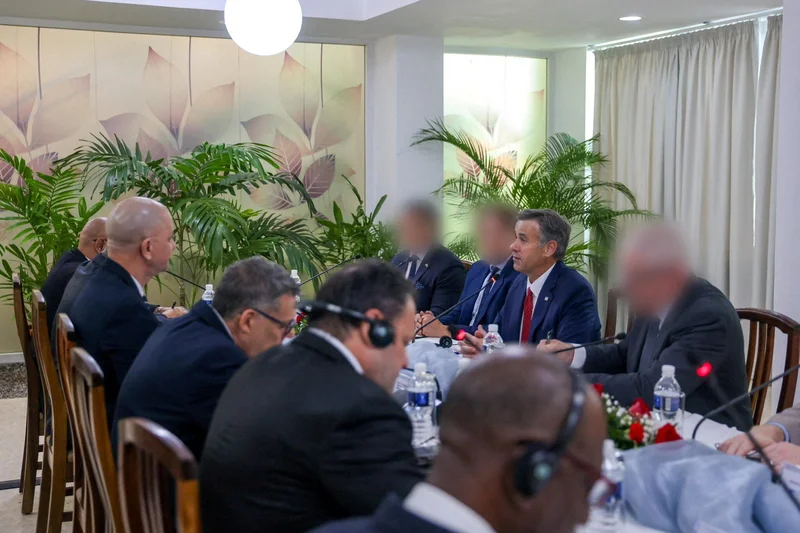
The escalation against the island accelerated with Trump’s return to the White House. The Republican president placed Rubio at the head of the operation to promote political change. As evidence of renewed interest in Cuba, Washington sent CIA Director John Ratcliffe to Havana in May to meet with regime officials, including Raúl G. Rodríguez, known as “El Cangrejo,” Raúl Castro’s grandson and bodyguard.
Ratcliffe, the highest-ranking U.S. official to set foot on the island since Trump’s campaign began, delivered several messages. He warned Havana to stop cooperating on intelligence matters with China and Russia. He also expressed his admiration for Cuba’s intelligence services and offered cooperation should a regime change occur; finally, he issued an ultimatum demanding that Cuba undertake the political and economic reforms Washington is calling for.
The CIA’s presence in the Caribbean country is nothing new. It has maintained a more or less constant presence there since the 1960s. In recent years, the agency has declassified some secret documents regarding the role of its spies on the island, including during the 1961 Bay of Pigs incident, among others.
During Trump’s first term, several U.S. intelligence agents suffered strange health problems in what came to be known as Havana syndrome. As a result, the Republican kept the presence of spies to a minimum until six months ago, when he launched a fierce campaign to exert pressure and gain control over the island.