I've been testing gaming laptops for more than a decade, and I've observed an evolution of sorts during those years. Gaming laptops were once expensive, thick, and altogether impractical—not to mention pathetic in performance compared to a desktop PC. In almost all cases, it just made more sense to buy or build a desktop.
Now, not only is a gaming laptop a solid alternative to a gaming tower, but it isn’t much larger than its non-gaming laptop cousins. To serve you the very best options for your specific gaming needs, I've reviewed more than a dozen models in the past year, including budget-friendly options and decked-out powerhouses.
If one of the options below doesn't work for you, check out my comprehensive guide to How to Buy a Gaming Laptop for more information.
Updated August 2026: I've added the Alienware 15 and Lenovo LOQ 15 Essential Gen 11 as alternative budget options to buy. I’ve also confirmed links and ensured up-to-date prices throughout.
- Powerful, Thin, and Gorgeous
- Cheap Gaming Laptops That Are Worth It
- Experimental Stuff
- Other Good Gaming Laptops I’ve Tested
- What Makes a Great Gaming Laptop?
- Specs to Look for in a Gaming Laptop
- Which Laptop Brand Is Best for Gaming Laptops?
- How Much Should You Spend on a Gaming Laptop?
- What Size Gaming Laptop Should You Buy?
- Is It Worth Getting OLED on a Gaming Laptop?
Powerful, Thin, and Gorgeous
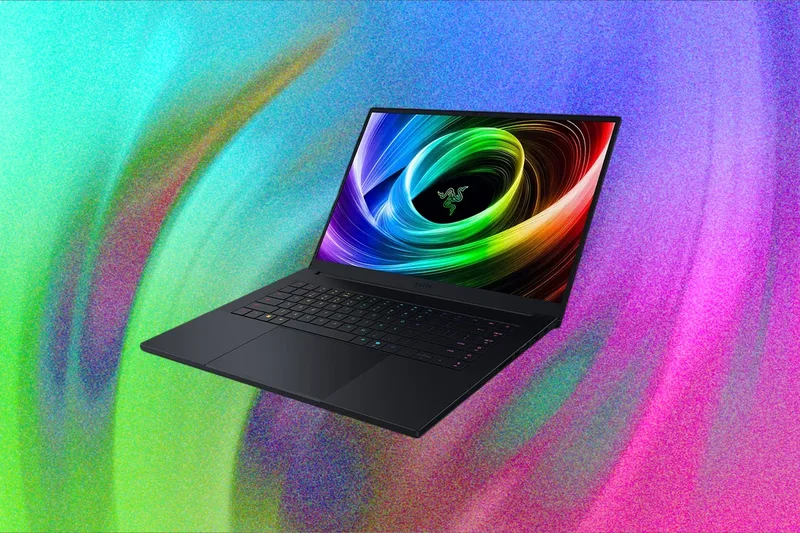
The PC gaming aesthetic of the past was loud and in your face—blaring lights, harsh angles, and oversize vents. These days, it's all about embracing a clean, modern style. Thinner and less chunky is ideal, as is a subtler approach to RGB and branding. The Razer Blade has always been a proponent of that new generation of PC gaming, and the Blade 16 (8/10, WIRED Recommends) embodies that aesthetic best. Aside from the green-snaked logo on the lid, a slim few elements here scream “gamer.”
There's a reason many regard the Razer Blade line as the MacBook of gaming laptops (complimentary): It sports a machined aluminum construction, thin bezels, very few vents, and simple straight edges. In 2025, the Blade 16 came out with an even slimmer profile, despite its ability to range up to an RTX 5090, which is the most powerful laptop graphics card right now. It's really expensive, though, and currently only available through Razer.com.
If you like the design but want something cheaper and more accessible, the smaller Razer Blade 14 (8/10, WIRED Recommends) is also impressive. Your GPU options with the 14-inch model are only between the RTX 5060 and RTX 5070, but you'll be surprised by its strong performance, nonetheless. The Blade 14's compact nature makes it the better choice if you're planning to bring it around campus or on work trips.
For years, the Razer Blade laptops were alone in their pursuit of being the ultimate minimalist gaming laptop. Then, Asus came around with its ROG Zephyrus G14 and G16. Once relegated as cheaper knockoffs of the Blades, they've evolved into unique devices that are every bit as premium as Razer's laptops (and now they also cost about the same). They're just as thin, powerful, and all-around high-end. Like the Blades, the G14 and G16 both use a high-resolution OLED display.
Another class of high-end gaming laptops focuses more on performance than on being thin or portable. The Lenovo Legion 7i Gen 10 (7/10, WIRED Recommends) is one of my favorites in this category, featuring a beautiful white chassis, glossy OLED display, and either RTX 5070 Ti or RTX 5080 for graphics. Unlike some OLED displays, the Legion 7i's screen can crank up to more than 1,000 nits of brightness. The result is some really splendid HDR performance that brings games to life.
And though, as mentioned, this laptop prioritizes performance above a sleek build, it's only 0.7 inches thick and still includes many ports on the back. offering either the
Finally, if you want that upper echelon of performance, the Asus ROG Strix G16 is among the most budget-friendly gaming laptops (currently selling for $1760) you can buy these days that still gets you a powerful RTX 5070.
Cheap Gaming Laptops That Are Worth It
No gaming laptops worth buying are actually cheap relative to all laptops on the market. High-refresh-rate displays and discrete graphics will always make them more expensive than standard laptops. But as you get closer to $1,000, there is one laptop I always come back to: The Lenovo LOQ 15 (8/10, WIRED Recommends). Pronounced “lock,” this Lenovo sub-brand is known for cutting the fluff to give gamers a top-rated performance at an affordable price. No laptop does that better than the LOQ 15. Many laptop manufacturers sell their RTX 5060 configurations for hundreds of dollars more. If you're shopping around $1,000, there's no reason not to buy the LOQ 15. Just do it.
Want to save some extra cash? Another option that costs less than the LOQ 15 while making very few compromises is the MSI Cyborg A15, which comes with an RTX 5050. While laptops at this performance level went for as little as $600 in the past, these days, they cost right around $1,000. The Cyborg A15 isn't the prettiest laptop in the world, nor does it have a high-quality display. But it gets you decent performance in games for less money than many of the other options. And unlike the Acer Nitro V16 and Lenovo LOQ 15 Essential (more on those later), the A15 comes with an appropriately sized 180-watt power brick to ensure you're getting max performance.
You will also find lots of gaming laptops for less than $1,000 that use older graphics cards, such as the RTX 4050 or 3050. In general, I'd recommend staying away from those. They're only one or two generations back, but remember: Nvidia only releases new laptop graphics cards every couple of years. So, an RTX 4050 laptop may be well over three years old already, and an RTX 3050 is over five years old. Not only do you get worse graphics performance in this case, but these laptops are much more likely to need replacing sooner.
Experimental Stuff
One exciting facet about gaming laptops is their experimentation. While clamshell gaming laptops with a conventional Nvidia GPU are the industry standard, there are a few ways to take your PC games on the go that stretch the boundaries. You might consider a gaming handheld, for example, like the Steam Deck or Xbox Ally X. These handhelds have their fans, and though you can't also do your homework on these devices, they work great on couches, trains, and planes.
Beyond handhelds, there are other interesting gaming laptops that play with form factors. My favorite is the Asus ROG Flow Z13 (7/10, WIRED Recommends). This is a 2-in-1 gaming laptop, meaning it's essentially a Windows tablet with a detachable keyboard cover. All the guts of the device are behind the screen, which, in the case of the 2025 model, includes the AMD Ryzen Max+ chip. In other words, it's a Surface Pro designed for playing games.
Nearly every gaming laptop I've ever used gets warm on the palm rests and keyboard while gaming, leaving you with sweaty hands after a few missions of Arc Raiders. But not so with the Flow Z13; because it's a tablet, your hands are never near vents and warm surfaces. It’s also one of the smallest and most compact gaming devices you can buy. Asus has also been experimenting with dual-screen gaming laptops for years, with the most interesting edition out later this year: the ROG Zephyrus Duo. I saw it at CES a few months ago, and it was one of the most exciting new gaming devices I've seen in a while.
Many laptops that aren't necessarily marketed as gaming products can play games. Some laptops with discrete GPUs are oriented toward content creators, like the Lenovo Yoga Pro 9i (7/10, WIRED Recommends) or the Asus ProArt P16 (9/10, WIRED Recommends). I like both of these options, particularly given the new version of the Yoga Pro 9i with an RTX 5050 for $2,400. Not bad.
For something a bit more grounded, I'd consider the Dell XPS 14 (8/10, WIRED Recommends). While it doesn't have a discrete graphics card, you can configure it with Intel's latest X7 integrated graphics, which are surprisingly powerful. While I wouldn’t buy the XPS 14 mainly as a gaming device, like a 16-inch MacBook Pro (8/10, WIRED Recommends), it's absolutely capable of running AAA games on the side. I was able to average 56 frames per second in Cyberpunk 2077 with the settings at medium. For a laptop without a discrete graphics card, that's kind of mind-blowing. When you need it, Intel offers both a low-latency mode and XeSS upscaling. When used together, you get faster frame rates without too much visual distortion or input lag. Your battery will also benefit if you go with a non-gaming laptop. Unlike many of the gaming laptops on this list, it actually gets fantastic battery life, competitive with the 14-inch MacBook Pro (8/10, WIRED Recommends).
Other Good Gaming Laptops I’ve Tested
Alienware 15 for $1,160: For the price, the Lenovo LOQ 15 is a better buy, given it offers both more power and a better display. It's the screen, in particular, though, that keeps the Alienware 15 (7/10, WIRED Recommends) from being a full recommendation, as the colors look desaturated. However, the RTX 5050 configuration of the Alienware 15 that I tested performs well for what it is and is solidly built.
Lenovo LOQ 15 Essential Gen 11 for $1,850: Not to be confused with the LOQ 15 I mentioned as my top recommendation, this newer model intends to be an entry-level option (despite its current price tag being higher). The LOQ 15 Essential is, however, a step up from the Alienware 15 in terms of the quality of the display. The configuration I tested comes with an RTX 5060, which offers better gaming performance over the Alienware. Its crucial flaw is that its included power adapter is only 135 watts, meaning it'll actually drain the battery, even while plugged in when playing games in Performance mode.
Acer Nitro V 16 for $1,049: This laptop has the same 135-watt power adapter problem as the LOQ 15 Essential, unfortunately, meaning it sucks power while playing heavy games in Performance mode. This laptop sold for hundreds less six months ago, and at that lower price, the problem was easier to accept. Now, at the premium rate, I find the issue to be less forgivable. Even so, it's one of the few laptops with an RTX 5050 that's currently available for $1,000. While I like the more modern 16:10 aspect ratio display, the Cyborg A15 is a better buy right now.
Asus TUF Gaming A14 for $2,200: I tested this laptop (6/10, WIRED Recommends) earlier this year and was impressed by the quality of the design, display, and touchpad. The AMD Strix Point CPU used inside is also compelling, providing the best gaming performance ever seen on integrated graphics. Even so, it's priced much higher than last year's more conventional RTX 5060 version, which is still more powerful.
Alienware 16X Aurora for $2,780: Before the 17X Aurora launched earlier this year, it seemed that Alienware had lost some focus with its gaming laptops. Thankfully, the 16X Aurora (7/10, WIRED Recommends) felt like a return to form. It attempts to offer the right balance of performance, premium features, and price. At its current cost, it nails those goals. While there are cheaper ways to get RTX 5060-level performance, the bright, color-accurate IPS display is a great upgrade, as is the premium touchpad. All considered, the Alienware 16X Aurora ended up being my favorite Alienware gaming laptop in years. Unfortunately, like many gaming laptops, its price has risen dramatically over the past few months.
MSI Titan 18 HX for $5,700: Power. It's what PC gamers want most, right? Well, if that's you, and you don't have a budget, get the MSI Titan 18 HX (7/10, WIRED Recommends). It sets the definition for “large and in charge.” This machine is loaded with tons of advanced features like a mechanical keyboard, an invisible haptic-feedback touchpad, and plenty of RGB lighting. The touchpad isn't my favorite, but typing and gaming on the keyboard is an absolute joy. There are a few other 18-inch laptops to consider, like the updated Alienware 18 Area-51 and the Razer Blade 18. But the incredible 4K+ mini-LED display is something you can't get on another 18-inch laptop right now. Games look gorgeous on it, and thanks to the RTX 5090, you can play AAA games at that native resolution at decent frame rates. This MSI is a beast of a laptop, so don't try to take it with you on a work trip. Trust me.
What Makes a Great Gaming Laptop?
Picking the right gaming laptop can be a delicate balance. The raw power you typically find in gaming desktops takes a lot of energy, which, in a laptop, can drain the battery fast. Similarly, the super-fast refresh rates in gaming monitors can lead to even more power drain. If you plan to keep your laptop plugged in most of the time, you can lean toward more powerful hardware. If you want to play while using battery, balancing power with efficiency should be a priority.
Size is also a factor to consider. When you're gaming at home, you might want the largest, brightest screen you can find, but when you have to carry that screen around, the bulk and weight can be a (quite literal) drag. If you plan to travel with your laptop, you might want to think about how much heft you're willing to lug.
No matter what, you should expect to make some sacrifices that aren't as common with more typical laptops. It's not unusual for a gaming laptop to last less than two hours after you start playing games on it. Unless you have a lot of (usually expensive) power under the hood, you might not be able to play some modern AAA games at their highest level the way you would on a desktop without spending a little time fiddling with the game's graphics settings.
Specs to Look for in a Gaming Laptop
It's easy to get overwhelmed with numbers when you're shopping for a gaming laptop, but there are a few key specs to focus on to get the best bang for your buck. For additional help with all the specifications on offer, check out our How to Buy a Gaming Laptop guide.
RAM: Aim for a machine with at least 16 GB of RAM. While 8 GB is workable for those who play less demanding games or have little desire for fancy graphics, you'll be hard-pressed to find a machine with such a small offering these days. The new minimum is effectively 16 GB of RAM, and if you intend to play new AAA games, stepping up to 32 GB is a really good idea. The speed of your RAM can also be a factor. Currently, DDR5 is the best you'll find, but you'll start to see DDR6 replacing it over the next few years.
CPU: When you want the fastest processor, newer is usually better. Right now, you'll still find Intel's 14th generation of gaming CPUs out in the wild most frequently, though its latest Core Ultra 200HX Plus series (Arrow Lake Refresh) is increasingly available. Meanwhile, AMD Ryzen is now on the 9000 series. If you want to get into the nitty-gritty, CPU benchmarks can help you get a sense of how powerful a processor is, but the best indicator is real-world testing (which we do on every laptop we feature).
Discrete GPU: As with the central processing units (CPU), there are an overwhelming number of models to keep track of. In most cases, you'll want whatever gaming laptop you buy to have a discrete graphics processing unit (GPU). Some of the latest integrated graphics have changed that advice slightly, but you need to be careful about which model you buy. These days, Nvidia is the primary option, whether that's the previous-gen RTX 40-series GPUs or the latest RTX 50-series. The full range of RTX 50-series graphics cards for laptops includes the RTX 5090, 5080, 5070 Ti, 5070, 5060, and 5050. You'll be able to find a few gaming laptops with AMD GPUs out there, competing with its Radeon 7000 generation. These will often share similar names to their desktop counterparts, but most are technically running the “laptop” version of the GPU, such as the RTX 5090 or 5080. All said, real-world testing is the best indicator of performance.
Storage: Most laptops now have solid-state drives, which are super-fast and reduce load times considerably compared to the days of hard drives. Games can get massive, so I’d recommend at least a 1-TB internal drive. But if you can swing for a 2-TB option, you'll have a lot more room for multiple AAA games. Fortunately, many gaming laptops let you install more internal storage, so you may be able to expand that later for less money.
Display: Most gaming laptop displays are in a 16:10 aspect ratio and start with a resolution of at least 1920 x 1200 with a refresh rate of at least 120 Hz. You want something that matches the performance of the laptop's GPU and the types of games you play. Competitive multiplayer gamers will want a higher refresh rate, while single-player gamers will benefit more from higher resolutions. There's even next-gen display technology available, like mini-LED or OLED screens that enable impressive HDR visuals and improved response times.
Which Laptop Brand Is Best for Gaming Laptops?
All major laptop manufacturers have gaming sub-brands these days. Just to name a few, Lenovo has Legion and LOQ, Asus has ROG and TUF Gaming, Acer has Predator and Nitro, and Dell has Alienware. HP previously offered the Victus and Omen brands but began selling under its HyperX sub-brand earlier this year.
Asus has the most full-featured lineup, including high-powered juggernauts and sleekly slim options alike. Asus also offers some of the cheapest models on offer with its TUF brand and some hyper-portable options in the ROG Flow line. MSI is another noteworthy brand, with dozens of models under various names denoting price and performance: Titan, Raider, Stealth, and Crosshair.
Beyond these sub-brands, let's not forget about Razer. The company has earned its reputation for producing the most premium and well-built gaming laptops, often referred to as the MacBook of gaming laptops.
You will, however, find many lesser-known brands of gaming laptops on Amazon. Most are easy to ignore based on specs alone, as they rarely even feature a discrete GPU. But no matter how attractive the price may be, avoid these options at all costs.
How Much Should You Spend on a Gaming Laptop?
For years, I didn't recommend spending less than $1,000 on a gaming laptop. Today, there are some good options, as you can see from our picks above (and from our list of the best cheap gaming laptops). If you find a good discount, there are a couple of great options to consider for less than $1,000. You can find RTX 5050 laptops for cheaper, but be careful, as many of these budget-minded devices make some serious compromises.
On the other side, you can spend close to $5,000 on a top-tier model that sports the latest RTX 5090 and loads of high-end features and specs. It’s also possible to buy a previous-generation gaming laptop with an RTX 40-series GPU onboard if you're strapped for cash. Though I would be wary, as those laptops are already almost three years old at this point.
What Size Gaming Laptop Should You Buy?
Gaming laptops primarily come in three screen sizes: 14-inch, 16-inch, and 18-inch. There are also 15.6-inch displays in an old-school 16:9 aspect ratio, such as the Lenovo LOQ 15 listed above. The difference between these three sizes is pretty dramatic, both in terms of overall footprint and portability. Most people should buy a 16-inch gaming laptop, which tends to be the sweet spot. Many 16-inch gaming laptops offer you the full range of performance, up to the latest CPUs and GPUs (including the RTX 5090), and even come with a wider range of display options, including OLED. Eighteen-inch gaming laptops tend to be gargantuan—not the kind of thing you want to move around much. The larger screen is great if you don't ever intend to connect it to an external display or pack it in a bag to tote around with you.
Meanwhile, 14-inch gaming laptops have become popular over the past few years, and they function best as a hybrid device. They tend to be sleek and minimalist, downplaying the gamer aesthetic for something more professional and buttoned-up. GPU options tend to be more limited at this size, but you can still get some surprisingly solid performance out of these laptops, depending on the configuration. They tend to get better battery life, too.
Is It Worth Getting OLED on a Gaming Laptop?
In a word, yes. OLED has a number of benefits for PC gaming. The extreme contrast of OLED allows the display to excel in HDR performance. HDR really brings games to life, brightening highlights and deepening shadows. It should be mentioned that all current OLED panels being used on gaming laptops are as bright as the best OLED gaming monitors, which can hit over 1,000 nits of peak HDR brightness. Laptops like the Legion 7i Gen 10 can match that brightness, though, which is when you get the most prominent and noticeable HDR effect in games.
OLED is available for both 14-inch and 16-inch gaming laptops but not on 18-inch models just yet. OLED is helpful for more competitive gamers, offering less input lag than on IPS or mini-LED. It's totally worth it. It's increasingly becoming standard on premium gaming laptops, meaning you won't always need to make the hard choice between a faster GPU and a better screen.