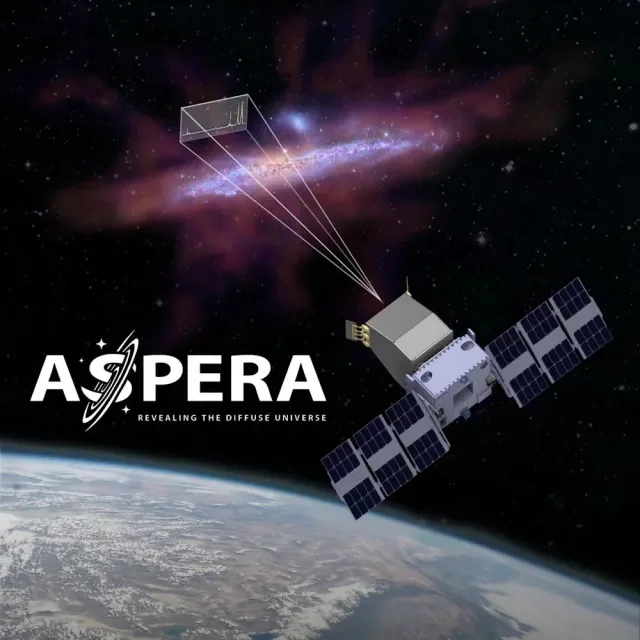
Whenever you look at the Universe in a more powerful way than you ever have before, either in a new set of wavelengths, at higher sensitivity, on wider-field scales, or with novel capabilities, you open yourself up to a remarkable possibility. In addition to the “obvious” science gains that you’ll achieve from finding more examples and revealing greater details about the types of objects and events you already know about, you also give the Universe an opportunity to surprise you: by finding things, thanks to the new power of your novel observatory, that you never expected would be out there. This isn’t necessarily restricted to flagship missions that “brute force” their way past the limits of our prior frontiers, but can sometimes, for certain specific use cases, be accomplished by much lower-cost missions that specialize in one particular set of applications: what I call “finesse missions” rather than flagship missions. In the far-ultraviolet part of the spectrum, there’s very little that we can do for astronomy from down here on Earth; we have to go to space to access that portion of the spectrum. But other than NASA’s Hubble Space Telescope, far-ultraviolet telescopes have been few and far between. Thanks to Principal Investigator of the ASPERA mission, Dr. Carlos Vargas of the University of Arizona, that’s all about to change. In this fascinating conversation, we talk about the science that’s awaiting us in the far-ultraviolet, including in one of the most poorly studied regions of our own galaxy: the circumgalactic medium. It’s an important place, as it’s quite likely where the majority of the baryons, or the components of normal matter in the Universe, are actually located. Have a listen to Carlos and I talking about the far-ultraviolet, the ASPERA mission, and more on this edition of the Starts With A Bang podcast! This article Starts With A Bang podcast #132 – Space in the ultraviolet is featured on Big Think.
Starts With A Bang podcast #132 – Space in the ultraviolet